
Subscribe
to receive news by email

Poll
Will the Trump Administration Shift U.S. Policy in Favor of Palestine?
- No (87%)
- Yes (13%)
 Loading ...
Copyright © 2026 Arab America
Go topArab Free Officer movements from 1952-1969
By: Taim Al-Faraje / Arab America Contributing Writer
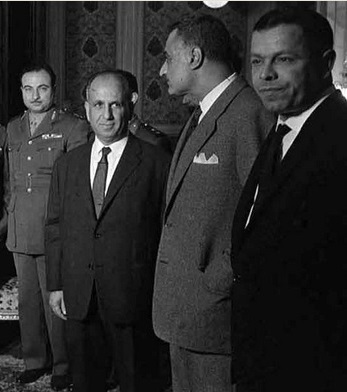
Throughout the 50s and 60s, the Arab World saw a plethora of coups and revolutions. These coups particularly took place in countries where the common people were discontent with the ruling monarchies. They had many goals; on a smaller scale, they were aimed at overthrowing the rulers of these countries, and on a larger scale, they were focused on systematic changes and serving the general people rather than the ruling class.
Junta takeovers of this time in Middle Eastern history were often characterized by the idea of “Free Officers,” or officers within the military of a country who aimed to break their nations free of their corrupted, monarchical, foreign-aligned leaders, and wanted to establish anti-colonial republics for their people. This article will dive into the Free Officer movements of the Arab World from 1952-1969, looking at motives, objectives, how successful they were in reaching their objectives, and how popular they were amongst the people.
1952 Egyptian Coup – Start of the Free Officers Movement (FOM)
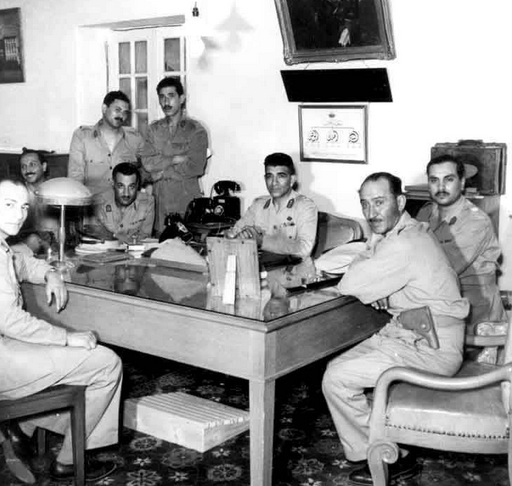
In 1949, a group of lower-middle-class Egyptian military officers began forming a group with an end goal of destroying all corruption within Egypt and restoring democracy. They were young, passionate, driven, and more importantly, relatable Egyptians who weren’t a part of the country’s elite -the 5% who owned 65% of the country’s wealth. They were humble and hungry, determined to change the country’s course from corruption to independence. As time went on, the monarchy disillusioned not just the Free Officers but many Egyptians. They were ready for change.
Turmoil brewed in Syria as three coups unfolded within a year. The Egyptian Free Officers watched carefully, aiming to learn from these successes. Their goal was to apply similar strategies in their own coup against the King. Throughout their early years, they encouraged civilians to rise up and take initiative to end British control over Egypt. This manifested itself in the creation of small groups of Egyptian common workers who called themselves fedayeen, or the “ones who redeem/sacrifice themselves.” They’d get into small skirmishes with the British military in the Suez Canal, showing discontent. The Egyptian Free Officers, as the only organized group, led the 1952 coup and overthrew the King, restoring common rule to Egypt.
1958 Iraqi Coup
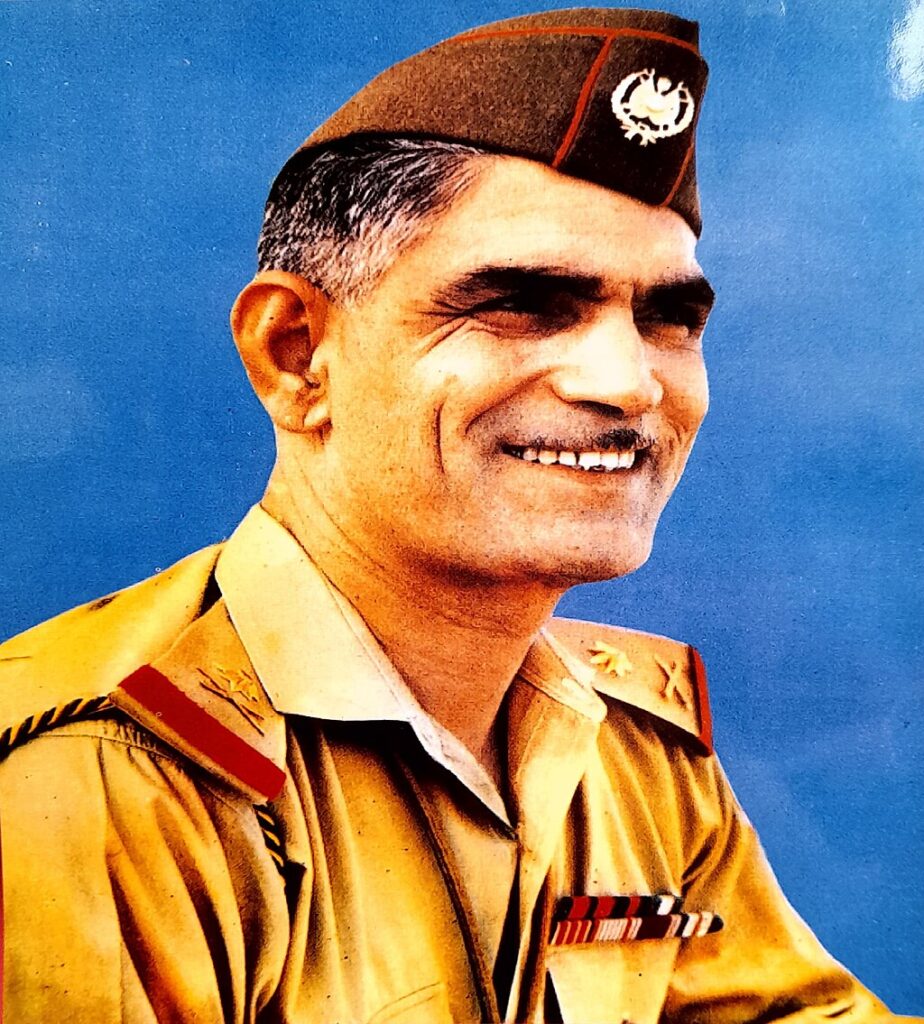
After the 1916 Arab Revolt against the Ottomans, the British, going against their promise of granting the Hashemites the ability to rule from Aleppo to Aden, only granted rule of Transjordan and Iraq. In Iraq, particularly, Arab nationalism began to spread after the Second World War. This was largely because political refugees from Palestine and Syria fled there and became teachers, hired by Iraqi educational directors. Needless to say, Arab nationalism flourished throughout the 40s and 50s. Similar to Egypt, people in Iraq became very discontent with the British-aligned Hashemite King.
As the years ticked closer and closer to 1958, Iraq’s government became more and more distant from the rest of the Arab World. After the 1956 Tripartite Aggression, where Britain and France engaged in a war with Egypt over the nationalization of the Suez Canal, Iraq’s government faced intense backlash. Its popularity reached its lowest point ever. Nasser, the Egyptian President, had successfully nationalized the Suez Canal. Though the Iraqi king did not support Britain’s effort, Iraq was part of the Middle East Treaty Organization. This was a British-led defense alliance aimed at containing communism. The Arabs saw this as being on the side of the colonialists. This was especially true now that Nasser was seen as the leader of the Arab people.
Iraq had distanced itself far from the Arabs, leading to their exclusion from the 1957 “Treaty of Arab Solidarity,” an effort to rid British influence on Jordan by providing for their needs within Arab states. In one last-ditch effort to remain in power, Iraq entered a unification with the Hashemite kingdom of Jordan. However, this was to no avail. The events of July 14 occurred, and General Abd al-Karim Qasim overthrew the king.
1969 Libyan Coup
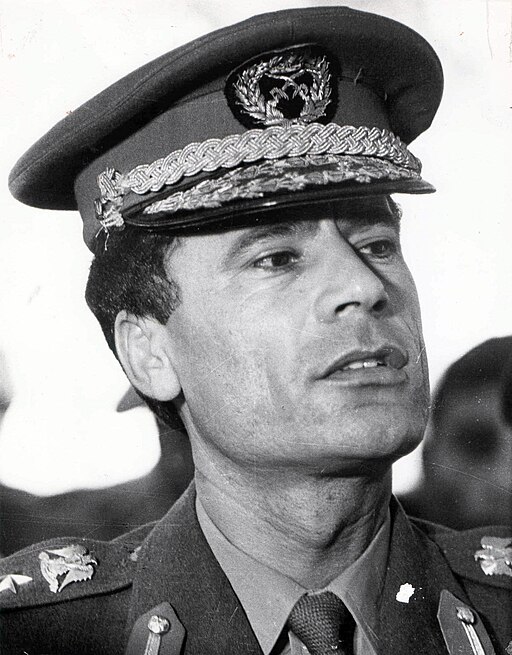
Before 1911, the Ottoman Empire officially ruled Libya. However, real power lay with the Senussi clan, a Muslim religious order that had gained the support of thousands across the country. Their influence extended across much of Libya, overshadowing Ottoman authority. Being very popular, once the Italians invaded in 1911, they, alongside the Ottomans, resisted the Italian push for colonial control over the region; however, they eventually succumbed and ceded the rule of the country to Italy in 1912.
Despite this, the powerful Senussi order remained determined to resist the Italians. They remained strong in the eastern side of the country, having strong ties to the Bedouin tribes there; this led to coordinated attacks on the Italians taking place from that side of the country. Over the next 11 years, the Senussi Order organized revolts against the Italians but failed. They often faced extreme conditions like concentration camps, public executions, and torture. This time period, called the Second Italo-Senussi War, led to another major loss for the Libyans.
Italian rule didn’t end until 1943, with the Battle of Tripoli. This was fought between the British and Italians, leading to the beginning of British rule. Unfortunately, this ended up as another period of colonialism. The United Nations ended this second period of colonialism in 1951 by granting Libya independence. This made Libya the first country to gain independence through the UN. It was that year that the Senussi clan began officially ruling the country, with King Idris as President.
Over the next 18 years, although the people had historically trusted and loved the Senussis, they grew discontented with them as the Senussi family concentrated power within itself. Corruption spread through nepotism, and people especially felt its effects after Libya struck oil in 1959. While the people should’ve felt the benefits, they noticed the rich only got richer, and the poor remained poor. In 1964, the Free Officers, with Colonel Gaddafi as their leader, formed. Over the next five years, they gained popular support. This was largely due to the 1967 Arab-Israeli War, when the Arabs suffered a major defeat to the Israeli side. Their discontent manifested itself in the form of a coup in 1969. This forced the exile of King Idris and placed Colonel Gaddafi as the leader of the new republic. He would continue to rule until an American-led coup in 2011.
Want more articles like this? Sign up for our e-newsletter!
Check out our blog here!