

Subscribe
to receive news by email

Poll
Will the Trump Administration Shift U.S. Policy in Favor of Palestine?
- No (87%)
- Yes (13%)
 Loading ...
Copyright © 2026 Arab America
Go topArab Leaders: Publicly Critical of Israel, Privately Making Deals
By: Ghassan Rubeiz / Arab America Contributing Writer
One day, Israel might become an integral part of the Middle East, but only if the Jewish state abandons its colonial approach to state building. Arab-Israeli relations must be transparent and sensitive to injustice.
While millions of Arabs watch Gaza’s destruction with growing outrage, their leaders quietly sign contracts with Israel and its American patron. The disconnect between the Arab street and its leadership is perturbing; for many Arab heads of state, business and personal interests override moral principles.
The Gaza war has awakened ordinary Arabs to Israel’s strategy of might-makes-right, yet their governments continue prioritizing external protection and concentrated wealth over Palestinian rights. Elites criticize Zionism publicly while making deals privately.
Evidence of this deceptive approach abounds. Egypt, bound by the Camp David Accords since the 1970s, now imports substantial natural gas from Israel. Washington maintains Cairo’s cooperation through annual foreign aid while Israel sweetens arrangements with favorable economic terms. Jordan followed a similar path with its 1994 peace treaty, prioritizing stability over solidarity.
The Abraham Accords, tying the United Arab Emirates, Bahrain, Morocco, and even divided and now subdivided Sudan, to Israel, a few years ago. This unusual move was achieved through business and hollow diplomacy, a significant distraction from Israel’s conduct in the region.
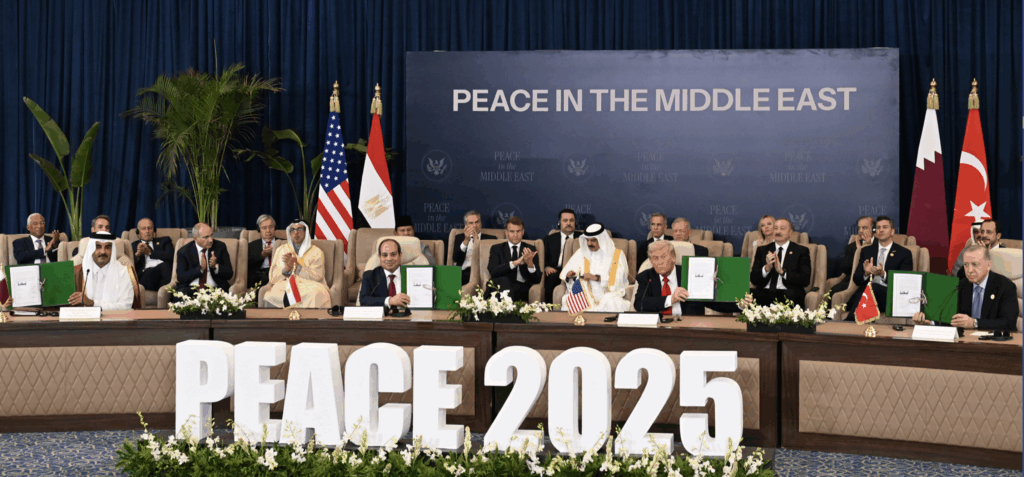
Saudi Arabia had positioned itself to join these accords before Gaza’s devastation forced Riyadh to pause. However, Israel’s pull has not vanished. The Arab states’ recent approval of a pro-Israeli Trump plan for Gaza signals that Palestinian statehood remains marginal.
Last week’s visit by the Saudi Crown Prince to Washington concluded many military and economic deals which required heavy presence of foreign personnel. Such deals may improve the sense of security of the Kingdom, but they may eventually limit the freedom of its leadership and its role in Palestine.
Qatar presents a complex case— actually sympathetic to Palestinians yet constrained by its small size, extreme wealth, and inflated ambitions. The emirate hosts a regional American military air base. Its recent gift of a presidential aircraft to Trump is telling; his acceptance of the gift is legally very questionable.
In Syria and Lebanon, the dynamics differ: Israel’s conduct is tolerated by Beirut and Damascus simply out of fear and bankruptcy. Syria, emerging from tyranny into chaos, desperately seeks sanctions relief and international support. Ignoring international law, Israel immediately expanded its occupation of Syrian territories after the regime change. Damascus now seeks security arrangements with Tel Aviv—a position driven by poverty, internal divisions, and military weakness.
Lebanon faces similar pressures, with mounting American demands to disarm Hezbollah at any cost and to negotiate directly with Israel, a comfortable occupying force. “Saving” the state from Hezbollah through impulsive external pressure may end up terminating the Lebanon we know.
The Arab League’s endorsement of the Trump Accords demonstrates this institutional failure. The League has effectively blessed Gaza’s partitioning, Israel’s control, and the establishment of a weak Palestinian administration—arrangements that guarantee pacification rather than peace. And the trend continues.
The international community follows the Arab elite’s approach regarding Israel: saying one thing and doing another. The United Nations Security Council’s approval of the Trump plan last week provided artificial legitimacy to U.S. diplomacy. The Council endorsed Gaza’s division when it should have demanded the enclave’s reunification with the West Bank; it legitimized Israel’s military presence while calling for disarmament in the Strip; it ignored escalating settler terrorism in the West Bank and focused on ending the terror in the besieged enclave.
The gap between Arab citizens and their leaders has never been wider, leaving Palestinians to face dispossession and Israelis to enjoy a false sense of achievement, victory, and impunity. The rush to integrate Israel in the region artificially is unhealthy. Tel Aviv must adapt to fit its environment, not expect the environment to accommodate its unrealistic plans.
Ghassan Rubeiz is the former Middle East Secretary of the World Council of Churches. Earlier, he taught psychology and social work in his country of birth, Lebanon, and later in the United States, where he currently lives. He has contributed to political commentary for the past twenty years and has delivered occasional public talks on peace, justice, and interfaith topics. You can reach him at rubeizg@gmail.com
The views and opinions expressed in this article are those of the author and do not necessarily reflect the position of Arab America. The reproduction of this article is permissible with proper credit to Arab America and the author.
Want more articles like this? Sign up for our e-newsletter!
Check our blog here!






_19.jpg)