

Subscribe
to receive news by email

Poll
Will the Trump Administration Shift U.S. Policy in Favor of Palestine?
- No (87%)
- Yes (13%)
 Loading ...
Copyright © 2026 Arab America
Go topArab Migration Through the Ages, and It's Effect on Identity
By: Taim Al-Faraje / Arab America Contributing Writer
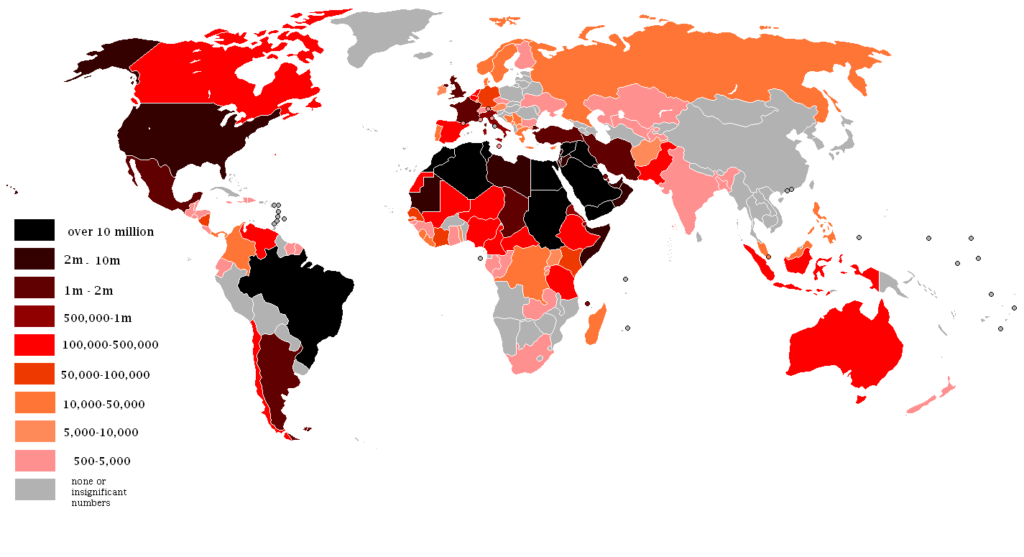
Arabs in the West continue to struggle with their identity, whether it’s through appearance, language, sense of belonging, or all three. “Too Arab to get along with Whites, too White to get along with Arabs,” is a common feeling among the younger Arab diaspora. This feeling, although unfortunate, is often inevitable, especially as political upheavals have shaped newer waves of migration. In the years following the Arab Spring, millions were displaced or forced to migrate for safety or stability, making these identity struggles even more pronounced. Young immigrants move to Western countries, oftentimes speaking little to no English or English with a heavy accent, and have a hard time with community and making friends. This article will explore the history of Arab migration to places outside the Arabian Peninsula and the wider Arab World, and how this migration has taken a toll on Arab identity.
Early Arab Migration to Outside the Arabian Peninsula (7th century)
Historically, the term “Arab” meant one whose ancestors came from the deserts of the Arabian Peninsula- the area containing modern day GCC countries like Saudi Arabia and Oman. It was these Arabs who began migrating to other areas of the present Arab World, such as the Levant and North Africa. For the Levant, a majority of its population spoke Aramaic, and the state language was Greek. When the Arabs fought the Byzantines during the Arab Conquest of the Levant in the 7th century, they had almost no intention of changing the language and religion of the native population.
It would take hundreds of years for “Arabization,” or the Arabizing of the local population, to take place. The third Caliph of the Rashidun Caliphate, Uthman, appointed his governor over Greater Syria to ensure that Peninsula Arabs who moved to the Levant didn’t live too close to the native population. He did not want confrontation between the groups to begin, as this would lead to resentment of the Islamic State.
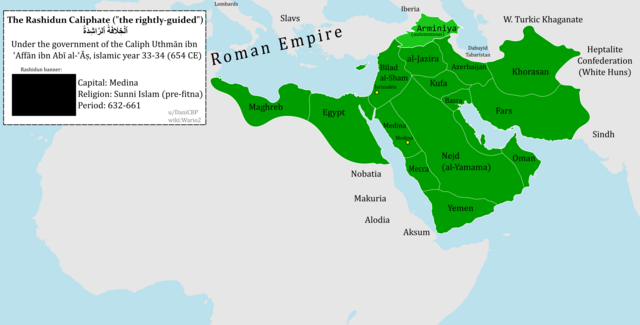
This is also why the Arabs of the Caliphate accommodated native populations to the best of their ability. Over time, these populations would begin speaking Arabic and adopt Arab culture, regardless of religion, with the first translation of the bible into Arabic taking place in the ninth century. Similarly, in Egypt, the native population continued speaking Coptic for centuries after the conquest, and the Arab rulers did not attempt to change this. Arabization in Egypt was gradual, driven largely by administrative reforms, migration, and cultural exchange. In North Africa, Arab tribes initially remained in separate towns, while the Amazigh population retained its languages and identities. It was only over many generations, through trade, marriage, and Islamic scholarship, that the Arabic language and culture became dominant.
Arab Migration to the West (19th century to now)
In the last 150 years, a large number of Arabs have left the Arab World for Western Countries. This section will detail the two main waves of this migration.
1870-1924
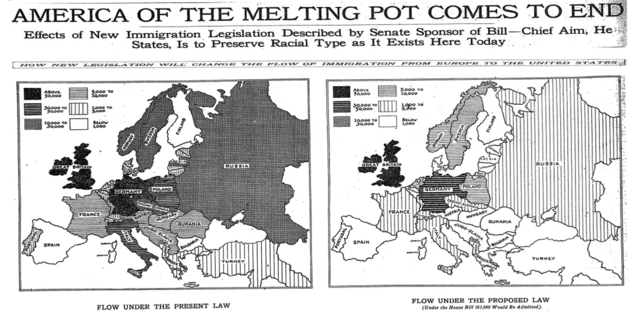
Beginning in the 1870s until the 1920s, there was a significant Arab migration from areas in the Ottoman Province of Greater Syria to the West, particularly the United States. During this period, Arabs moved to Latin American countries like Brazil, Mexico, and Argentina. A major factor in the migration to the US was a blight on Lebanese Mulberry Trees, driving the silk industry down, and pressuring people from the modern-day Lebanon area to find economic opportunities outside. Another major reason for this migration was the beginning of conscription for Christians in the Ottoman Empire, who did not want to serve, and, therefore, left. Regardless of reason, this period saw around 110,000 Arabs move to the USA, and ended with the Johnson-Reed Act of 1924.
The Arab Spring (~2011-2024)
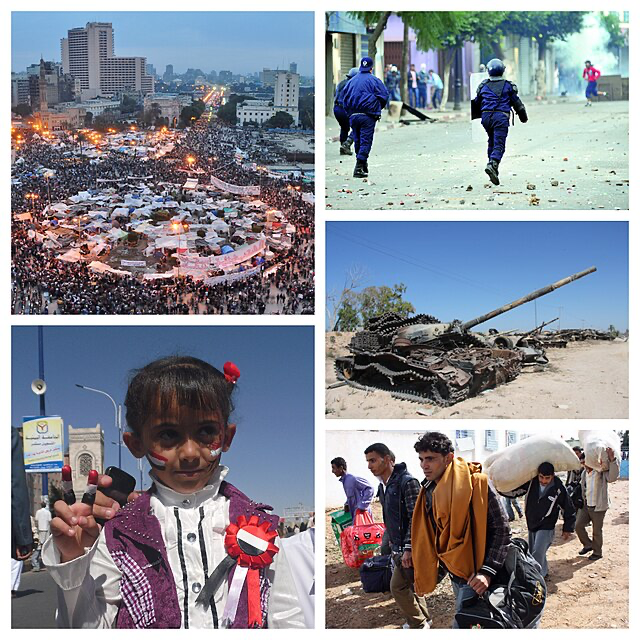
The Arab Spring was a highly controversial and conspiracy-associated period. It saw the overthrow of Arab Presidents such as Hosni Mubarak, Muammar Qazzafi, Zine el-Abidine Ben Ali, and most recently, Bashar al-Assad. Conspiracies around heavy US involvement and the idea that the Arab Spring only took place out of a Western push for control over the Arab World flooded Arab and international media; however, that’s a topic for a different article. Constant war and harsh living conditions for people of these countries led to a mass migration to the West, especially to countries in Europe like Türkiye and Germany.
How This Plays Into Identity
When Arabs move to these countries, they struggle to assimilate, especially grade school-aged children. This can be for a mix of reasons like a difference in cultural norms between the West and their home countries, experiences with discrimination and racism, and the struggle to remain close to their heritage while also wanting to fit in and feel like they belong. If they remain too close to their heritage, they’ll be weird, obnoxious, “fobby;” but if they forget where they came from, struggle with their home language, they’ll be an embarrassment to their people, too white. Caught between these expectations, Arabs grow up feeling that no matter what they choose, they will never fully belong to either world.
The embracement of one’s heritage and history is the sole way for anyone not from the country they reside in to reach fulfillment. Otherwise, the struggle of assimilation will consume them forever.
Want more articles like this? Sign up for our e-newsletter!
Check our blog here!