

Subscribe
to receive news by email

Poll
Will the Trump Administration Shift U.S. Policy in Favor of Palestine?
- No (87%)
- Yes (13%)
 Loading ...
Copyright © 2026 Arab America
Go topArab Photojournalists and Press Freedom Challenges
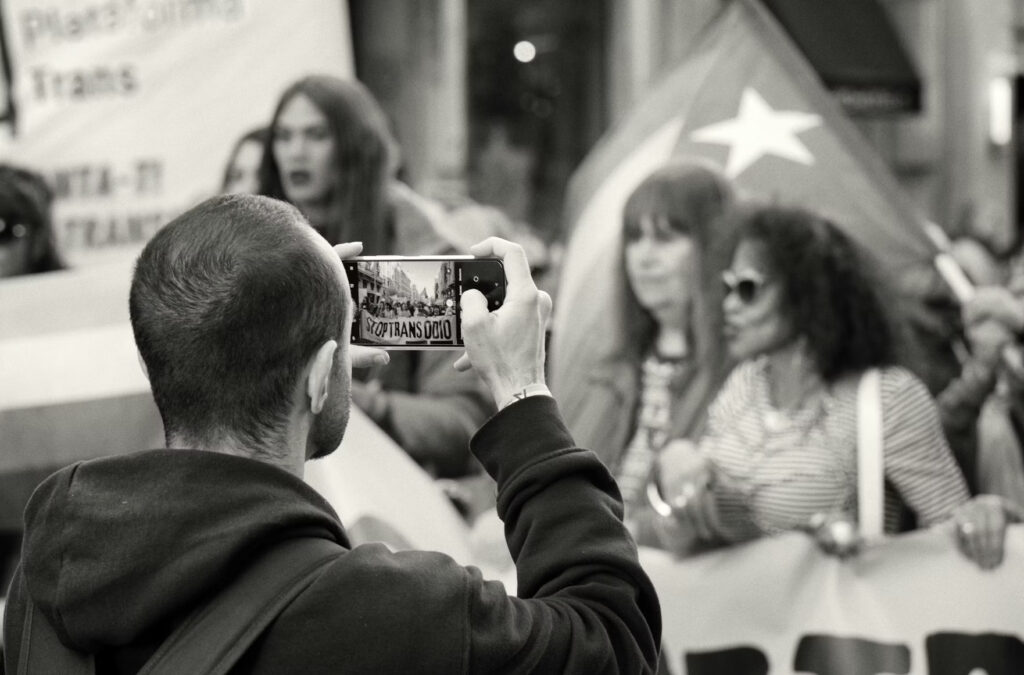
By London Sewell/ Arab America Contributing Writer
On the Front Lines
Arab journalists are on the front lines of some of the most important stories in the world today. With cameras in hand, they document protests, capture moments of resistance, and show the humane side of political movements. Their work gives people outside the region a chance to understand what’s happening in the Arab World.
Unfortunately, as the role of these journalists gains more importance, the risks they face are growing. Across many countries, restrictions on press freedom are making it harder and more dangerous for them to do their jobs.
The Role of Photojournalism in Protests
Photojournalism plays a central role in how these events are understood. In many Arab countries, protests have become a key form of political expression, and photojournalists are often at the center of documenting them. Through their images, they capture not only what is happening, but the emotion, urgency, and human stories unfolding within these moments.
Whether people are calling for economic reform, social justice, or government accountability, these gatherings often carry deep emotion but also urgency. Arab photojournalists play a critical role in documenting these moments. Through their work, they don’t just show what is happening, but how it feels to be there.
Challenges in the Field
However, capturing these moments is not as simple as pointing the camera and clicking a button. Many photojournalists face harassment, intimidation, and even arrest while covering protests. In some cases authorities restrict where journalists can go or what they can photograph. This makes it difficult to report freely and honestly. Some governments justify these actions by claiming they are maintaining order, But for journalists these restrictions often feel like a direct attempt to control the narrative.
Real Risks, Real Experiences
The risks aren’t theoretical, they are lived experiences. Journalists like Wael al-Dahdouh have continued reporting through active conflict zones, even after facing such tragic personal losses, including loss of family members.
His decision to keep documenting events despite such grief highlights the immense emotional weight journalists carry, while bearing witness to many tragic events, showing the emotional weight that comes with documenting crises.
In Egypt, Lina Attalah has faced repeated questioning and detention while working to report on sensitive political issues, highlighting the pressure journalists face for simply doing their jobs. And in Syria, Razan Zaitouneh documented abuses during protests before she was forcibly disappeared, a reminder of the extreme dangers tied to broadcasting what others wish to keep hidden.
Uncertainty and Targeting
One of the biggest challenges is the uncertainty. Photojournalists never know when a situation might turn dangerous. A peaceful protest can quickly escalate, and being in the mainframe of the camera makes them a target. They may be questioned, detained, or have their equipment confiscated. In some cases, their photos never see the light of day. This not only affects their work, but also limits what the public gets to see.
Despite these challenges, many Arab photojournalists continue their work because they believe it matters. They see themselves as witnesses to history. Their images can bring attention to issues that might otherwise be ignored.
The Double-Edged Sword of Social Media
Social media has changed the trajectory of how journalists share their work and experiences. Platforms like Instagram and Twitter allow them to publish their experiences instantly and reach a global audience. This can be powerful and extremely helpful, especially when traditional media outlets are restricted. However, social media also comes with its own risks. Accounts can be monitored, taken down, and the journalists themselves can face online harassment. What they share online can be used against them.
Limited Protection
Another issue is a lack of protection. In many parts of the world, journalists have legal rights and support systems that help protect them. But in some countries, those protections are limited or not enforced. This leaves photojournalists vulnerable without the strong support they often rely on one another for safety and guidance.
Still, the impact of their work cannot be ignored. Arab journalists are shaping how the world sees the region. Their images challenge stereotypes and provide a more complete picture of what’s really going on in today’s world. Instead of relying on outside perspectives, audiences can see events through the eyes of those who live there.
Why Press Freedom Matters
As restrictions on press freedom continue, the role of photojournalists has become even more important. When access to information is limited, images can serve as powerful evidence. They can document events in ways that are hard to deny. This is why protecting press freedom is so important. Without it, the public loses access to important truths.
In the end, Arab photojournalists are doing more than just documenting protests. They are preserving history, giving a voice to those who may not be heard, and pushing against efforts to silence them. As they continue to navigate growing restrictions, their commitment to showing the truth remains strong.
Want more articles like this? Sign up for our e-newsletter!
Check our blog here!