
Subscribe
to receive news by email

Poll
Will the Trump Administration Shift U.S. Policy in Favor of Palestine?
- No (87%)
- Yes (13%)
 Loading ...
Copyright © 2026 Arab America
Go topBil’in: A Symbol of Freedom Against the Wall
By: Emma Campbell / Arab America Contributing Writer
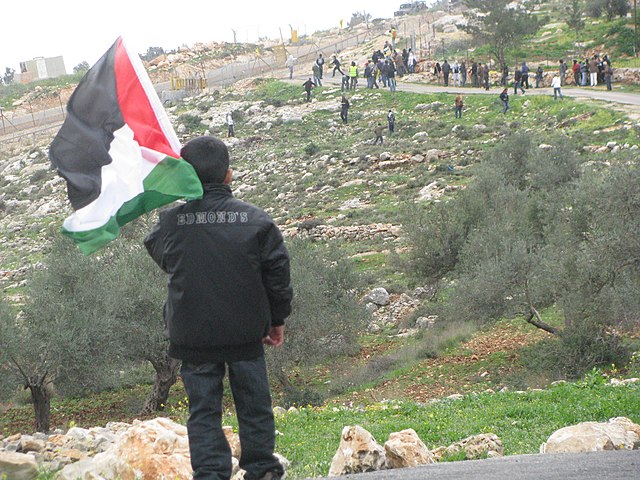
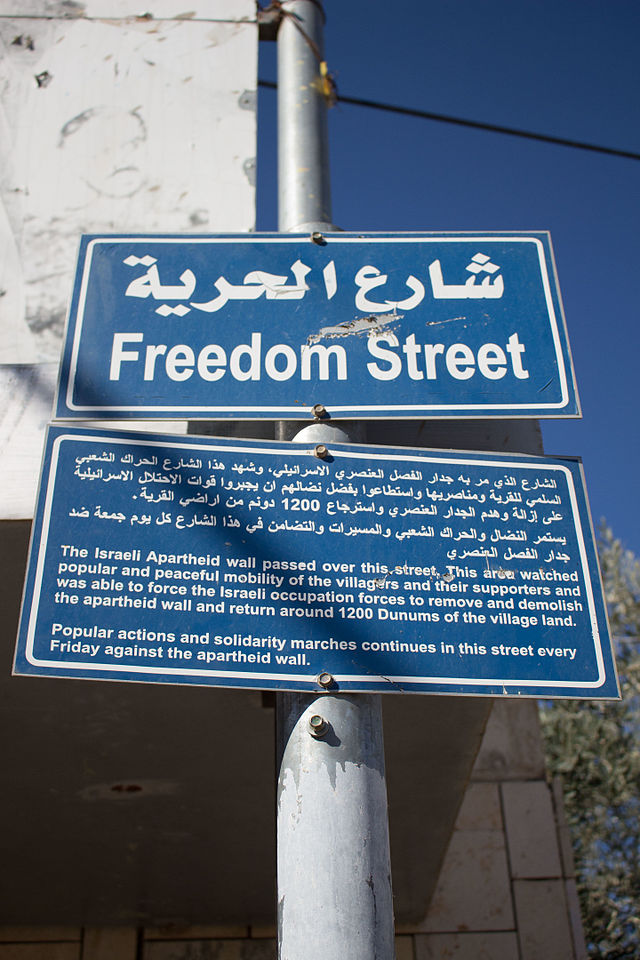
In the Palestinian village of Bil’in, just outside Ramallah, a powerful grassroots movement has challenged the Israeli Separation Barrier for over two decades. Led by local residents, the Bil’in Popular Committee Against the Wall has become a symbol of Arab resilience and nonviolent resistance. In this analysis, Arab America contributing writer Emma Campbell highlights the strength of Palestinian communities in the face of occupation. Their struggle demonstrates how even the smallest villages can inspire global awareness and solidarity.
Leadership and Methods of Resistance
Bil’in, a village of around 2,000 located 12km from Ramallah in Palestine, has been the center of grassroots-led protests and nonviolent resistance against the Israeli Separation Barrier. According to Welcome to Palestine and OCHA maps, Bil’in’s geography has made it a focal point of protest. Organizers describe the movement as “a consciousness free of occupation,” as reported by +972 Magazine, combining creative acts of nonviolence with solidarity and legal advocacy.
The Popular Committee is led by Bil’in’s residents, including farmers, families, and youth. Two figures stand out: Iyad Burnat, who has led the Committee since 2005, and Abdullah Abu Rahmah. In an interview with Mondoweiss, Burnat explained: “We started our non-violent struggle in Bil’in when we saw these bulldozers destroying the olive trees, and we continued … To have non-violent resistance is not our goal. It is not our goal to be in resistance, nonviolent or violent. Our goal is to have our freedom.”
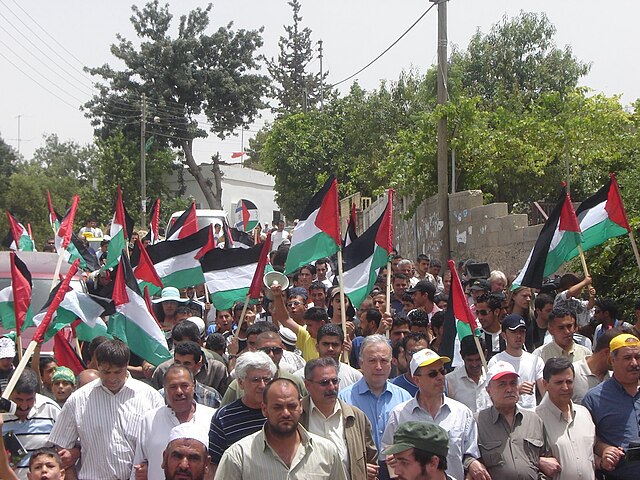
Rahmah has also spoken publicly about Bil’in’s struggle. According to Mondoweiss, participation is voluntary but nearly every household in Bil’in has been involved. Since 2005, the Committee has organized weekly protests after Friday prayers. Resistance Studies notes that this predictability ensures visibility, media coverage, and international attention. Demonstrations often include artistic expression and symbolic acts, reframing the struggle around human rights rather than security.
Timeline, Geography, and Effectiveness
The Committee’s timeline begins with the Separation Barrier’s arrival in Bil’in in 2004–2005. Weekly protests reached their height between 2005 and 2011. In 2007, the Israeli High Court ordered a partial reroute of the Wall near Bil’in — 1.7km long — according to the court ruling.
Bil’in’s geography is strategic. As OCHA documents, its proximity to Ramallah provides access to media networks, while its location near settlements makes it a visible flashpoint.
Bil’in’s effectiveness lies in its ability to frame the Wall not as a security measure, but as land theft and a human rights crisis. By keeping its message rooted in local identity and nonviolent resistance, the Committee has differentiated itself from other groups and become a symbol of Palestinian endurance.
Outcomes and Challenges
According to the Los Angeles Times, Bil’in reclaimed around 30% of its land due to the High Court ruling. The Oakland Institute notes that Bil’in’s model has inspired other villages, such as Nabi Salih.
Despite all this, challenges still remain. +972 Magazine reports that some Palestinians criticize the Committee for “normalization” when working with Israeli allies. Despite this, Bil’in’s commitment to nonviolence protects its legitimacy. The group’s leadership rotation prevents targeted attacks, and inviting international observers ensures documentation of protests. Additionally, weekly Friday demonstrations reduce spontaneous escalation.
Bil’in’s Popular Committee Against the Wall offers a localized response to the broader conflict of the Separation Barrier. While the Barrier fragments Palestinian land and sovereignty, Bil’in’s dedication to grassroots organization demonstrates the effectiveness of mobilization. Despite constraints, the Committee’s symbolic victories reshape global perceptions of the Palestinian struggle, inspiring similar efforts across the West Bank.
Want more articles like this? Sign up for our e-newsletter!
Check out our blog here!