Subscribe
to receive news by email

Poll
Will the Trump Administration Shift U.S. Policy in Favor of Palestine?
- No (87%)
- Yes (13%)
 Loading ...
Copyright © 2026 Arab America
Go topBooks and Free Speech: The Watertown Library Pro-Palestinian Reading List Debate
By Arab America Contributing Writer / Layla Mahmoud
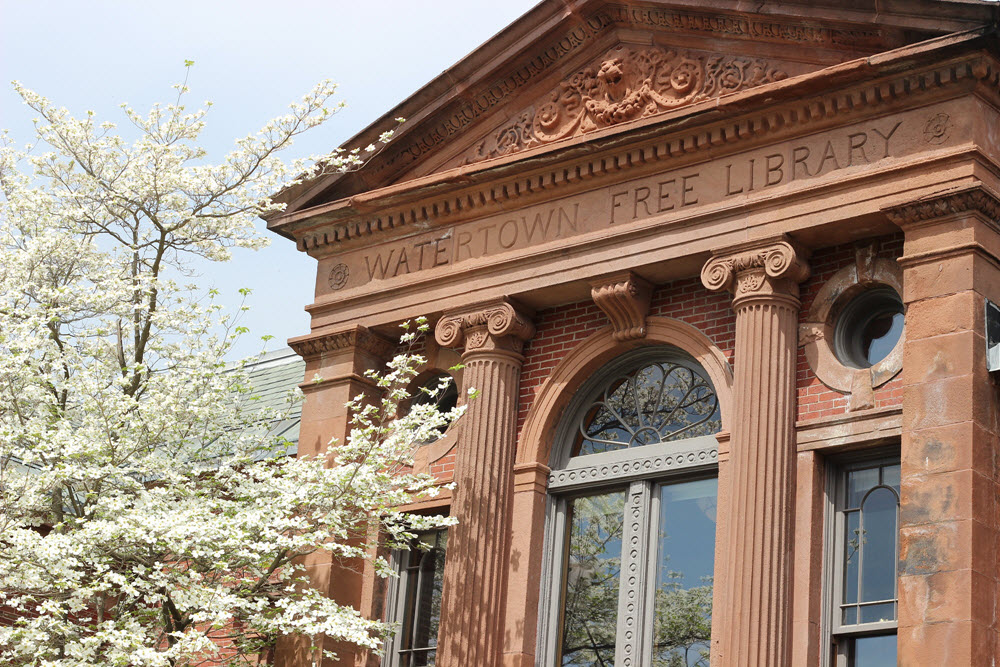
In early August 2025, the Watertown Free Public Library in Massachusetts found itself at the center of a national controversy after including pro-Palestinian books in its summer reading list. What began as a local literary curation quickly became a highlight in the broader American culture war over Palestine, Israel, and the boundaries of free expression. Arab America Contributing Writer Layla Mahmoud covers how the incident shows the tension between public institutions’ commitment to intellectual diversity and the pressures they face from political sensitivities.
The Controversy Unfolds
The library’s summer reading recommendations included several titles offering Palestinian perspectives, historical context, and critiques of Israeli policy. Among them were works that have been widely praised in academic and human rights circles for shedding light on the Palestinian experience. However, opponents argued that the selection was “one-sided” and amounted to political indoctrination in a taxpayer-funded space. Critics very quickly mobilized by sending letters to the library board, contacting local officials, and voicing concerns at public meetings. Some accused the library of promoting anti-Israel sentiment, while others went further, framing the list as antisemitic. This backlash mirrored broader national tensions where advocacy for Palestinian rights is often met with accusations of bias or hostility toward Jewish communities.
Community Response
Not all reactions were negative. Many Watertown residents, local activists, and free speech advocates defended the library’s decision, framing it as a necessary step toward inclusivity in public discourse. They argued that Palestinian voices have historically been marginalized in mainstream American narratives, and that libraries, as institutions of learning, must present diverse perspectives even on contentious topics. Several community members spoke during a heated library board meeting, emphasizing that access to books is not the same as endorsing their content. Others noted that reading lists are meant to spark dialogue, not dictate ideology.
The Larger Pattern
The Watertown case is far from isolated. Across the U.S., similar controversies have emerged in universities, schools, and libraries whenever Palestinian narratives enter public programming. These disputes often tap into long-standing political divides and mirror the deep polarization of the national conversation on Israel-Palestine. Public institutions frequently find themselves walking a fine line of balancing their role as spaces for intellectual exploration against the risk of political backlash and funding threats. In many cases, the controversy can lead to self-censorship, where institutions quietly remove or avoid material to prevent conflict.
Academic and Advocacy Implications
The uproar in Watertown also touches on issues of academic freedom and the politicization of cultural spaces. While libraries are not universities, they share a mission to provide open access to information. This mission becomes complicated when information itself is politicized, as with literature on Palestine. Advocates of the library’s reading list contend that excluding Palestinian perspectives due to political pressure would set a dangerous precedent, one in which the loudest critics dictate the intellectual boundaries of public institutions. They point out that literature is one of the few spaces where underrepresented voices can challenge dominant narratives without interruption.

Looking Ahead
For Watertown, the outcome of this debate may shape future library programming and set an example (either chilling or encouraging) for other public institutions. Whether the library stands by its reading list or makes concessions, the incident will likely remain a case study in the challenges of navigating political controversy in public spaces. The larger question remains: Can public institutions in the United States acknowledge contested narratives without succumbing to the pressure to filter or sanitize? The Watertown episode suggests that the answer may depend as much on community resolve as on institutional policy.
Want more articles like this? Sign up for our e-newsletter!
Check out our blog here!