

Subscribe
to receive news by email
Poll
Will the Trump Administration Shift U.S. Policy in Favor of Palestine?
- No (87%)
- Yes (13%)
 Loading ...
Copyright © 2026 Arab America
Go topBound by Asida: A Shared Dish Across Continents
By: Nourelhoda Alashlem / Arab America Contributing Writer
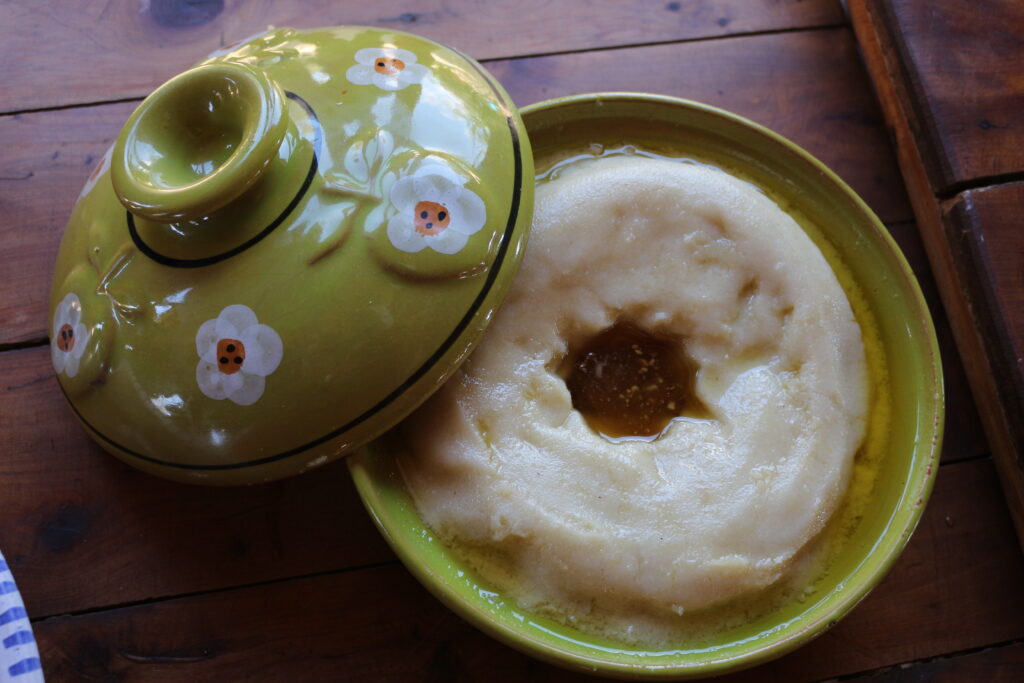
Asida (also known as Aseed or عصيدة) is a traditional grain-based dish shared across Southwest Asia and Africa, particularly in Yemen, Saudi Arabia, Somalia, and across North Africa, including Libya, Tunisia, Algeria, Morocco, and Sudan.
The dish is eaten directly by hand from a single communal bowl, without the use of individual plates or utensils. Regardless of region, Asida is made from the same core elements across all: grain, water, fat, and salt—and prepared through constant stirring until the dough becomes smooth and dense.
Origins of Asida
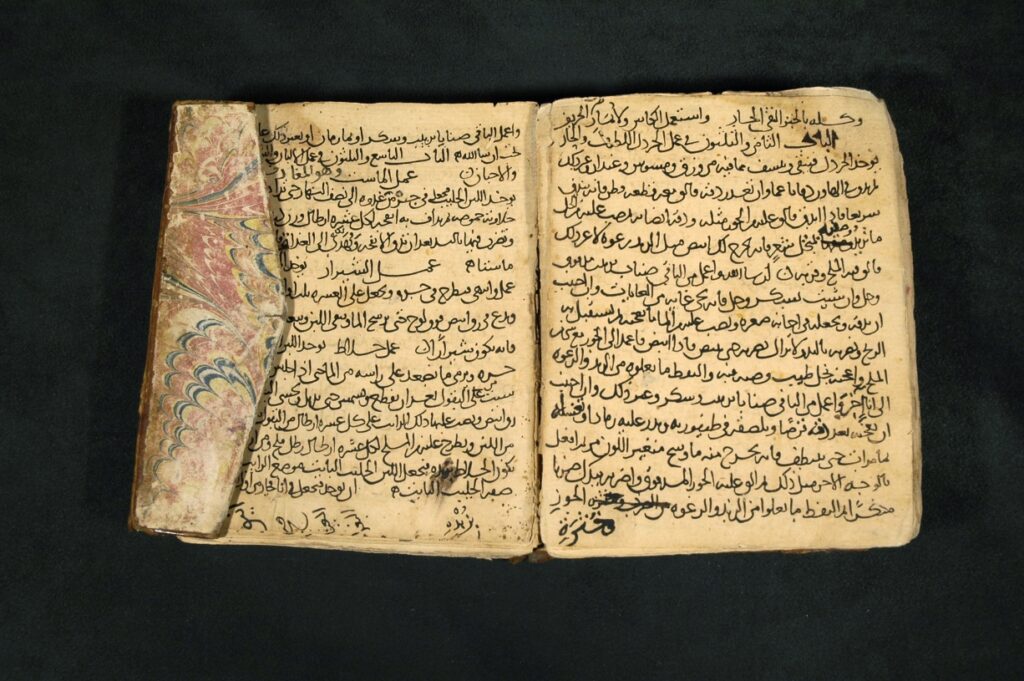
Although Asida appears in early Arabic cookbooks such as Kitab al-Ṭabīkh by Ibn Sayyar al-Warraq in the 10th century, the dish itself predates written records. Its origins are rooted in Amazigh and Bedouin food traditions, where grain-based meals were designed to be filling, portable, and easy to prepare with minimal tools.
Across desert, mountain, and agriculture-based societies, Asida served as survival food. It required only one pot, boiling water, and flour, and could feed many people at once. Over time, migration and trade carried Asida across regions, where it adapted to local grains and sauces while maintaining the same communal form.
Traditional Asida Recipes by Country
Asida is placed at the center of the table or, most commonly, on the floor on a tablecloth. Everyone eats from the same bowl, using their fingers. There is no separation between guest and host, rich or poor. The dish is usually served boiling hot and eaten when fresh. Beyond tradition, research suggests that eating with the hands can enhance both taste perception and social connection.
A study published in the Journal of Retailing by sensory researcher Adriana Madzharov found that people, particularly those with higher self-control, rated food as more enjoyable and satisfying when eaten with their hands rather than with utensils. The study also notes that hand-eating encourages mindfulness and creates a more intimate sensory experience, which can strengthen feelings of closeness among people sharing a meal. This makes Asida transform from a dish to a ritualistic experience.
Libya – Asida (عصيدة)
Ingredients:
- 300 g wheat flour (or whole-meal flour)
- 1 liter boiling water (divided)
- 25 g butter or ghee
- 1 tsp salt
To serve:
- Honey or date syrup (rub)
- Melted butter or olive oil
Method:
- Heat ½ liter of water in a deep pot. Add butter and salt.
- Once boiling, add flour all at once and remove from heat.
- Stir immediately with a wooden spoon, pressing dough against the pot to remove lumps.
- Return to low heat and add remaining boiling water.
- Cook uncovered for about 20 minutes, turning the dough halfway.
- Knead vigorously with a wooden spoon until smooth.
- Shape into a dome on a wide plate.
- Make a hollow in the center and fill with honey or date syrup. Pour melted butter or olive oil around the edges.
Yemen – Aseed (عصيد)
Ingredients:
- Whole-meal wheat flour
- Boiling water
- Salt
- Oil or ghee
To serve:
- Meat or chicken broth
- Hilbeh (fenugreek sauce)
- Honey or dates (sweet version)
Method:
- Boil water with salt and oil.
- Gradually add flour while stirring continuously.
- Stir until thick and elastic.
- Shape with oiled hands.
- Serve hot with broth poured around the dough or honey in the center.
Saudi Arabia – Aaseedah (عصيدة)
Ingredients:
- Wheat flour or millet flour
- Boiling water
- Salt
- Ghee or butter
To serve:
- Honey, dates, or meat broth
Method:
- Boil water with salt.
- Add flour slowly while stirring.
- Cook until smooth and firm.
- Shape into a mound and serve hot with honey or savory broth.
Sudan – Asida (عصيدة الذرة)
Ingredients:
- 2 cups (500 g) sorghum flour
- 500–800 ml water
- 2–3 tsp salt, to taste
- 1 tbsp yoghurt (close to expiry, used as a fermenting agent)
- 1 tbsp oil (for greasing the bowl)
To serve:
- Mullah stew (such as tagalia)
Method:
- In a bowl, mix the sorghum flour with an equal amount of water.
- Add salt to taste and stir in the yogurt.
- Cover and leave the mixture overnight to ferment.
- The next day, taste a small amount. If it tastes slightly sour, it is ready; if not, allow more time to ferment.
- Adjust the consistency so it resembles a thin pancake batter by adding water or flour as needed.
- Bring about 500 ml of water to a boil in a deep pot.
- Slowly pour in the fermented mixture, stirring continuously.
- Cook for 5–10 minutes, stirring, until thick like hot porridge. When cooled, the texture should become jelly-like.
- Grease a deep bowl with oil and pour in the cooked asida.
- Allow it to cool and set for 20–30 minutes.
- Turn the asida out into a wide bowl and pour the mullah stew around the edges, forming an island of asida surrounded by sauce.
Tunisia – Assida Bidha (عصيدة بيضاء)
ingredients:
- 1 cup flour or fine semolina
- 3–4 cups water
- Pinch of salt (optional)
To serve:
- Butter
- Sugar
Method:
- In a casserole or deep pot, bring the water to a gentle boil.
- Gradually add the flour or fine semolina while stirring continuously.
- Keep stirring to prevent lumps from forming.
- Cook over medium heat until the mixture thickens into a smooth, creamy texture.
- Once fully cooked and glossy, remove from heat.
- Serve warm with butter melted on top and sugar sprinkled over.
Somalia – Soor (سور)
Ingredients:
- 1 cup fine white cornmeal
- 3–4 cups water
- 1 tsp salt
To serve:
- Tomato stew (dalac bilaash)
Method:
- In a deep pot, bring the water and salt to a boil.
- Gradually add the cornmeal while stirring continuously to prevent lumps.
- Continue stirring over medium heat until the mixture thickens.
- Reduce heat, cover, and cook for 20–30 minutes, stirring occasionally, until firm and smooth.
- Remove from heat and serve hot with tomato stew spooned over or around the soor.
Morocco & Algeria – Assida (العصيدة)
Ingredients:
- 1 cup semolina (durum wheat, medium or coarse)
- 4 cups water
- 1–1½ tsp salt, to taste
To serve:
- Butter or olive oil
- Honey
Method:
- In a deep pot, bring the water and salt to a boil.
- Gradually add the semolina while stirring continuously to prevent lumps.
- Reduce heat to medium and continue stirring as the mixture thickens.
- Cook for about 20 minutes, stirring frequently, until the semolina is tender and the porridge becomes smooth and glossy.
- Remove from heat and transfer to a deep serving dish.
- Dot the surface with butter and drizzle generously with honey.
- Serve warm, with extra honey and butter on the side if desired.
Rituals, Celebrations, and Everyday Life
While ingredients and accompaniments vary by region, the role of Asida in social life is remarkably consistent. In the Maghreb, particularly in Libya, Tunisia, and Morocco, the dish is closely associated with Mawlid al-Nabī, where it is prepared communally and shared as part of religious remembrance. In Saudi Arabia and parts of the Arabian Peninsula, Asida is most linked to childbirth, commonly prepared for women after delivery and during the ʿaqīqah, the ceremony held seven days after a child’s birth.
These traditions place Asida beyond the kitchen. Its preparation, which requires continuous stirring and attention, and its shared consumption, show its collective experience. Across regions, the dish marks moments of transition: birth, religious commemoration, and gathering, rather than an everyday indulgence.
What makes Asida even more interesting is not nostalgia alone, but function. It continues to show in spaces where food must feed many people and brings individuals into a shared space. In this way, Asida remains less a recipe than a practice, which is sustained by ritual and kept alive through communal life.
Want more articles like this? Sign up for our e-newsletter!
Check out our blog here!




.jpg)