
Subscribe
to receive news by email

Poll
Will the Trump Administration Shift U.S. Policy in Favor of Palestine?
- No (87%)
- Yes (13%)
 Loading ...
Copyright © 2026 Arab America
Go topCan Israel and Lebanon Break the Cycle of Conflict?
By: Ghassan Rubeiz / Arab America Contributing Writer
In armed conflict, victory is often mistakenly measured by the destruction inflicted on the enemy—not the long-term interests of the warriors. This narrow view, now, threatens to pull Lebanon and Israel into yet another devastating conflagration.
Prime Minister Netanyahu is thrilled that Israel’s military forces have overperformed over the past two years: tens of thousands of Arabs and Iranians killed and injured, with Iran, Hezbollah, Hamas, and the Houthis severely weakened. He plans to “complete the job” to reach “total victory.”
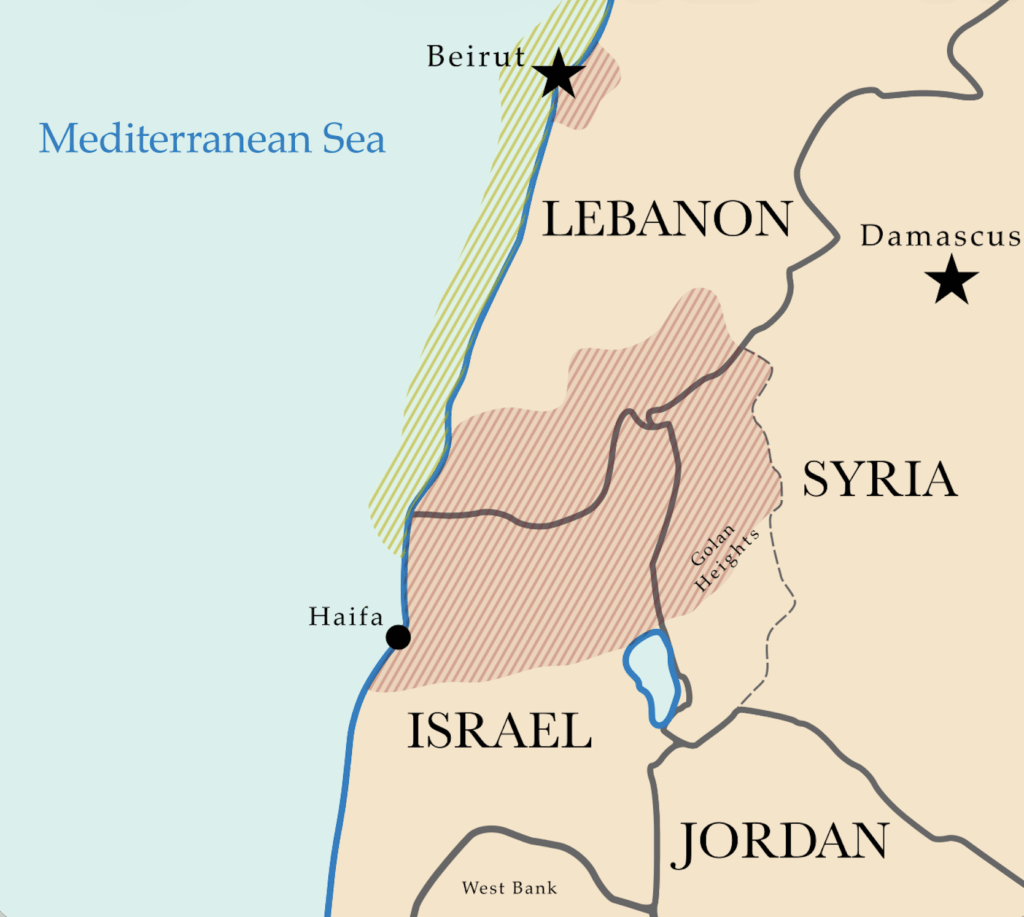
The daily-violated ceasefire between Lebanon and Israel is over a year old. Israel has set December 31, 2025 as deadline for Hezbollah to disarm, warning that if it does not give up its weapons by year’s end, Israeli forces will “work forcefully again in Lebanon.” Not surprisingly, Israel is not satisfied that Hezbollah has withdrawn from south Lebanon, to the north of the Litany River.
While the Lebanese government wants Hezbollah to disarm, it is aware that the Lebanese people do not uniformly support a forced solution to Hezbollah’s weapons.
There are other reasons for avoiding a new civil war. The US-supported Lebanese army is too weak to disarm an Iranian-supported strong Lebanese militia. The composition of the army is substantially Shiite, Hezbollah’s demographic constituency. Funded and trained by Washington, the leadership of the Lebanese army is viewed by a sizable sector of society as being too close to the West.
There is also the question of reciprocity in the enforcement of the ceasefire: while Hezbollah has withdrawn from the south- a remarkable reconciliatory step, Israel shows no willingness to withdraw from Lebanese-occupied territories or to stop its daily violations of the ceasefire- by air strikes ruthlessly applied to whatever is deemed to be a Hezbollah threat.
Despite some hesitation from the White House, Washington is increasingly putting pressure on Lebanon to expedite disarming its “Resistance”, with US lawmakers urging Lebanese leaders to “disarm Hezbollah, by force if necessary.” Now, President Trump, the “hero-in-waiting” of peace, does not want Israel to impulsively restart another war with a helpless Arab state.
To avoid a new Israeli invasion, Washington called for a meeting between the two sides last Wednesday. In that meeting, no progress was made, but the mood was described as “positive.” On the 19th of this month, a second meeting is scheduled.
It would be a surprise if another session could achieve a breakthrough in the form of a security and border agreement until a more lasting understanding is reached at the regional level.
What would really make a difference is a bold move from Washington to warn Israel against a new, unjustified war.
Part of the problem with the negotiations is the fact that there are actually four, not only two, parties involved, with differing agendas: Israel, Lebanon, Hezbollah, and the Trump administration.
Israel and Hezbollah each want to see the other neutralized or defeated.
The Lebanese government wants Israeli withdrawal but does not wish to see Hezbollah’s military capabilities lost; it prefers to see a powerful resistance force merge with the Lebanese army.
Regrettably, the US does not seem to care enough about Israel’s withdrawal from Lebanon. Trump is focused on pushing speedy Arab-state normalization with Israel, promoting US exclusive interests in the region, expanding Trump family business in the oil-rich Gulf states, as well as increasing his chances of winning a future Nobel peace prize.
Considering the complexity of motivations and diversity of players in the Israeli-Lebanese conflict, a lasting resolution of tension requires respect for long-ignored issues of justice and better attention to regional harmony.
While the current Lebanese government has taken several reconciliatory steps, Israel’s leadership is still considering another air and ground attack on its fragile neighbor state to inflict maximum damage on the “enemy”.
Trump is the decider.
Ghassan Rubeiz is the former Middle East Secretary of the World Council of Churches. Earlier, he taught psychology and social work in his country of birth, Lebanon, and later in the United States, where he currently lives. He has contributed to political commentary for the past twenty years and has delivered occasional public talks on peace, justice, and interfaith topics. You can reach him at rubeizg@gmail.com
The views and opinions expressed in this article are those of the author and do not necessarily reflect the position of Arab America. The reproduction of this article is permissible with proper credit to Arab America and the author.
Want more articles like this? Sign up for our e-newsletter!
Check our blog here!