Advertisement Close

Entertainment

Casting Call for Elderly Arab Woman in Thesis Film

Casting director Nadine Foty is in need of an elderly Arab woman (age 70-80) to play the role of Samia in a short film called Il Mahal. The film is being produced for a Master’s thesis program by students. There is no compensation, but the film can help young Arab Americans invoke thought and discussion … Continued

Six Flags’ newest theme park may be in Saudi Arabia

By Max Bearak 

The Washington Post 

With its oil economy tanking, Saudi Arabia is searching for new ways to make money. Although the country is mostly desert, has a worldwide reputation for its ultra-conservatism and does not issue tourist visas to non-Muslims, the kingdom has settled on tourism as a focus for the future.

On Monday, that ambition got a lift when the chief executive of Six Flags Entertainment announced that his company, famed for its chain of theme parks, would be investing in Saudi Arabia.

Without giving any specifics, John Duffey said: “We’re very honored to be provided with an opportunity to enter into a partnership to bring Six Flags to the kingdom. … Our parks can provide the entertainment to which Saudis aspire.”

It is unclear whether a Six Flags theme park in Saudi Arabia would adhere to the kingdom’s strict codes, such as limits on mingling between men and women. But it is possible.

An outline of economic diversification called “Vision 2030” that has been promoted mostly by Deputy Crown Prince Mohammed bin Salman calls for tourism spending to increase from $8 billion to $46 billion by 2020. Tourism infrastructure is strongest around the pilgrimage sites of Mecca and Medina, which may make them likely candidates for a new theme park. But Saudi Arabia is also trying to stem the flow of its own citizens’ search for entertainment abroad. Neighboring Qatar and United Arab Emirates have made a global name for themselves as shopping and entertainment destinations, and they both draw plenty of Saudis.

The “Vision 2030” plan makes it clear that the kingdom sees increasing entertainment options as a way of catering to the expanding desires of its citizenry. “We consider culture and entertainment indispensable to our quality of life,” the plan says. “We are well aware that the cultural and entertainment opportunities currently available do not reflect the rising aspirations of our citizens and residents.”

On social media, some were quick to point out the strangeness of the news that a company so directly associated with care-free, summertime fun in the United States would be moving into a country in which morality police roam the streets.

Meanwhile, the deputy crown prince is on the next leg of a U.S. trip to pitch the kingdom’s attempts to move away from its dependence on oil revenue. After a week of meetings in Washington, he heads to Silicon Valley to meet with technology company executives. After that, he heads to New York for sessions with Wall Street investors.

Source: www.washingtonpost.com

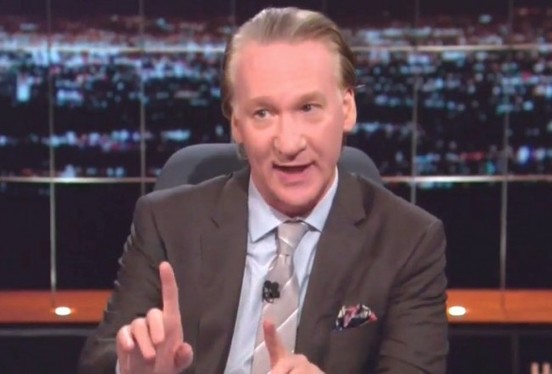
Bill Maher Has a Fear of Muslims Who Talk Back

Dean Obeidallah

Mediaite.com


Bill Maher did it again Friday on his HBO show. He went on his predictable rant against Muslims. And just as predictably, he didn’t have even one Muslim on the panel to respond.

Maher not inviting Muslims to be in his show when he lectures on “what Islam is really about” is like having a discussion on Black Lives Matter with only a panel of white people. True, we see that very thing happen on Fox News, but Maher keeps telling us he’s a liberal. Well, wouldn’t a liberal invite a Muslim who disagrees with him on the show when having such a conversation?

On Maher’s show Friday, he told America that Muslims are not countering the threat of radicalization enough, declaring, “We need to ask more of Muslims.” Well what a great place for a Muslim American activist to explain to Bill and the audience exactly what our community has been doing. And to make it clear that no one wants to stop Muslims from committing acts of terror more than fellow Muslim Ameircans for a few reasons. The first is because we don’t want to see innocent people killed in the name of our faith – it’s morally reprehensible. Plus we are painfully aware of the backlash we endure after such an attack, as we are seeing now after Orlando with shots being fired at a mosque, a Muslim man being punched in New York City, women in hijabs being threatened and more.

And if Maher had on a Muslim who is actually a part of the Muslim American community- as opposed to a Muslim who has no following and is more about selling books- he would have learned that Muslims have turned in suspected terrorists and are working with law enforcement.

The reality is Maher at one time did invite a spectrum of Muslim voices on his show. Maher welcomed people like Congressman Keith Ellison, the first Muslim elected to the U.S. Congress, author Reza Aslan, journalist Rula Jabreal and others.

But Reza and Rula haven’t been back on the show since they challenged Maher’s views on Islam a few years ago after his famous blow up with Ben Affleck. And to my knowledge, no one else from the Muslim American community has been invited on the show unless they are on Maher’s side, such as Ayaan Hirsi Ali.

It appears Maher doesn’t want Muslims on his show that will talk back to him. Or could it be that Maher simply doesn’t know any other Muslim Ameircans? Maybe that’s it- Maher needs more Muslim friends.

On my weekly SiriusXM radio show (which will be expanded this week from once a week to live Monday to Friday at Noon ET on Ch. 121- and yes, that was a shameless plug) I open each program by saying, “I want to be your Muslim friend.” Now given my history with Maher, I doubt he wants me on his show. (Last year, Maher mocked me on his show for my Daily Beast article defending Ahmed Mohammed, the teenager who made a clock. Plus I have written countless articles for CNN and The Daily Beast very critical of Maher.)

But I can promise you this is not about me getting on Maher’s show – it’s about having a person from the Muslim American community who can, and will, push back against Maher’s overgeneralizations and half truths about our faith and community.

So here are a few Muslim Americans I have had on my radio show in the past that Maher might like to be friends with and invite on the show. (The order below is random, not a ranking.)

1. Congressman Andre Carson (D-Ind.) – The second Muslim member of Congress and a great progressive voice.

2. Linda Sarsour- a leader in the Muslim American community in New York City and a tireless fighter against racism, sexism and bigotry.

3. Maysoon Zayid- a comedian and activist who is co-founder of the Muslim Funny Fest and New York Arab American Comedy Festival.

4. Wajahat Ali – a journalist and activist with extensive media credentials.

5. Suhail Khan – a Republican Muslim (yes, they exist) who served in the Bush administration.

6. Haroon Moghul – a writer and activist who is busy building bridges between Jews and Muslims.

And the list goes on from Imam Daayiee Abdullah, the openly gay Imam in the United States to Dalia Mogahed, the Director of Research at the Institute for Social Policy and Understanding and many, many others. I’m happy to share their contact info if Maher’s producers are interested.

But now it’s up to Bill: Is he content simply playing a liberal on TV or will actually be one and invite Muslims who don’t agree with on his show? We will all be watching for an answer.

Source: www.mediaite.com

#RumiWasntWhite – Hollywood Continues to Whitewash Films

BY: Clara Ana Ruplinger/Contributing Writer Recent news sources say that the writer of the box office hit film, The Gladiator, David Franzoni, wants to cast Leonardo DiCaprio as poet Jalaluddin al-Rumi, and Robert Downey Jr. as Shams of Tabriz, Rumi’s mentor. This line up of actors were selected for an upcoming film about the Iranian … Continued

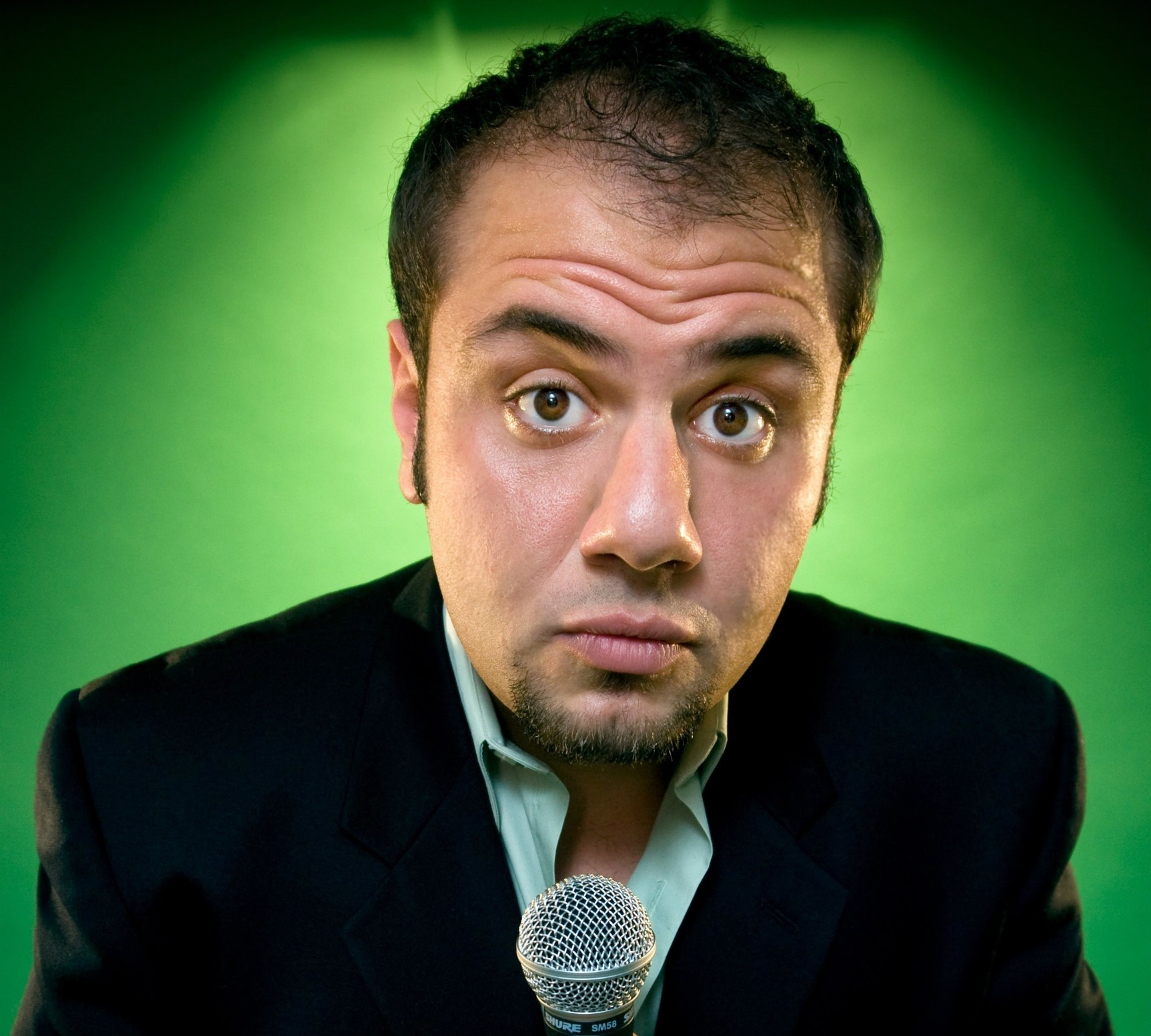
Standup Comedian Mo Amer is a proud Texan and Arab American

By P.F. Wilson 

City Pages


“I was born in Kuwait after the first Gulf War,” says comedian Mo Amer, “or, as I like to call it ‘The Prequel.’” Born to Palestinian parents, Amer lived a comfortable life in Kuwait. “People ask, ‘Why did you leave?’ Very simple. Our house spoke to us.” Houses don’t speak, of course, unless they are in, say, Amityville, New York, but Amer elaborates: “If a bomb lands a 100 feet from your house, it will speak to you. Boom! ‘Get out!’”

Amer’s parents sent him and his brother to the U.S. when he was about nine years old. Fortunately, he was fluent in English, although there was still some culture shock. “I went to a nice, private British school in Kuwait,” he says. “I spoke British English. I wore a bow tie and a vest.”

Until their parents came to America, Mo’s brother was his guardian, and enrolled him in public school in Houston. “My brother neglected to tell them I spoke English, so they put me in an English as a second language class. I was the only guy who spoke English.” His classmates immediately began speaking Spanish to him. “I have no idea what you’re talking about,” he says in an English accent. “I think my parents sent me to the wrong country!”

Sadly, Amer’s father passed away just a few years after he came to Texas. When he wasn’t skipping school, Amer began acting out in class. A teacher intervened, and encouraged him channel that energy into more artistic pursuits. Having seen Bill Cosby at the Astrodome a few years earlier, Amer decided comedy would be his focus. 

Watching Amer perform today, his Arab/British English background isn’t immediately apparent, as he is decidedly a Texan. “Damn right,” he agrees. “I do take pride in being a Texan. All my memories and childhood friends I grew up with are from there, so I absolutely have an affinity and a special place in my heart for Texas.”

He does go into his heritage quite a bit onstage, however, such as when he talks about performing in the South. “I was working in Arkansas, and everything was going great,” he tells an audience. “People are laughing, and then I say I’m an Arab-American. Suddenly the whole room gets quiet. One guy in the back goes, ‘Ah, hell no.’ One black couple got up and left.”

Amer isn’t averse to poking fun at his culture, though, or even his own name. “I didn’t know how popular my name was until I watched the Egyptian soccer team on ESPN Deportes,” he says. “They were showing the play-by-play: ‘Mohammad has the ball and passes to Mohammad to Aqmed to Mohammad to Mohammad, back to Mohammad, Mohammad to Mohammad to Aqmed to Mohammad. Mohammad! Goal!’ Was that just one guy on the team passing the ball to himself?”

That bit always kills with audiences, but as an observer of all things, including culture, Amer is keenly aware of the current U.S. climate — one that in some circles is hostile to his culture. That’s why, he feels, it’s even more important that he be a successful comic.

“People will look at it and go, ‘Wow, this guy did it in this time,’” he says, “because when I first started, 20 years ago, there was only like two or three of us that were doing standup from my background.” Amer feels he has an obligation to future generations. “I want to introduce people, through this art form, that we’re something other than terrorists or the evil Muslims that are often portrayed in the media.”

“It’s surprising America hasn’t learned from its previous mistakes and continues to experience the same crap it did with Japanese Americans in World War II or black people in the Civil Rights movement, and way before that,” he says. “I think it’s really important to be able to introduce our community to people so they can see who we really are, and I think standup is great for that purpose. I love being a standup for that reason. I get to talk about things from my perspective and my own experiences and people can walk away with a new perspective. But it’s not a specific agenda. My goal is to be hilarious.”

Source: www.citypages.com

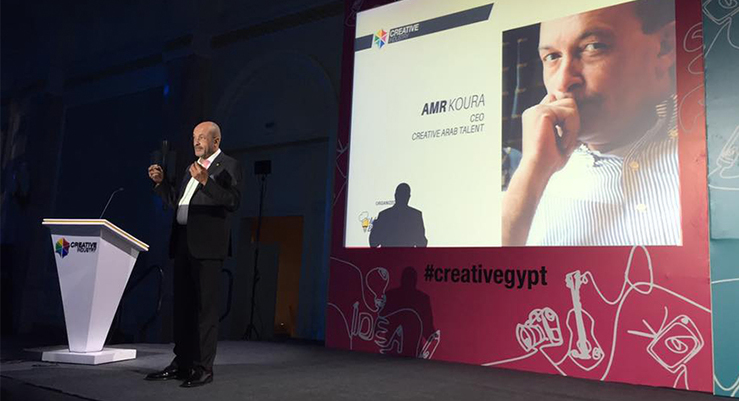
From Cairo to California: Meet the Arab world’s super-agent

By establishing talent agency CAT, Egyptian producer and film director Amr Koura hopes to bridge the cultural gap between the Arab world and the West.


By Shahira Amin

Al-Monitor


Egyptian producer and director Amr Koura is a social entrepreneur in every sense of the word. Seizing opportunities missed by others, he has used media to deliver inspiring, educational content that promotes positive social change.

Success seems to come naturally for Koura, who in the summer of 2000 made “Sesame Street” accessible to millions of Arabic-speaking preschoolers in the Middle East through an Arabic-language adaptation of the popular US children’s educational TV series. Just months after it premiered in Egypt, the local “Sesame Street” co-production named “Alam Simsim,” which literally translates into “Simsim’s World,” was already among the top five most-watched children’s TV shows in the country, reaching some 12 million children. The Egyptian cast of “Alam Simsim” muppets provides much-needed role models for the young children, encouraging them to take pride in their culture while inspiring them to pursue their academic interests and fulfill their aspirations.

Following the success of “Alam Simsim,” Koura produced the Arab World’s first TV teen drama serial titled “Al Jamaa” (“The University”) targeting teenagers. Seeking to promote diversity and tolerance, the TV drama also tackled many of the problems faced by young people in the Middle East and North Africa. 

More recently, Koura has broken new ground, setting up the Middle East’s first and thus far only Creative Arab Talent agency (CAT) in Cairo. The concept of creative talent agents is little known in the Middle East, and initially there was a great deal of skepticism toward the work of the new agency.

“The biggest challenge we faced when we launched in April 2015 was convincing talent to sign up with the agency and to trust us with their talent. It took a while for the artists to warm up to the idea of a ‘middleman’ as they had previously only dealt directly with producers,” Koura told Al-Monitor. “We also had to convince producers that we were not there to push prices higher but rather were there to help them by suggesting the best talent for the roles and intervening when there are problems on location.”

Pitching talent to producers and the market as a whole, CAT agency negotiates the terms of the artists’ contracts on their behalf. It also advises them on the best choices to make, helping them plan and develop their careers.

The agency’s clientele made up mostly of Egyptian actors and actresses has steadily grown in the first year with the company currently boasting a 30-strong roster; dozens more are on the waiting list. Koura said that he is picky and handles only “top and promising talent.” Among those who have entrusted the agency with administering their business affairs are Egyptian superstar Yousra, Jordanian producer and actress Saba Mubarak, and budding actress Amina Khalil. The agency is not limited to solely handling acting talent but caters to a variety of artistic talent including writers, satirists, stand-up comedians and film directors. Koura announced in a Facebook post on April 23, “Very proud to have the Master Illusionist Ahmed El Bayed to our select group of talents ‪#‎CAT‬.”

CAT has also recently signed a marketing and promotional agreement with Egyptian comedian Ahmed Amin, which will take him on an international tour that includes the United States, the United Kingdom and the Gulf states. 

“We have signed more than 25 contracts for our various clients ahead of the month of Ramadan, which is a great success for year one,” Koura said. The fasting month is traditionally a peak time for TV viewing in the Middle East and the Gulf states with the screening of new soap operas, some of which are produced especially for broadcast during the month of fasting.

A little over a year after establishing the agency in Cairo, Koura is opening CAT’s new office in Los Angeles. He hopes it will help Arab talent penetrate the Hollywood scene and vice versa, acting as a “cultural bridge between East and West.”

While Koura acknowledges it may be difficult to introduce Arab talent to Hollywood, he said, ”This is not impossible.” He added that the late Egyptian superstar Omar Sharif made his English-language film debut with “Lawrence of Arabia” in 1962 before starring in “Doctor Zhivago” three years later and then featuring in other American and British productions.

In recent years, a handful of actors from the Middle East have also managed to make a name for themselves in Hollywood, including Egyptian actor Amr Waked, who played the policeman in Luc Besson’s American-French science fiction film “Lucy” and also starred in Netflix’s historical epic “Marco Polo.” Palestinian actor Ali Suliman has made appearances in several American movies, including “Lone Survivor” and “Body of Lies.” Furthermore, a number of Arabs have worked or are currently working off camera in big international productions, including as videographers and lighting and sound technicians.

When the demand for Arab talent arises in international markets, Koura hopes that he would be “the point of contact in the Middle East.” He believes there is also a growing demand for foreign talent in the Arab film industry, and he wants his agency to recruit that talent when and if it is needed. He also hopes to help in the creation of Arab-international co-productions and other joint venture projects that involve collaboration from both sides. It is to this end that Koura is currently meeting with heads of some of the main Hollywood agencies such as UTA “to knock on doors” and “probe prospects of cooperation with them” during his two-week visit to Los Angeles that ends on June 12. On the agenda is a meeting with Netflix’s Ted Sarandos to discuss the latter’s proposal to create “a really well-scripted series about contemporary life in the Middle East.”

“We have a distinct advantage as we are located in the Middle East and have access to the top writers and directors whom we can recommend, so that this project can see the light,” Koura said.

Koura believes that there are a number of advantages to cross-cultural collaboration, not least among which is clearing misconceptions and doing away with the stereotypes.

“The world is becoming one big village. Cross-cultural content is being aired all around the world, and we need to put our talent and our stories to the world to remove the stereotyping of Arabs and Muslims as terrorists. When you see a good piece of drama or film from a certain country, it reflects positively,” he said.

At this time of political turmoil and violence in the Middle East, CAT’s work takes on added significance and can go a long way in fostering tolerance and mutual understanding and bridging the cultural gap between the Arab world and the West.

Source: www.al-monitor.com

Arab American Contestants in Miss U.S.A. Pageant 2016

BY: Kristina Perry/Contributing Writer A new Miss U.S.A. was crowned Sunday night, and this year’s crown went to Army Reserve officer Deshauna Barber, representing the District of Columbia. She is the first army officer to win the crown, and was a fan favorite from the start of the competition. The winner of Miss U.S.A. goes … Continued

Laith Al-Saadi, Arab American Artist to Perform at Dearborn, Michigan’s Homecoming Festival

BY: Andrew Hansen/Contributing Writer At this year’s annual Homecoming Festival on August 5-7, 2016 in Dearborn, Michigan, local festivalgoers are in for a quite a show as they welcome native Michigander and Arab American musical performer, Laith Al-Saadi. Al-Saadi was a top performer on the hit music competition television series The Voice, and was specially … Continued

Palestinian reality TV show ‘elects’ the next president

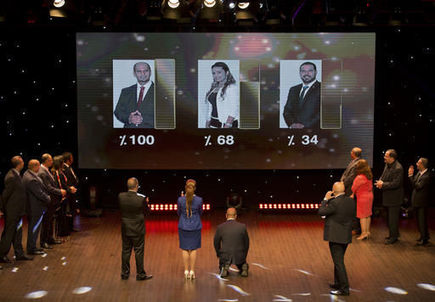
The winner of this “election” for Palestinian president was a 24-year-old lawyer from east Jerusalem, who defeated a woman and a Christian from Bethlehem. But this was reality television — not real life — and the vote came on a TV show called “The President” that is meant to educate young Palestinians about politics.

In reality, Palestinians haven’t had a chance to cast an actual ballot for president in over a decade.
The spirited competition among the three young finalists has drawn attention to the shortcomings of the Palestinians’ experiment with democracy, complicated by Israeli military occupation, now in its 50th year, and two decades of failed peace efforts.


The last time the Palestinians in the West Bank and Gaza Strip elected a leader was in January 2005, when current President Mahmoud Abbas won by a large margin. Now polls indicate widespread discontent with Abbas and the long-ruling entrenched leadership around him.


“This show was an opportunity for the Palestinian youth to raise their voice and deliver their message,” said Waad Qannam, the winner of Thursday night’s finale, who was awarded a new car and is expected to meet Abbas.


“The show proves that we have skillful young leaders who can take over when there is an opportunity,” he said. “This is a message to the politicians to open the gates for the new generation to practice politics and prove themselves.”


The show’s format brings in elements from “Arab Idol,” a popular show in which viewers across the Middle East choose their favorite singer by voting with text messages, as well as the “The Apprentice,” the international reality show that helped put another presidential hopeful, Donald Trump, in the spotlight.
The finalists were Qannam; Fadi Khair, 30, a male nurse from the West Bank; and Naameh Adwiya, a 22-year-old woman and political science graduate from east Jerusalem. All are active in Abbas’ Fatah party.


Several hundred people packed a Ramallah auditorium for the finale. A Palestinian flag stood on the side of the stage, while a black screen with floating stars, along with the show’s logo, formed the backdrop. Senior politicians and security officials were in the audience, although Abbas was not.


Maan, a local TV network, has been airing the show for the past six months. The program is funded by Search for Common Ground, a U.S. nonprofit group that promotes conflict resolution. The goal was to give young Palestinians an opportunity to practice running for office and voting for a candidate.
Suheir Rasul, the group’s local co-director, said the show was the only place where Palestinians in the West Bank, Gaza and many other places can vote.


“Palestinian youth do not get the opportunity to engage with political leaders on this magnitude. This program is not just a TV show; it’s actually the only true democracy in practice,” she said.
It is the second time the Palestinians have held the contest.
Raed Othman, the program’s spokesman, said 1,180


Palestinians ages 20 to 40 applied. A committee of politicians, business leaders and public personalities narrowed the list to 48 contestants. The final three were selected by a panel of judges and votes by viewers.


Over six months, the list was whittled down through written tests and interviews about public affairs and politics. Contestants also took courses in communications and public service, and put forth plans for increased political participation and better public services.


Like any good politician, the finalists were polished and generally cautious in their responses, venturing into controversial topics only when asked by the judges.
But during Thursday’s finale, they were asked a range of questions on issues affecting Palestinians, such as Israel’s demand to be recognized as the state of the Jewish people, recent executions by Hamas, and socio-economic problems in refugee camps.


Khair, a member of the West Bank’s Christian minority, said in one of the final episodes that as president, he would work to change laws including one that says the Palestinian president must be a Muslim. He called the law unjust.


Adwiya said she would allow university students to demonstrate against her or rip down posters of her in the streets. “Yes, I would let them do that and express their feelings,” she said.
Abbas has shown little tolerance for dissent, frequently breaking up protests and, in several cases, jailing people for critical Facebook posts.


The prospects of reaching peace with Israel rarely came up, and when the topic was mentioned, contestants tended to take strong positions against Israel.


Qannam said Israel was responsible for the current wave of Israeli-Palestinian violence and said he wouldn’t call on Palestinians to stop stabbing attacks.


Abbas was elected in January 2005 for what was supposed to be a five-year term.


But the rift between his Fatah party and the Islamic militant group Hamas, which led to the establishment of rival governments in 2007, has prevented new presidential and parliamentary elections.


Hamas remains in control of Gaza, while the Fatah movement governs in the West Bank. Both camps are entrenched in their respective turf, and there’s no sign they would risk losing control by holding elections


In his decade in power, Abbas has failed to deliver on a promise to lead Palestinians to independence, with negotiations on terms of statehood stalled since Israeli hard-liner Benjamin Netanyahu became prime minister in 2009. The Palestinian economy is stagnant, and polls have indicated two-thirds of Palestinians want Abbas to resign.


“Why watch virtual elections? We need real elections,” said Hisham Atta, a 21-year-old university student from Ramallah.
But Sawsan Abu Adel, 28, said she has enjoyed the show.
“It’s good to see these boys and girls competing and dreaming,” she said. “But in reality, the ones who take the jobs are the sons and daughters of the officials.”

Source: www.oaoa.com

Art Can Combat Islamophobia

By Anisa Mehdi Islamic Monthly “It’s important for mainstream Americans to hear Muslim voices,” says Omnia Hegazy, a singer-songwriter. Hegazy is not talking about political commentary, debunking Donald Trump or how some Muslims try to explain away the horrors of Daesh; she is talking about artist voices. With her acoustic guitar and bluesy lyrics backed up … Continued

332 Results (Page 18 of 28)