By Roqayah Chamseddine
Paste Magazine
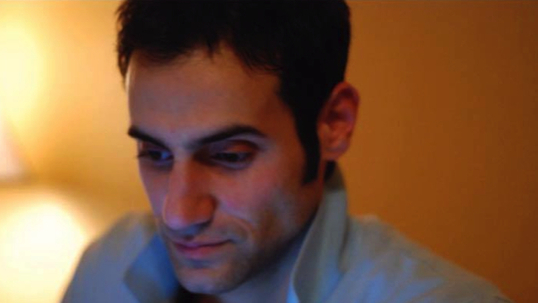
The Aug. 12 killing of 37-year-old Khalid Jabara, a Lebanese-American and Oklahoma resident, by 61-year-old Stanley Vernon Majors, in front of the family’s porch, underscores the impact of both anti-Arab sentiment and a national climate entrenched in racialized Islamophobia. According to a special report by Georgetown University, When Islamophobia Turns Violent, during the course of 2015 alone there were at least 174 reported incidents of anti-Muslim violence, including 12 murders. Khalid Jabara, an Arab Christian, was targeted by a man who, according to the Jabara family, “was a hateful person” who had made anti-Muslim remarks and had called them “dirty Lebanese.” The language employed by Majors echoes mainstream rhetoric employed by lawmakers and laypersons alike, rhetoric which has a direct effect on non-Muslim communities perceived as Muslims.
In Racializing Islam Before and After 9/11, Hilal Elver writes that the majority of Arabs in the United States are Christians:
“Unlike other groups, the category of Muslim in the United States covers not only immigrant communities but also includes a significant number of native born African-American citizens. This complexity is one of the markers of the racialization of Islam in the United States, as “Muslim looking people” are subject to hate crimes and social discrimination.”
Immigrants to the United States from Muslim-majority countries have come in waves. The first wave included those who arrived in the late nineteenth and early twentieth century. According to Helver, between the 1870s and World War II these immigrants were in varying degrees already integrated and assimilated, and came predominantly “from the Arabic speaking parts of the Ottoman Empire, a geographic area of the Eastern Mediterranean shores that includes the current states of Jordan, Lebanon, Palestine, and Syria.” Khalid Jabara’s parents had immigrated in the early 1980s to the United States from Lebanon.
Just weeks after 9/11, a public opinion survey conducted by Gallup revealed that most respondents believed Arab and Muslim Americans should be profiled and targeted for surveillance and interrogation in the name of national security. Some of the survey’s findings included “a substantial proportion of Americans [claiming to have] become less trusting of Arabs living in this country.” According to an ABC News/Washington Post poll taken between September 13, 2001, 43% of Americans said “they think the attacks will make them more suspicious of people whom they think are of Arab descent.”
In the 2005 documentary by filmmaker Jaqueline Salloum, Planet Of The Arabs, a compilation of clips taken from major films are edited to show a relentless cascade of stereotypes against Arabs—from hijackers and patriarchal barbarians to submissive, veil-clad women. In the film Reel Bad Arabs: How Hollywood Vilifies A People, based on the book by Jack Shaheen, director Sut Jhally shows how Arabs are portrayed as subhuman, their surroundings based on orientalist fantasies—vast desert land accompanied by a mish-mash of cliché bellydancing music. Viewers are introduced to the ominous Arab caricature which appears in almost every mainstream film. This passage, from an interview with Shaheen, is representative:
JACK SHAHEEN: Disney’s Aladdin was seen by millions of children worldwide. It was hailed as one of Disney’s finest accomplishments, but the film recycled every old degrading stereotype from Hollywood’s silent black-and-white past.
ALADDIN OPENING MUSIC: Oh, I come from a land, from a faraway place, where the caravan camels grow, where they cut off your ear if they don’t like your face. It’s barbaric, but, hey, it’s home.
JACK SHAHEEN: “Where they cut off your ear if they don’t like your face. It’s barbaric, but, hey, it’s home.” Now, how could a producer with a modicum of intelligence, just a modicum of sensitivity, let a song such as that open the film? 300 movies, nearly 25 percent of all Hollywoodmovies that, in one way or another, demean Arabs, contain gratuitous slurs, or they portray Arabs as being the butt of a cheap joke. claims that “in more than 300 movies, nearly 25% of all Hollywood movies that in one way or another demean Arabs, contain gratuitous slurs or they portray Arabs as being the butt of a cheap joke.”
These documentaries show, in a very in-your-face manner, just how the public’s perception of Arabs has been shaped by the media, as it has many other marginalized groups.
The demonization of Arabs has far-reaching implications that allow for targeted killings, as we’ve seen in the case of Khalid Jabara, and also aid in justifying the expansion of surveillance measures. The intrusive monitoring program conducted by the NYPD, which led to local businesses, community centers, mosque, and student organizations associated with Arabs or Muslims being surveilled, is only one recent example. Unsurprisingly, the understandable paranoia that this type of monitoring caused remains. The image of Arabs, many of whom have become victims of the racialization of Islam and Muslims, has led to the curtailing of civil rights being justified by lawmakers and the public for the sake of national security.
In an official statement released by the Jabara family, they convey their anguish at a hate crime that could have been prevented, had the authorities taken diligent action. “Despite the overwhelming evidence we marshalled of a palpable threat of danger and hate facing us on a daily basis, the existing legal mechanisms proved insufficient to protect our beloved Khalid and our mother,” the statement reads. The racial profiling of Arabs, and the association of all Arabs with Muslims, has created an environment that threatens to cause more irreversible damage to both communities, unless these abuses are acknowledged and genuinely addressed. Until then, social pressure based on subjection remains focused tightly on Arabs, and Muslims, intimidating even those who cling to their nationalism. The Jabara family have routinely referred to themselves as “proud Americans,” and still they were not safe.
Source: www.pastemagazine.com


 Loading ...