Advertisement Close

Religion

Gaza report: One day in Ramadan

BY: Pam Bailey/Contributing Writer It is 3 a.m. and time for suhoor, the last meal before fasting begins during the days of Ramadan, one of Islam’s holy months. The call to prayer will waft through the clear night air at 3:50, signaling the start of the day’s long hot hours, with no food or even water allowed … Continued

NUSACC Hosts Fifth Annual Iftar Dinner in Washington, DC

Press release: The National U.S. – Arab Chamber of Commerce (NUSACC)


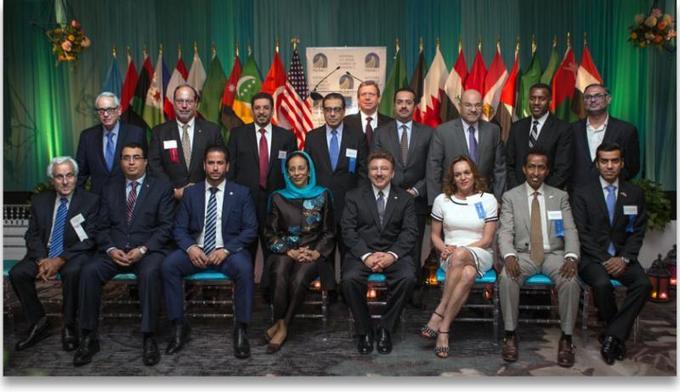
The National U.S. – Arab Chamber of Commerce (NUSACC) this week hosted its fifth annual Ramadan Iftar celebration in honor of the Arab diplomatic community and the League of Arab States. Over 200 leaders of numerous faiths attended the high-profile gathering held at The Ritz-Carlton Hotel in downtown Washington DC. Attendees included business leaders and senior U.S. and Arab government officials, including Chiefs of Mission from Bahrain, Iraq, Lebanon, Oman, Somalia, Yemen, and the League of Arab States.

Breaking the fast (Iftar) during Ramadan is a traditional event celebrated daily by more than 1.7 billion Muslims around the globe. Ramadan is a holy month of spiritual cleansing in which adherents of Islam rededicate themselves to God, worship, and reading the Quran, Islam’s holiest book. The month-long period is marked by fasting, personal sacrifice, self discipline, and increased generosity, especially toward the underprivileged.  

“In the spirit of Ramadan, let us count our blessings,” said David Hamod, President & CEO of NUSACC. “The Holy Month gives us an opportunity to celebrate what is good in the world, but it also encourages us to tackle challenges in order to make the world a better place.”

Source: campaign.r20.constantcontact.com

Bill Maher Has a Fear of Muslims Who Talk Back

Dean Obeidallah

Mediaite.com


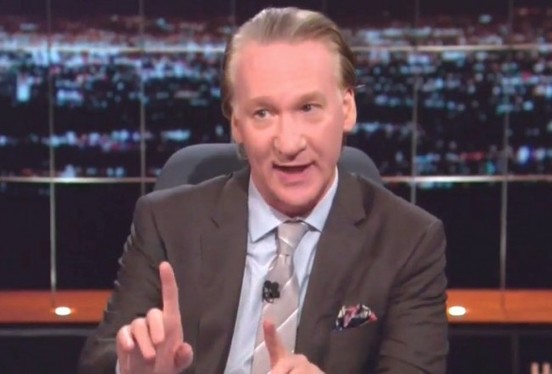
Bill Maher did it again Friday on his HBO show. He went on his predictable rant against Muslims. And just as predictably, he didn’t have even one Muslim on the panel to respond.

Maher not inviting Muslims to be in his show when he lectures on “what Islam is really about” is like having a discussion on Black Lives Matter with only a panel of white people. True, we see that very thing happen on Fox News, but Maher keeps telling us he’s a liberal. Well, wouldn’t a liberal invite a Muslim who disagrees with him on the show when having such a conversation?

On Maher’s show Friday, he told America that Muslims are not countering the threat of radicalization enough, declaring, “We need to ask more of Muslims.” Well what a great place for a Muslim American activist to explain to Bill and the audience exactly what our community has been doing. And to make it clear that no one wants to stop Muslims from committing acts of terror more than fellow Muslim Ameircans for a few reasons. The first is because we don’t want to see innocent people killed in the name of our faith – it’s morally reprehensible. Plus we are painfully aware of the backlash we endure after such an attack, as we are seeing now after Orlando with shots being fired at a mosque, a Muslim man being punched in New York City, women in hijabs being threatened and more.

And if Maher had on a Muslim who is actually a part of the Muslim American community- as opposed to a Muslim who has no following and is more about selling books- he would have learned that Muslims have turned in suspected terrorists and are working with law enforcement.

The reality is Maher at one time did invite a spectrum of Muslim voices on his show. Maher welcomed people like Congressman Keith Ellison, the first Muslim elected to the U.S. Congress, author Reza Aslan, journalist Rula Jabreal and others.

But Reza and Rula haven’t been back on the show since they challenged Maher’s views on Islam a few years ago after his famous blow up with Ben Affleck. And to my knowledge, no one else from the Muslim American community has been invited on the show unless they are on Maher’s side, such as Ayaan Hirsi Ali.

It appears Maher doesn’t want Muslims on his show that will talk back to him. Or could it be that Maher simply doesn’t know any other Muslim Ameircans? Maybe that’s it- Maher needs more Muslim friends.

On my weekly SiriusXM radio show (which will be expanded this week from once a week to live Monday to Friday at Noon ET on Ch. 121- and yes, that was a shameless plug) I open each program by saying, “I want to be your Muslim friend.” Now given my history with Maher, I doubt he wants me on his show. (Last year, Maher mocked me on his show for my Daily Beast article defending Ahmed Mohammed, the teenager who made a clock. Plus I have written countless articles for CNN and The Daily Beast very critical of Maher.)

But I can promise you this is not about me getting on Maher’s show – it’s about having a person from the Muslim American community who can, and will, push back against Maher’s overgeneralizations and half truths about our faith and community.

So here are a few Muslim Americans I have had on my radio show in the past that Maher might like to be friends with and invite on the show. (The order below is random, not a ranking.)

1. Congressman Andre Carson (D-Ind.) – The second Muslim member of Congress and a great progressive voice.

2. Linda Sarsour- a leader in the Muslim American community in New York City and a tireless fighter against racism, sexism and bigotry.

3. Maysoon Zayid- a comedian and activist who is co-founder of the Muslim Funny Fest and New York Arab American Comedy Festival.

4. Wajahat Ali – a journalist and activist with extensive media credentials.

5. Suhail Khan – a Republican Muslim (yes, they exist) who served in the Bush administration.

6. Haroon Moghul – a writer and activist who is busy building bridges between Jews and Muslims.

And the list goes on from Imam Daayiee Abdullah, the openly gay Imam in the United States to Dalia Mogahed, the Director of Research at the Institute for Social Policy and Understanding and many, many others. I’m happy to share their contact info if Maher’s producers are interested.

But now it’s up to Bill: Is he content simply playing a liberal on TV or will actually be one and invite Muslims who don’t agree with on his show? We will all be watching for an answer.

Source: www.mediaite.com

US: Moroccan American Community Holds Interfaith Iftar

Morocco World News


Hundreds of people of all faiths gathered on Saturday, June 18, at the Beachmont School Cafeteria to celebrate an interfaith Iftar organized by the Moroccan American community of Revere. The event was attended by religious leaders representing all faiths in the city of Revere to promote a culture of peace, tolerance, and coexistence.

Muslims do not eat or drink during the day for the month of Ramadan. At the end of the day an Iftar is held. An Iftar is a meal served at the sunset to break the day’s fast. The Iftar celebration varies from one cultural group to another. Therefore, people who attended this event were allowed to observe and experience an Iftar the Moroccan way. This includes trying some of the mouth-watering Moroccan dishes and enjoying some great music from Morocco, which was performed by the Noor Ensemble.

During this special Iftar, all the guests had an opportunity to speak, on a personal capacity, with officials who attended the event. Mayor Arrigo addressed the Moroccan community and thanked them for their generosity and hospitality. He added that the Moroccan community is carrying on the tradition of immigrants who chose to pursue their hopes and dreams in Revere. He continued by telling those in attendance that they have contributed to our collective story — a story of persistence, faith and family.”

The Moroccan-born city’s chief administrative officer (CAO), Omar Boukili, interacted with the Moroccan community to learn more about their concerns. “Events like this are very important so we can get to hear from the diverse community of Revere,” said Boukili.

Rachid Moukhabir, a proud Moroccan American community organizer and a longtime Revere resident, spoke to the audience on behalf of the Muslim community condemned the recent horrific attack against the LGBT community in Orlando, Florida. “Our entire community should not be held responsible for the actions of ISIS or any other terrorist group,” said Moukhabir. (but FBI has recently said that Omar Mateen was not affiliated with ISIS.)

The night started with a recital of some verses from the holy Quran by Imam Soufyan, which were translated to English by the 9-year-old Ninna Nafai. Then, all governmental and religious leaders were recognized. After Al-Adhan, the call to prayer, and right before the dinner started, Muslims prayed Salat Al-Maghreb, sunset prayers. Next, everyone got to enjoy the Iftar. While adults were enjoying the event, their kids were having a good time with John the balloon man.

This event was mainly sponsored by volunteers from the community as well as some Moroccan and Arab businesses: Casablanca House of Pastry, the Good Diner, Tibari Travels, Omar Financial Services, Abeer & Associates Investment Group, and HHH Financial Solution.

Source: www.moroccoworldnews.com

Mashrou’ Leila’s gay, Muslim singer speaks out against hate ahead of Los Angeles concert

By Michelle Mills

SGVTRIBUNE.com

In the wake of the horrific shooting at the Orlando gay nightclub Pulse, Hamed Sinno, lead vocalist of the band Mashrou’ Leila, spoke out on Twitter.

“What a time to be an Arab-American queer Muslim,” Sinno, referring to himself, posted to his account June 12. “F— hate. My heart is with the families of the victims. I wish you strength and clarity.”

Based in Beirut, Mashrou’ Leila is controversial for its songs about sexual and religious freedom. Earlier this year, the band’s scheduled concert in Jordan was shut down by the government, which later backtracked after fans spoke out, but only after it was too late for the men to perform.

Mashrou’ Leila is currently on tour in the United States, and will be in concert 8 p.m. June 17 at Grand Performances at California Plaza in Los Angeles.

Sinno spoke out about the Orlando attack during the band’s sold-out show at The Hamilton in Washington, D.C. on June 13.

“Suddenly, just because you’re brown and queer you can’t mourn, and it’s really not f—ing fair,” Sinno said according to a CNN report. “There are a bunch of us who are queer who feel assaulted by that attack who can’t mourn because we’re also from Muslim families and we exist … this is what it looks like to be called both a terrorist and a f—-t.”

HOW THEY CAME TO L.A.

Grand Performances director of programming Leigh Ann Hahn first saw them when they performed in a showcase during an international music conference in Morocco in 2014.

“I saw them play and I knew that they were perfect for us,” Hahn said in an interview conducted before the Orlando shootings. “Their music is so accessible even whether you understand the lyrics or not. It’s just filled with really great melodic hooks, the rhythms and the textures are really great and layered and you want to listen. You hear one song and you want to hear more.”

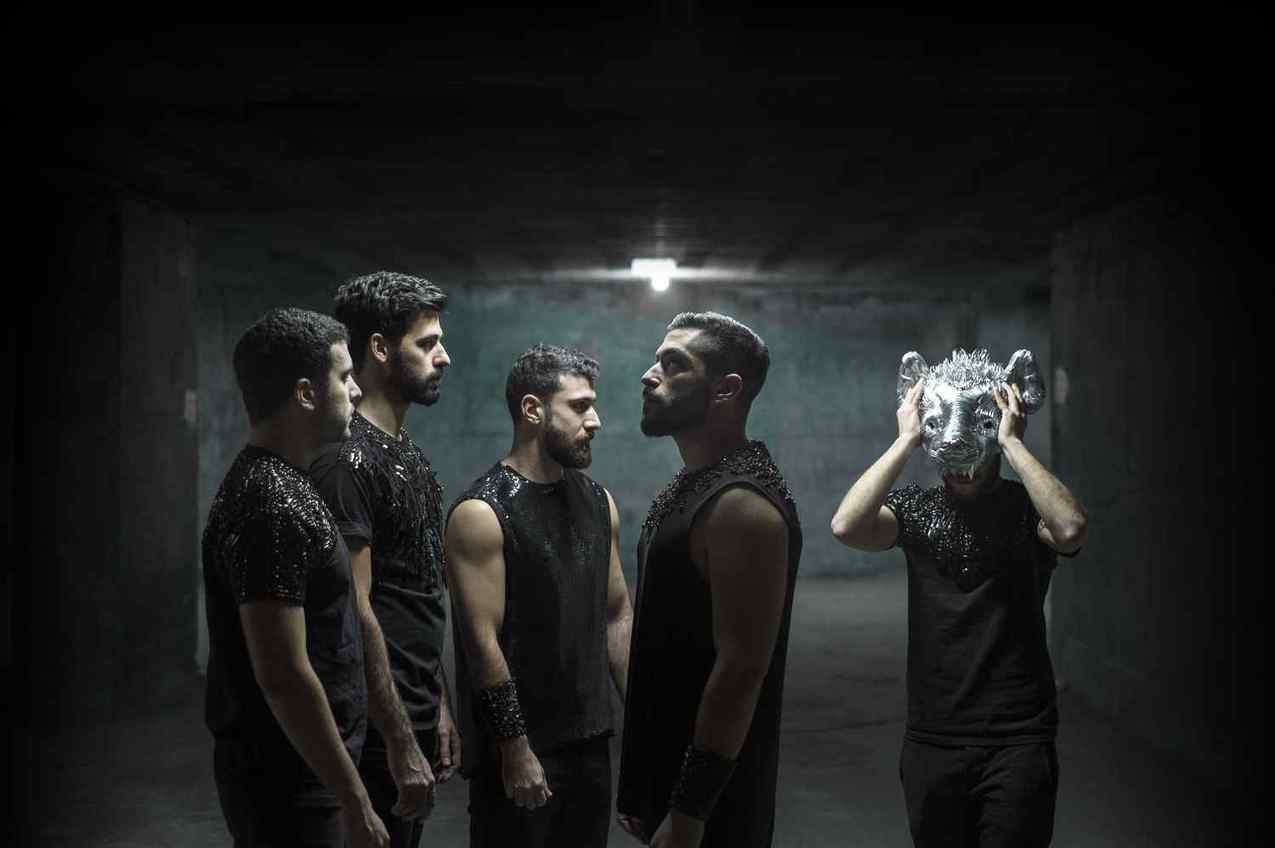
Mashrou’ Leila, vocalist Sinno, violinist Haig Papazian, drummer Carl Gerges, guitarist Firas About Fakher and bassist Ibrahim Badr, formed in 2008 as a music workshop at the American University of Beirut. Encouraged by friends, they began playing small venues and soon got a set in the annual Fete de la Musique (Make Music Day). In 2009 they won a number of awards in Radio Liban’s Modern Music Contest. Mashrou’ Leila’s 2015 album, “Ibn El Leil,” hit number 11 on the international world Billboard Charts.

Mashrou’ Leila’s lyrics are in Arabic, but this hasn’t been an obstacle says Sinno.

“I think live performance has been a really big part of what’s been pushing us in countries that don’t necessarily speak Arabic,” Sinno said in an interview conducted before the Orlando shootings. “We’re a little dramatic on stage. We’re very much aware that it’s a performance and we need to bridge the absence of linguistic communication. I also think that a lot of people are open to listening to music where the lyrics aren’t decipherable to them.”

ONE VOICE AMONG MANY

Mashrou’ Leila’s lyrics have been called brazen, but Sinno doesn’t agree.

“The stuff that we write about never really seems particularly controversial to any of us,” Sinno said. “We just write about the stuff we discuss with our friends, the stuff that we’re interested in. I don’t think that stuff is necessarily more sensitive where we’re from than anywhere else.”

Sinno said that the Western media often fails to recognize that they are just one of many voices addressing social injustice.

“There are thousands of people in prisons across the Middle East because of voicing dissent and taking up action against government and society. It’s almost unfair that these people are being represented by a group of five upper middle-class males from Beirut, of all places. It feels like part of a longer history of coming up with perfect narratives about the Middle East. They’ve come up with this sort of archetypal brown person. It’s like there’s only one story throughout the Middle East,” Sinno said.

Sinno said that the real key to Mashrou’ Leila’s success is their musical composition and internet savvy.

“(Music) got very formulated and the lack of alternative options was essentially what drove us to start making music in Arabic in the first place. That I thought something was missing meant that other people thought that,” Sinno said. “We got to use social media to bypass the mainstream music dissemination and a lot of people wanted to hear something that sounded not exactly like the cultural formula that was there everywhere else.”

UPCOMING SHOWS

Mashrou’ Leila has a few dates left on its North American tour in support of “Ibn El Leil,” including stops in San Diego and New York City.

Source: www.sgvtribune.com

Orlando Killings Rob Young New York Muslims of a Cherished Holiday Respite

By LIZ ROBBINS

THE NEW YORK TIMES

For Muhammad Hannan and other Muslim high school students in New York City, this has been a Ramadan of contrasts and conflicting emotions.

The joy of breaking a 16-hour fast with the first bite of a sweet date. The horror of hearing about the attack on a gay nightclub in Florida that left 49 dead. The drudgery of reviewing a year’s worth of earth sciences and trigonometry notes. The frustration of defending Islam — and the right to be in this country — after another terrorist attack carried out in the name of the Islamic State.

“I just don’t get it,” said Muhammad, a 17-year-old junior at Abraham Lincoln High School in Coney Island, Brooklyn, who immigrated from Pakistan with his family in 2014. “Islam is all about peace. In Ramadan, we don’t even curse. You’re not supposed to do anything bad.”

Ramadan is usually Muhammad’s favorite time. This year, though, the holiday, which encompasses a month of fasting from dawn to dusk, has not offered its usual refuge. Already, Ramadan coincided with the Regents, the series of state tests that most high school students in New York take.

Then on Sunday, a Muslim man born in New York, Omar Mateen, called 911 to proclaim his allegiance to ISIS and opened fire in the Pulse nightclub in Orlando.

Within a day, Donald J. Trump, the presumptive Republican presidential nominee, was renewing his call to ban Muslims from entering the United States.

And the day after that, another student in Muhammad’s English class started echoing Mr. Trump’s call.

“He was talking a lot of bad things, with no proof,” Muhammad said of the classmate. Muhammad replied that there were differences between Muslims like Muhammad Ali and those like Omar Mateen.

“If you can tell the difference between white people and K.K.K., you can at least differentiate between Muslims and ISIS,” Muhammad recalled arguing in class.

How did that student respond? “He said, ‘Because Donald Trump said so,’” Muhammad said. “Everybody in the class was laughing.”

Salwa Mozzeb, 15, who is finishing her freshman year at Millennium Brooklyn High School in Park Slope soundly dismissed Mr. Trump’s proposal. “That’s messed up,” she said on Tuesday, wearing a hijab and speaking in a brassy Brooklyn accent. A naturalized United States citizen, she came with her mother from Syria when she was 9 months old. “I was raised here,” she said. “America is my home.”

Salwa lives in a Bay Ridge apartment with her parents, grandmother and four younger siblings; she has uncles and cousins who live in the same building and on the same block. She volunteers at the Arab American Association of New York, whose headquarters are in Bay Ridge. Her mother, who is from Syria, has a brother who escaped the civil war there and made his way to Sweden. Another relative has been waiting 10 years for a visa to enter the United States.

Once populated largely by Scandinavian immigrants, as well as those of Italian and Irish heritage, Bay Ridge has been transformed like so much of New York. There are nine mosques in the area now, according to Tony Carnes, a sociologist who publishes an online journal, “A Journey Through N.Y.C. Religions.” Many of the store signs on the avenues are written in Arabic.

After the killings in Orlando, Salwa’s father, Abdulnoor Mozzeb, 39, a naturalized American citizen originally from Yemen, warned his daughter to be especially careful on the subway, and to sit near the conductor. The idea annoyed her. “I’m just like any other 15-year-old here,” she said. “I want to hang out and chill. I don’t want to stress about feeling like I’m different because I’m Muslim.”

Mr. Mozzeb approved of her convictions. “She’s strong,” he said. “When it comes to your identity, somebody is going to disrespect you, you got to stand up.”

Salwa’s mother, Manar Al Ahamar, said that in April, outside a pharmacy in Bay Ridge, an older woman had confronted her, telling her to go back to her country and cursing her in front of her 10-year-old son, Ahmed.

Ms. Al Ahamar, 32, said she had just walked away, but had gotten so upset later that her blood pressure soared and she began to have severe chest pains. Salwa had helped her mother into in an ambulance. It was not until Wednesday that her mother revealed what had caused the emergency.

Salwa did not understand how a woman could verbally attack her mother, especially in what she considers her own neighborhood. “If she doesn’t want to be surrounded by Muslims,” Salwa said, “why is she in this community?’”

As for Muhammad, he spends his days in two Brooklyn neighborhoods dotted with mosques. He and his family live in Brighton Beach, and he volunteers at the Council of Peoples Organization, a group in Midwood that serves Muslims, Arabs and South Asians.

In Brighton Beach, he and his older brother, Hassan, often attend a Turkish mosque up the block from their house, or one of three smaller mosques in the area. Though from the outside, Ramadan might seem to be a hardship — rising before dawn to eat, then going back to sleep before getting up again for school — Muhammad and his friends say it is more like a sweet respite.

“We get to fast, we get to stay close to Allah, we pray five times a day,” Muhammad said. “And after, when we pray at night, we go out with our friends and stay out till 1.”

Muhammad described the communal outdoor prayers in his hometown, Karachi, and how, with the streets closed, he and his friends would play cricket late into the night.

He said he missed the Ramadan of his childhood, but understood why his family moved to the United States.

“My parents wanted us to have a good education,” he said. He and Hassan, 21, who attends the Borough of Manhattan Community College, are permanent residents.

Salwa’s parents want the same for their children. “If you have education, you are a different person,” said Salwa’s father, who works as a doorman at a hotel in Midtown Manhattan.

The family lives half a block from their mosque at the Islamic Society of Bay Ridge, decorated on the outside this month with strings of colored lights. At 10 p.m. every night, Salwa and her friends go through the women’s entrance and, bypassing the hot, crowded third floor, climb to the roof.

They stay there in the soft breeze as the last embers of sunset fade and the lights of the Verrazano-Narrows Bridge twinkle in the background. Like most high school girls, they check their phones, compliment one another on their outfits and discuss their exam schedules, while younger children turn cartwheels nearby.

When the prayers begin, the girls go into the stairwell so they can hear through the speakers, kneeling on the cold linoleum to be closer, spiritually, to Allah.

Muhammad and his family usually pray at home before going to the mosque for evening prayers. Then, often until early morning, he and Hassan engage in philosophical debates in the room they share, discussions about American values versus their Pakistani upbringing.

“Usually,” Muhammad said, “it’s about sneakers.”

He wants to add to his Air Jordan collection, even at $250 a pair. His brother counters: “You can feed four to five homeless people with that.”

Because of Ramadan, the brothers were awake before dawn on Sunday when the first reports of the massacre in Orlando began to appear on their phones. “I was literally praying, ‘Don’t be a Muslim,’” Hassan said.

Just the week before, the brothers had watched as America mourned one of its most famous Muslims, Muhammad Ali. They were proud. Now, they are hurt and angry.

“It takes people like Muhammad Ali to do good things for Islam,” Muhammad said, “and then it takes seconds for people like Omar Mateen to destroy everything.”

Source: www.nytimes.com

Ramadan 2016 Recipes: Making the Most of Dates

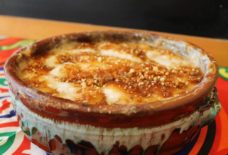
                      Plavaneeta Borah NDTV Food Ramadan is that time of the year, which is considered very auspicious by the Muslims. It is also a festival that is eagerly awaited for by food enthusiasts because of finding the opportunity to sample a range of delectable traditional … Continued

Diabetic Patients and Fasting in Ramadan

BY: Dr. Sameh Ahmed Ghareeb/Contributing writer (May Allah accept this article as a Sadaqa in behalf of the soul of my late dad) Around 50 million people with diabetes worldwide fast during Ramadan. For the next few years, Ramadan in the US will be in the summer months, and the length of fasting is very … Continued

LGBT Muslims React to Orlando Shooting

An unidentified man, wrapped in a Rainbow Flag, lights a candle during a vigil in Washington, Monday, June 13, 2016. Victoria Macchi Voice of America “This is what it looks like to be called both a terrorist and a faggot,” Hamed Sinno said from a Washington, D.C. stage early in his band’s concert Monday night, … Continued

LGBT Muslims do exist, and they are grieving. It’s time for acceptance.

By Amanullah De Sondy 

The Washington Post

In reaction to the mass shooting at a gay nightclub in Orlando, people hug outside the Stonewall Inn near a vigil for the victims in New York on Sunday. (Bryan R. Smith/AFP via Getty Images)
Muslim Americans. LGBT Americans. One would imagine that the marginalized would unite.

From the straight Muslim man who is profiled at the airport for his bushy, long beard to the transgender Muslim who fears being shunned from the mosque held so dear to heart and faith — is there so much distance?

Yet those who are marginalized are not immune to their own prejudices and phobias. Omar Mateen, who killed at least 49 people in a gay nightclub in Orlando on Sunday morning, offers a chilling example.

I’ve spent more than a decade researching Islamic masculinities, including five years living and teaching in Florida before I moved last year. I have heard some Western Muslim leaders step haltingly toward acceptance. But most of what I have heard, when Muslim leaders speak to the LGBT believers in their midst, is callous disregard or deafening silence.

We can no longer go on without accepting every Muslim of every sexuality. Sunday’s violence in Orlando proves that all too painfully.

As I have monitored the evolving statements of Western Muslim leaders — most of whom are straight — over the years, here’s what I have heard: a slight movement with regard to LGBT issues by some. Many are silent, but some have realized that the issue must now be publicly addressed, especially with the rise of countries adopting same-sex-marriage bills.

There are lesbian, gay, bisexual and transgender Muslims who stand proud in their understanding that they have a God-given right to claim their gender and sexuality. But the religious leaders who speak out at all on LGBT issues say only this — reluctant and guarded — “Hate the sin and not the sinner.” From the discussions I have had informally with these leaders, this is as far as they think they can go without losing their own followers.

This sort of cautious stance echoes repeatedly. Muslim writer Mehdi Hasan headlined his 2013 essay on the subject, “As a Muslim, I struggle with the idea of homosexuality — but I oppose homophobia.” University of Oxford professor Tariq Ramadan wrote before that, “Homosexuality is forbidden in Islam,” but “we must avoid condemning or rejecting individuals.” There are dozens more statements like these only a YouTube search away.

In the anxious day since the shooting in Orlando, this horrific event seems to be making Muslim communities at last stand up and make bolder statements about the LGBT community. But not all offer support. There are those on social media — Muslim and Christian, in the Middle East and the United States — who basically applaud the disgusting actions of Mateen. And surely it is easier to focus on “the other” than to admit that there is a true overlap between the Muslim community and the LGBT community, and between Islamophobia and homophobia.

But today, Muslim communities are saying it: LGBT Muslims do exist. They face both Islamophobia and homophobia every day. And they are grieving.

This is a thorny issue within Muslim communities, who find it difficult to find the rainbow within historical, rigid understandings of the tradition. But it is possible to find different colors of a tradition, text or law if we begin by associating that text with the lives of those who uphold it.

Of course, it is also easy to find the dark, gloom or heterocentric within the Muslim tradition. We must remember that much of this “tradition” was written by heterosexual Muslim men who may have been pressured to uphold particular forms of gender and sexual custom in print.

The challenge for Muslim communities around the globe today is to find and appreciate differences and pluralism and to support the lives of believers who do not fit societal norms. It is imperative if we want to support those on the margins who are hurt and damaged.

We need to think carefully about what goes through the mind of that closeted Muslim man listening to the statements today, who may well end up married to someone of the opposite sex because he fears losing his position in his Muslim community. We need to think carefully about what these statements do to empower heterosexual Muslim individuals, who then stand to represent not just Islam but the “ideal” gender and sexuality.

Are the small steps by Muslim leaders enough? Is this slight movement enough to prevent hatred and killing? There is no quick fix to this tension. But just as heterosexual Muslims combat Islamophobia through their loud voices, they must also now listen and accept the voices of LGBT Muslims as equals within the fold of Islam.

Much of our effort in the West to combat extremist ideology relies on building bridges between people, and many Muslim leaders are the first to take to the podium in interfaith dialogue. In light of the Orlando shooting, it is now untenable to have this dialogue of action without including and accepting every face of marginalization within faith communities — especially the LGBT people who are essential partners in our desire for a bright and colorful world.

Source: www.washingtonpost.com

464 Results (Page 20 of 39)