

Subscribe
to receive news by email

Poll
Will the Trump Administration Shift U.S. Policy in Favor of Palestine?
- No (87%)
- Yes (13%)
 Loading ...
Copyright © 2026 Arab America
Go topClassroom Silencing: How U.S. Teachers Are Punished for Discussing Palestine
By: Layla Mahmoud / Arab America Contributing Writer
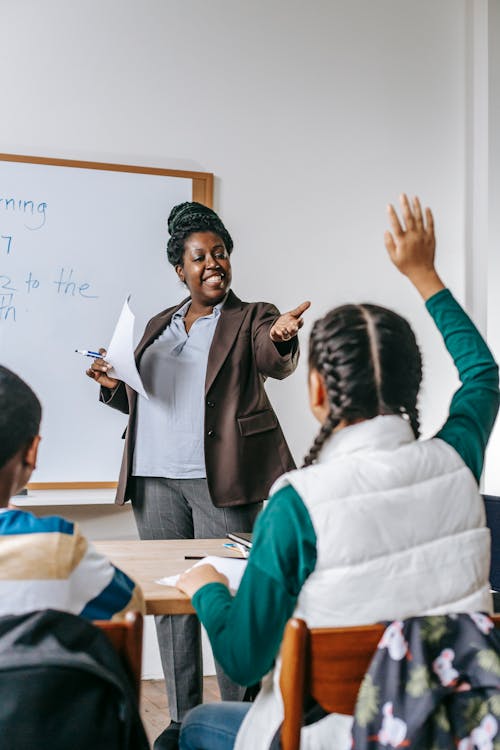
Across the United States, teachers who try to discuss Palestine in their classrooms are finding themselves silenced or even pushed out of their jobs. What used to be a space for open dialogue has turned into a risky territory where even basic historical context or humanitarian discussion is treated as political extremism. This trend has intensified since 2023, leaving many educators unsure of what they’re allowed to say and students confused about why specific global issues are off-limits. Arab America contributing writer Layla Mahmoud explores questions of academic freedom, free speech, and the growing climate of fear surrounding Palestinian narratives in American schools.
A Growing Pattern of Discipline
School districts in states like New York, Texas, California, and Florida have tightened control over how the topic of Palestine is approached. Some teachers are told explicitly to avoid the subject. Others are written up for assigning news articles, showing maps, or answering students’ questions. Even neutral discussions of international law or human rights have caused complaints.
Cases have surfaced across the country. A high school teacher in Texas was pulled from her classroom after assigning an article about Gaza’s humanitarian crisis. A New York social studies teacher received a formal warning for displaying a map that labeled the West Bank as “occupied.” A California educator was placed on leave after students made a ceasefire poster during a class project. These incidents send the clear message that even neutral acknowledgement of Palestinian history or suffering is considered dangerous territory.
The punishments are rarely consistent, but the pattern is unmistakable. Teachers learn quickly that the safest option is silence.
Why Palestine Is Treated Differently
American classrooms routinely teach about complex and painful global conflicts. Students learn about apartheid in South Africa, colonialism in India, genocide in Rwanda, and Russia’s invasion of Ukraine. Yet when it comes to Palestine, the rules suddenly change.
The difference is less about the curriculum and more about political pressure. Advocacy groups lobby school districts to monitor how Israel and Palestine are presented, and argue that any mention of occupation or displacement is inherently “biased.” Teachers who rely on mainstream human rights sources are accused of “taking sides,” even when they are simply quoting institutions like Amnesty International or the United Nations.
This has created a double standard where widely accepted terminology becomes off-limits in U.S. classrooms. A teacher can talk about the realities of apartheid-era South Africa, but risks punishment for describing conditions in the West Bank using the same internationally recognized language.
Impact on Students
The silence around Palestine doesn’t just affect teachers. It shapes the way students understand the world. Many report that they can discuss almost any global issue freely, except this one. Conversations about war, displacement, or human rights are allowed until the topic involves Palestinians.
Arab and Muslim students feel the impact most deeply. Some say they’re warned not to mention their family’s history or their relatives in Gaza. Others describe feeling invisible, as if their identities are too controversial for the classroom. Palestinian-American students, in particular, often feel erased from lessons that directly concern their heritage.
Students who simply want to understand the conflict are left with half-formed knowledge. The censorship creates confusion, misinformation, and a distorted understanding of global politics. When young people are taught that one conflict is too “sensitive” to explain, it shapes how they view truth and whose stories are considered legitimate.
Teachers Struggling Between Truth and Job Security
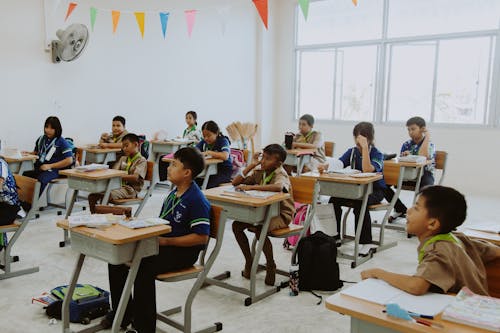
Most teachers disciplined for discussing Palestine are not activists. They’re educators doing their job by presenting facts and responding to students’ questions. But the fear of complaints pushes them to self-censor.
Many describe feeling torn between honesty and job security. They know that omitting Palestine weakens students’ understanding of international relations, but they also know a single parent email could result in an investigation. Some quietly resign while others avoid teaching certain units altogether. A few try to teach the material anyway and hope it goes unnoticed.
This climate affects morale. Teachers feel unsupported and restricted. It turns classrooms into environments where caution outweighs curiosity.
A Threat to Academic Freedom
The punishment of teachers for addressing Palestine sets a dangerous precedent. When political pressure determines what is allowed in the classroom, academic freedom becomes meaningless. History cannot be taught selectively without compromising its integrity.
The issue extends beyond the Israel-Palestine conflict. It raises a bigger question: who gets to decide which historical truths are acceptable? If certain narratives can be suppressed because they are politically inconvenient, students lose access to full and honest education.
Classrooms are supposed to be spaces where students learn to think critically. Silencing educators undermines that purpose and limits the intellectual development of an entire generation.
Looking Ahead
Unless school districts implement clear protections for teachers and create consistent, transparent guidelines, the censorship surrounding Palestine will only get worse. The longer the issue is treated as taboo, the more students grow up with an incomplete understanding of global politics.
What’s happening now is bigger than one conflict. It’s about whether U.S. classrooms can remain places where truth, complexity, and humanity are allowed to exist. Teachers shouldn’t be punished for educating. And students shouldn’t be shielded from realities simply because they’re considered politically sensitive.
Want more articles like this? Sign up for our e-newsletter!
Check out our blog here!