
Subscribe
to receive news by email

Poll
Will the Trump Administration Shift U.S. Policy in Favor of Palestine?
- No (87%)
- Yes (13%)
 Loading ...
Copyright © 2026 Arab America
Go topCounting Down Many Beginnings: New Year Traditions Across the Arab World
By: Emma Campbell / Arab America Contributing Writer
Across the Arab World, people do not celebrate the “new year” as a single moment on January 1st. Instead, many calendars, religious traditions, and seasonal cycles shape how communities celebrate beginnings. These celebrations range from spiritual remembrance to seasonal renewal. In this article, Arab America contributing writer Emma Campbell explores four widely observed New Year traditions in the region, each rooted in centuries-old history and cultural practice.
Egypt – Nayrouz: Commemorating the Coptic New Year
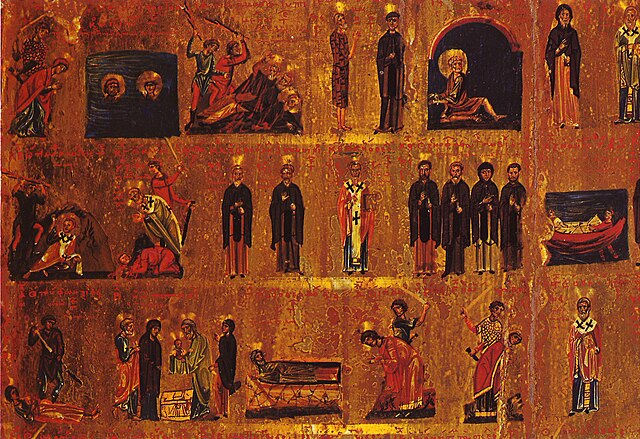
In Egypt, the Coptic Orthodox Christian community observes Nayrouz, the Coptic New Year. This occurs on the first day of the month of Tut, usually falling on September 11 or 12. This year, the first day of the Coptic year 1 Tut coincided with September 11 – marking the start of the Coptic calendar year 1742. The holiday celebrates the Feast of Nayrouz, or the Feast of the Martyrs. According to the H.H. Pope Tawadros II of the Coptic Church, “We, as Copts, are the continuation of the ancient Egyptians, and the Coptic calendar is an extension of the ancient Egyptian calendar. It is an agricultural year, as the Egyptians live near the Nile River and cultivate the lands near the river. Thus, they celebrated the year and its months, which are closely tied to the agricultural cycle.”
Nayrouz is both a celebration of the new year and a commemoration of Christian martyrs, particularly those who suffered under the Roman Emperor Diocletian in the third century, an era known in Coptic history as the “Era of the Martyrs.” In 2025, H.H. Pope Tawadros II led ceremonies and extended greetings to congregations in Egypt and around the world, emphasizing the continuity of faith from ancient times to the present.
Traditionally, families attend special church services that include prayers and hymns honoring those who gave their lives for their beliefs. Beyond its religious meaning, Nayrouz also carries cultural resonance among Egyptians, with red dates and other symbolic foods often part of family gatherings. For many in Egypt’s Christian community, Nayrouz is more than a liturgical observance. It is a moment to renew spiritual commitment and to remember the resilience of ancestors whose sacrifices shaped communal identity. The celebration underscores time as both a sacred cycle and a link to collective memory.
Persian Cultural Influence — Nowruz: Spring and Renewal
Across the Middle East, particularly in Kurdish regions of Iraq and Syria and in nearby Iran and Turkey, people celebrate Nowruz. Meaning “new day”, it marks the beginning of spring and the traditional new year tied to the spring equinox, typically around March 21.
Nowruz originated more than 3,000 years ago and predates Islam. Rooted in ancient Zoroastrian tradition, Nowruz celebrates rebirth, renewal, and a deep connection with nature. The holiday’s 13-day festival marks enduring popularity and spans centuries and borders. It has survived as a cultural touchstone among communities that celebrate it with family meals, outdoor gatherings, symbolic displays, and music.
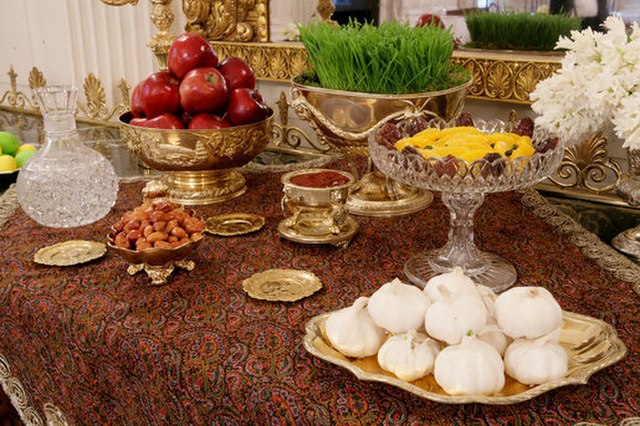
The beginning of Nowruz comes alive as families perform “khaneh tekani” (spring cleaning), exchange gifts, gather for celebrations, and buy new clothes. Central to Iranian Nowruz festivities is the haft‑sin table, an arrangement of seven items each beginning with the Persian letter “s,” representing life’s blessings. These range from health and love to patience and prosperity. Community festivities often include dancing, poetry, and shared meals that reinforce social bonds.
Assyrian New Year — Kha b’Nissan: Echoes of Ancient Mesopotamia
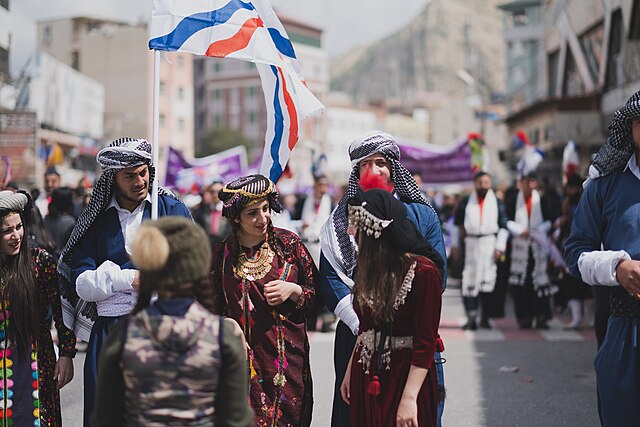
In Assyrian Christian communities in northern Iraq and northeastern Syria, Kha b’Nissan (Syriac for “First of Nisan”) functions as a distinct New Year celebration and the start of Spring. People observe it each year on April 1. Though its observance today is cultural rather than liturgical, its roots stretch back to ancient Mesopotamian celebrations such as Akitu, which honored seasonal renewal and agricultural cycles.
Modern celebrations often feature parades, traditional dress, and community gatherings that showcase Assyrian heritage. These festivities emphasize cultural pride, identity, and continuity by tying contemporary identity to a civilization that flourished thousands of years ago. While not tied to a religious calendar in the same way as Islamic or Coptic observances, Kha b’Nissan remains a meaningful cultural marker and a source of communal pride.
Islamic New Year — Muharram: Spiritual Beginnings
Distinct from seasonal or civil calendars, the Islamic New Year begins on the first day of Muharram. This is the first month of the Islamic lunar calendar, and holds profound spiritual significance for Muslims across the Middle East. It commemorates the Hijrah, the Prophet Muhammad’s migration from Mecca to Medina in 622 CE, which marks the start of the Islamic era.
According to the UK’s ReligionMediaCentre, The Islamic New Year comprises 12 lunar months. Additionally, the year is slightly shorter, around 354-355 days. Due to this, the holiday aligns slightly differently with the Gregorian calendar every year. This past year, the Islamic New Year started on June 27, 2025.
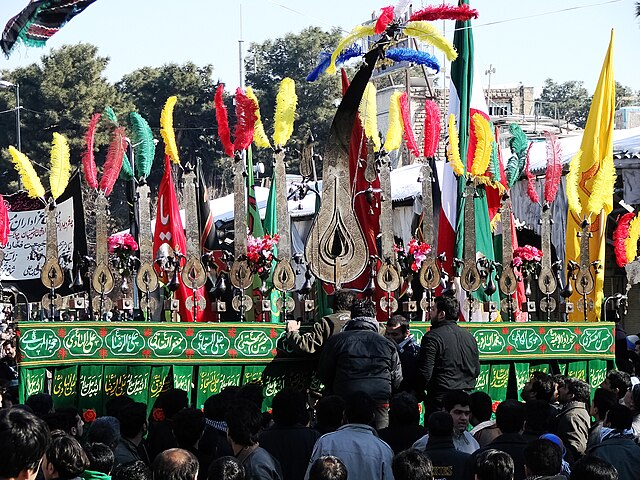
Unlike festive public celebrations, people mark the Islamic New Year with reflection, prayer, and community gatherings. As Muharram shifts earlier in the Gregorian year annually, its observance varies across Muslim traditions. For many, it is a time of reflection and introspection. Particularly, some Shia Muslims fast in the days leading up to the tenth month (Ashura) and refrain from activities like music. The first days of Muharram are typically a period of mourning for the Prophet’s grandson, Imam Husayn. In addition, people pray for protection, showing reverence for Allah’s guidance over their lives.
Celebrating Many Beginnings
Across the Middle East, “New Year” is more than one date. Nayrouz honors Coptic martyrs. Nowruz celebrates spring and renewal. Kha b‑Nisan reflects Assyrian heritage. Muharram offers spiritual reflection. Each tradition shows how communities mark time, memory, and identity.
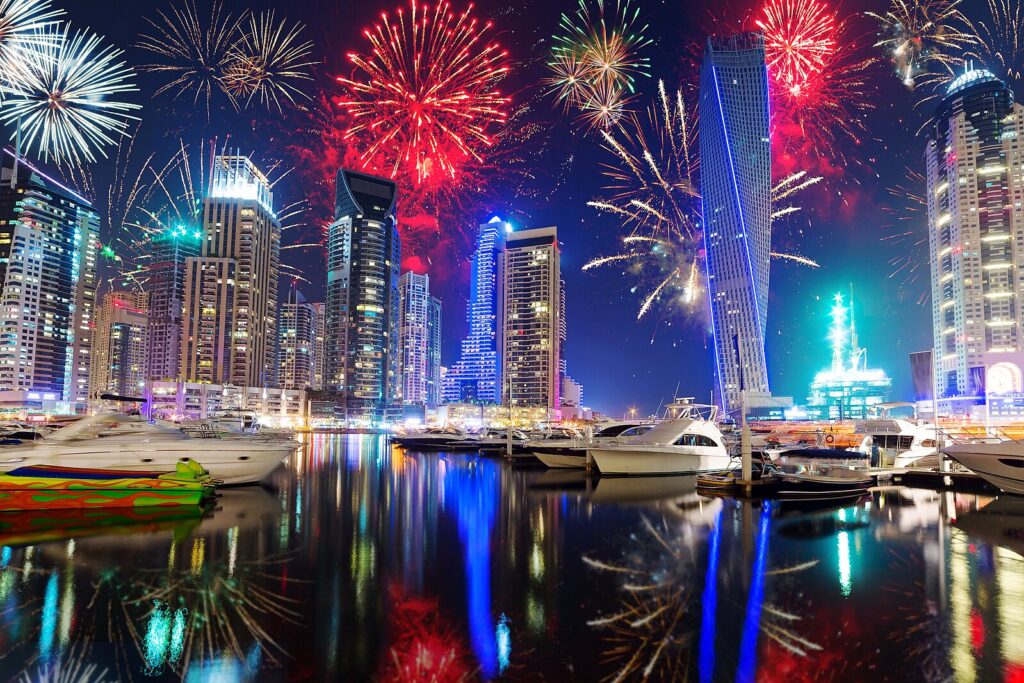
As January 1, 2026 approaches, the Gregorian New Year is also a time to refelct, reset, and embrace new beginnings. From honoring rich new years traditions to looking forward to the year ahead, happy New Year!
Want more articles like this? Sign up for our e-newsletter!
Check out our blog here!