
Subscribe
to receive news by email
Poll
Will the Trump Administration Shift U.S. Policy in Favor of Palestine?
- No (87%)
- Yes (13%)
 Loading ...
Copyright © 2026 Arab America
Go topCouscous Wars: When Food Becomes Politics
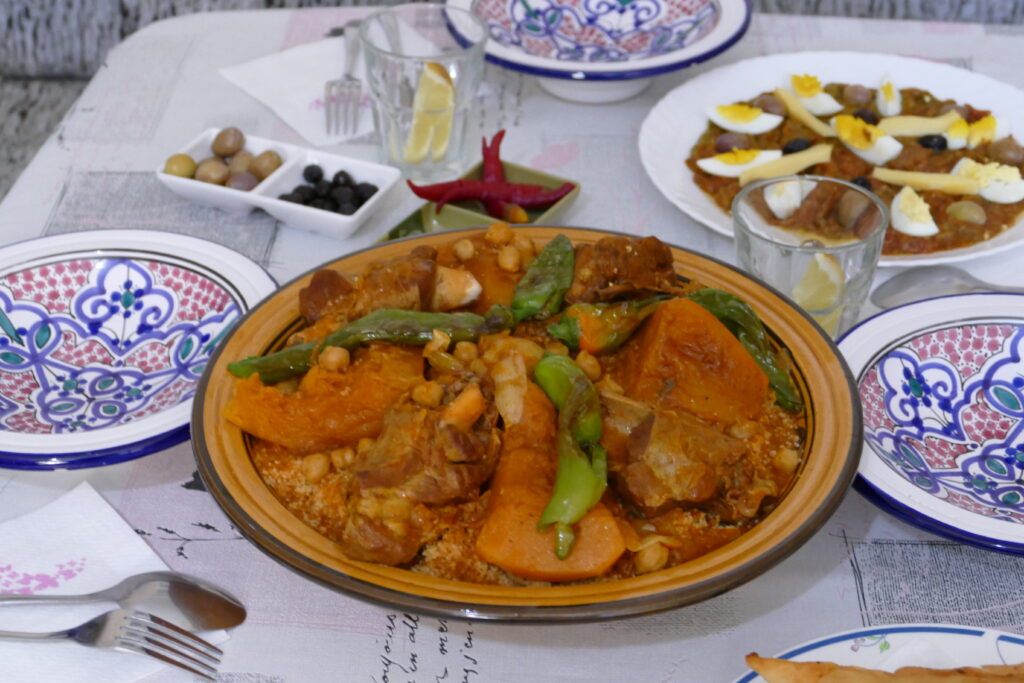
Across North Africa, Couscous is the national dish in Libya, Tunisia, Algeria, and Morocco. The dish is made from hand-rolled semolina and served with meat, vegetables, or fish. It is a staple of weekly meals, often eaten on Fridays across the Maghreb. It is also a central part of weddings and religious gatherings. Despite how widely it is shared, each country prepares it differently and ties it to its own identity.
In 2020, Couscous was recognized by UNESCO as cultural heritage through a joint submission by countries in the region, presenting it as a shared tradition. At the same time, it pushed a different conversation forward. Who gets to represent it? Who gets to claim it? That tension is what people now refer to as the “Couscous Wars,” in which a dish that has always been shared across the Maghreb begins to be treated as something national.
What Is Couscous and It’s Roots?
Couscous is made from semolina that is rolled into small grains and steamed over a pot of stew so it absorbs the flavor underneath. The method is the core of the dish. Traditionally, the grains are formed by hand, steamed multiple times, and fluffed until they are light and separate. The dish is then served in a large shared dish, known as a Gsaa/Gas3a, and eaten together, which is common across the region.
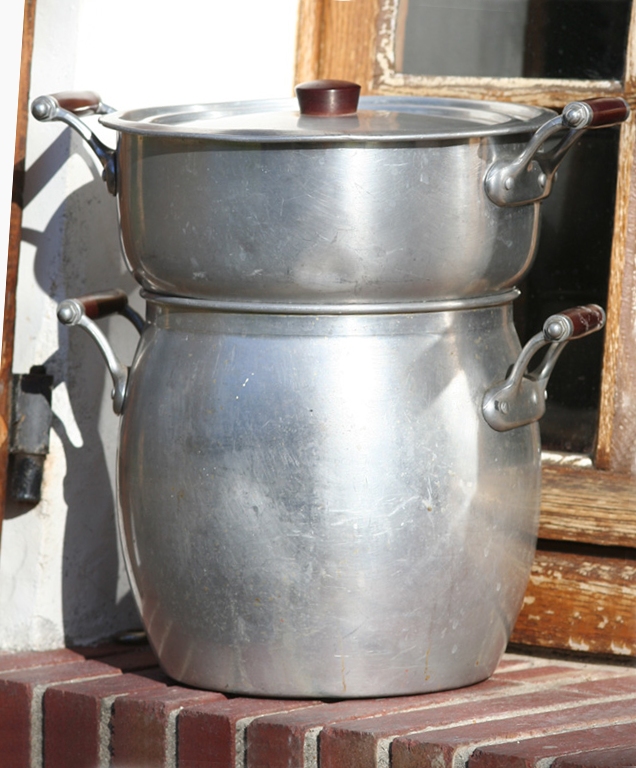
Couscous is widely tied to Amazigh origins, and historical evidence shows it existed in North Africa centuries before modern states were formed. Cooking tools similar to couscoussiers (a traditional double-chambered food steamer) have been found dating back as early as the 3rd century BCE, and written recipes appear by the medieval period.
The dish developed across the region that was already connected before borders were drawn. That is why it exists across multiple countries today and why it is difficult to assign it to just one.
Tunisia
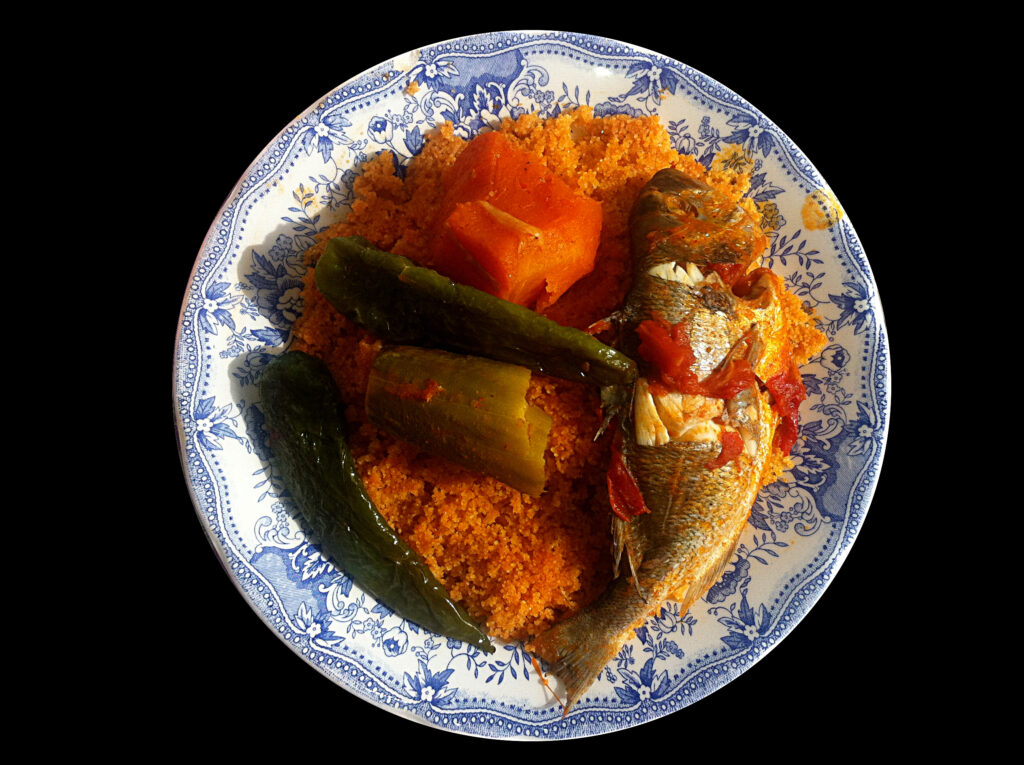
In Tunisia, Couscous is defined by a red, harissa-based sauce. The spice is central to the dish. The broth is thicker and more concentrated, often paired with lamb, chicken, or seafood along the coast.
Morocco
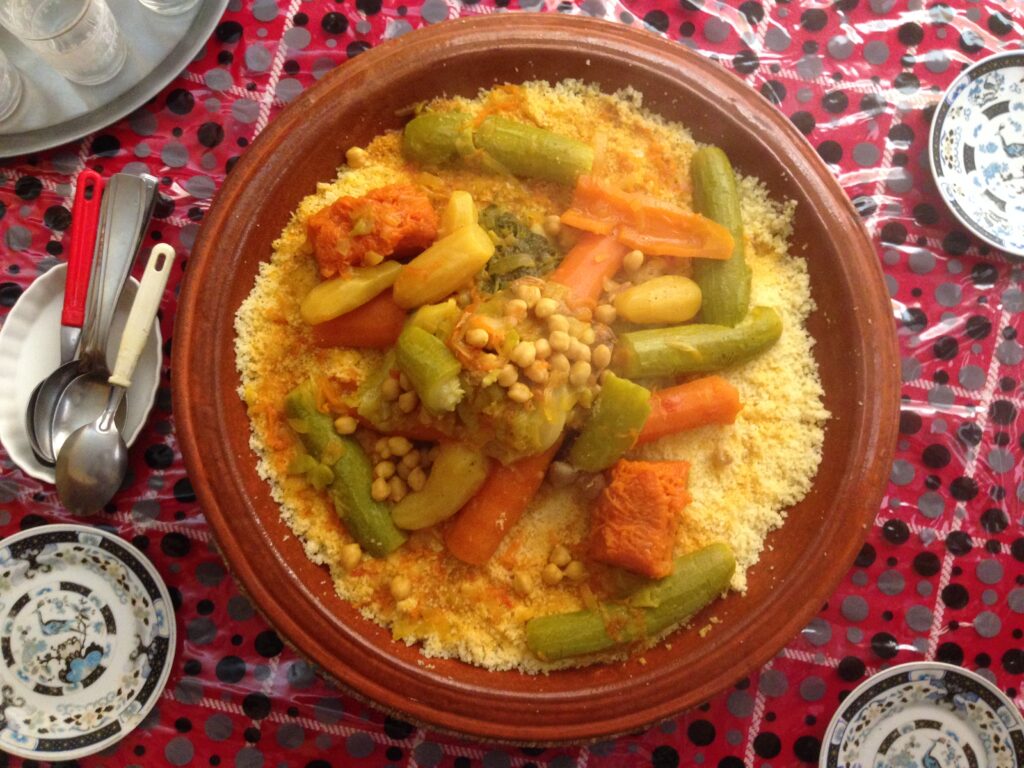
In Morocco, Couscous is more layered and mild. The grains are steamed, then topped with meat and vegetables like carrots, turnips, zucchini, and chickpeas and meat. Some variations include sweet elements like raisins, especially in Tfaya. The contrast between savory and sweet is designed to play a role in how the dish is structured and served.
Algeria
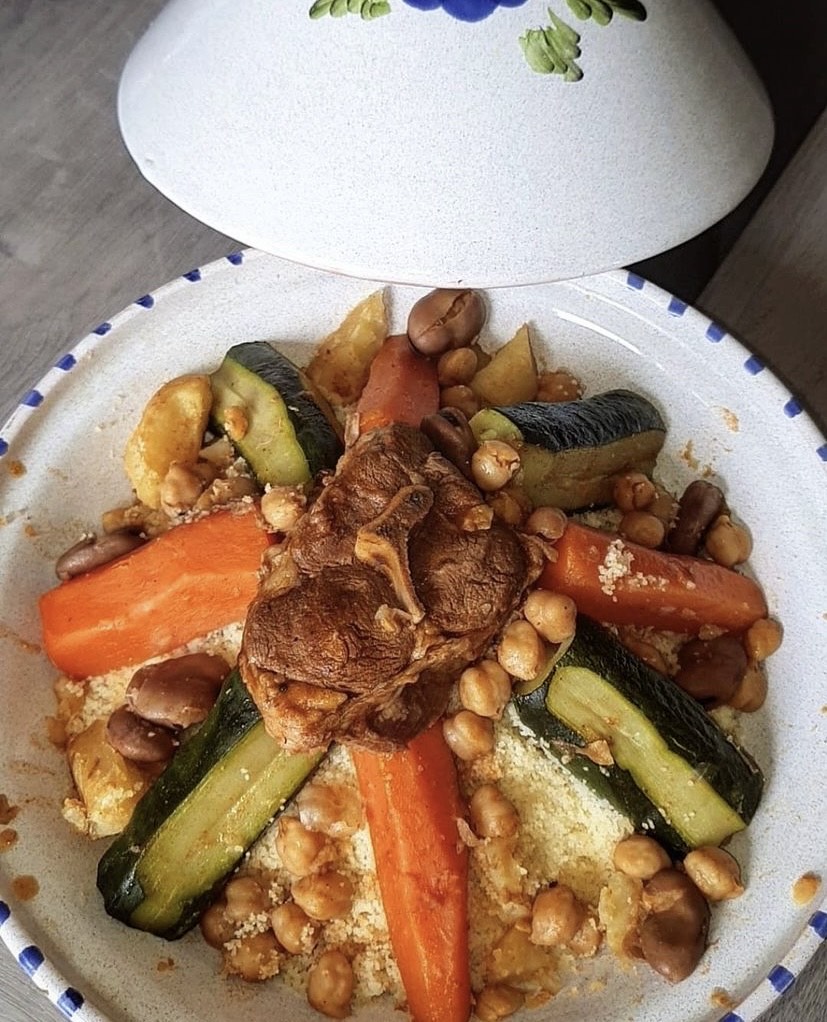
In Algeria, Couscous is known for the many variations that exist beyond one single style. There are hundreds of versions across the country, which reflects how regionally diverse it is. The base is usually built with lamb or beef, chickpeas, and vegetables like carrots, zucchini, squash, and turnips, cooked in either a tomato-based or lighter broth, depending on the region.
The preparation follows the traditional method. Semolina is moistened with water and olive oil, rubbed into small grains, and steamed in a couscoussiers before being combined with the stew. The seasoning includes cumin, coriander, and turmeric.
Libya
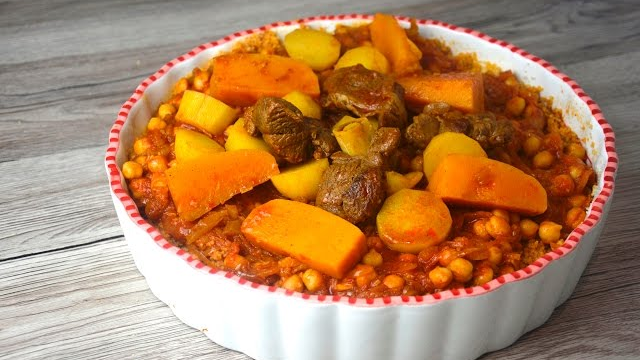
In Libya, Couscous is spicy and red in color, similar to the Tunisian version, made from a spiced tomato-based sauce with spices like cinnamon, turmeric, caraway, and hot red pepper. It is commonly made with lamb and fish. Chickpeas and vegetables like potatoes, carrots, pumpkin, and squash are often added.
A key element is a common Libyan topper, “busla,” slow-cooked onions placed on top, which add sweetness and balance the spice.
The “Couscous Wars” and Beyond
The “Couscous Wars” are less about the dish itself and more about who gets to claim it. Across Libya, Tunisia, Algeria, and Morocco, couscous is treated as a national symbol, and that shows up clearly in how people talk about it today.
Recently, the heated debate has become more visible online. On platforms like TikTok, people argue over where Couscous originates, which country makes it best, and what counts as the “real” version.
What makes this complicated is that couscous does not come from one place. Its origins are tied to Amazigh communities across North Africa, and it developed across the region long before current borders existed. But today, those same borders shape how people understand and claim it.
At the same time, outside of these debates, Couscous continues to be made the same way it always has been. It is rolled, steamed, and shared in homes across the Maghreb, part of everyday life rather than just something to argue over.
That is the contradiction at the center of it. Couscous is both shared and claimed, both regional and national.
And that is why the conversation around it is not going away.
Want more articles like this? Sign up for our e-newsletter!
Check out our blog here!