Subscribe
to receive news by email

Poll
Will the Trump Administration Shift U.S. Policy in Favor of Palestine?
- No (87%)
- Yes (13%)
 Loading ...
Copyright © 2026 Arab America
Go topDoctors in Gaza: Humanity Amid Ruins
By: Fayzeh Abou Ardat / Arab America Contributing Writer
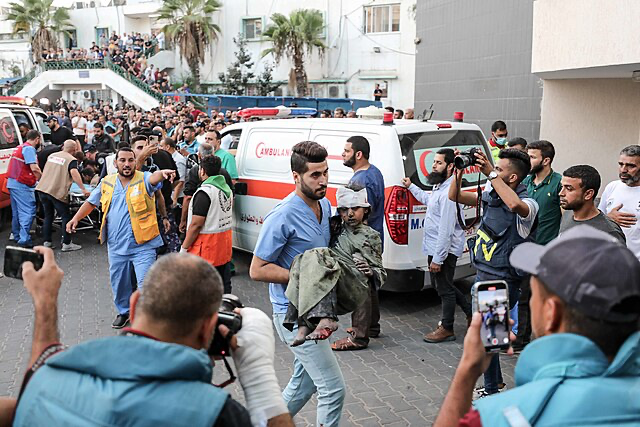
In Gaza, doctors’ white coats represent both a symbol of resilience and medicine. Despite persistent shelling, severe supply shortages, and the collapse of health infrastructure, medical personnel in Gaza continue to demonstrate amazing bravery. They also show remarkable compassion and commitment. They are more than simply doctors; they are lifelines, risking their own lives to save others in a world that transcends human endurance.
The Collapse of Gaza’s Healthcare
Since the escalation of violence in October 2023, Gaza’s healthcare system has been pushed to its limits. Hospitals have been frequently attacked and destroyed, and medical convoys bombed. Entire units, such as newborn intensive care or dialysis wards, have been made inoperable. Despite inhumane conditions, doctors continue to work 24-hour shifts with little food, water, or electricity. Some people sleep on hospital floors. Others have lost their families while attempting to save strangers. Nonetheless, they return time and again to the wrecked corridors of Gaza’s hospitals.
Media Silence and the Fight to Tell Gaza’s Story
One of the most graphic depictions of their heroism can be found in the documentary Gaza: Doctors Under Attack, produced by the BBC but controversially not broadcast on the network’s main channels. The film offers an unflinching look at the lives of Palestinian doctors and international volunteers in the besieged Strip. Its absence from the BBC’s airways has generated concerns about editorial decisions, media bias, and the West’s reluctance to confront the scope of the humanitarian tragedy in Gaza.
The documentary includes interviews with Dr. Ghassan Abu Sitta, a British-Palestinian surgeon. He spent weeks at Al-Shifa Hospital in Gaza before it was substantially destroyed. He describes treating children who have suffered devastating injuries such as burns, shrapnel wounds, and amputations, often without access to adequate anesthesia or pain relief. Due to the breakdown of Gaza’s healthcare infrastructure, medical workers were forced to conduct life-saving treatments on children who lacked basic medical supplies. These treatments included amputations.
Others who crossed borders and bureaucracies to get to Gaza have had similar experiences to Dr. Abu Sitta. Dr. Mads Gilbert, a Norwegian trauma surgeon who has worked in Gaza during numerous prior battles, says, “If I should choose today between hell and Shifa, I would choose hell.” In previous missions, he described working continuous shifts of more than 30 hours during intense bombardment. His experiences highlight how medical personnel frequently act as the last line of defence for Gaza’s besieged population.
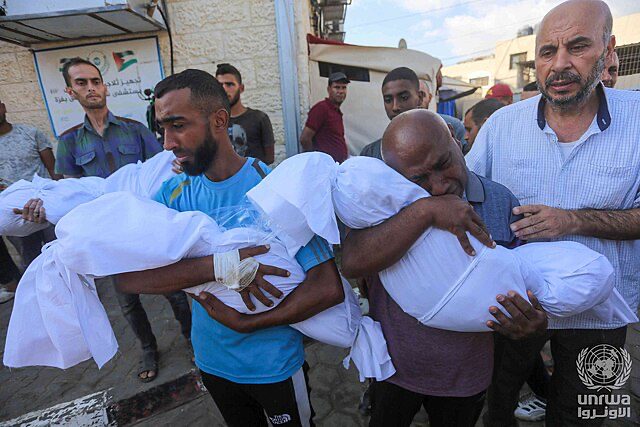
Doctors in Gaza are forced to face impossible ethical challenges. They must pick which patients to prioritize when supplies are limited.
Censorship, Bias, and the Cost of Withholding Truth
Despite its overwhelming power and emotional depth, the BBC elected not to broadcast Gaza: Doctors Under Attack on any of its major television channels. Human rights organizations, journalists, and regular people have all spoken out strongly against this. Instead, the documentary was surreptitiously released online and taken up by other international networks, such as Channel 4 and Zeteo.
Critics claim that the BBC’s choice reveals a deeper institutional unwillingness to fully depict Palestinian suffering. By declining to run the video, the network lost an important chance to enlighten the public about the situation on the ground. This is especially significant given its worldwide reach and impact. The absence is especially unacceptable given that the film meets the BBC’s own criteria for newsworthiness, public interest, and investigative rigour.
Resilience Amidst Devastation
Hospitals are bombed. Ambulances were destroyed. Medical neutrality, a cornerstone of international humanitarian law, is blatantly disregarded. In June 2024, the UN Human Rights Office stated that 500 healthcare personnel had been murdered since the conflict began. Many died while in hospitals or ambulances.
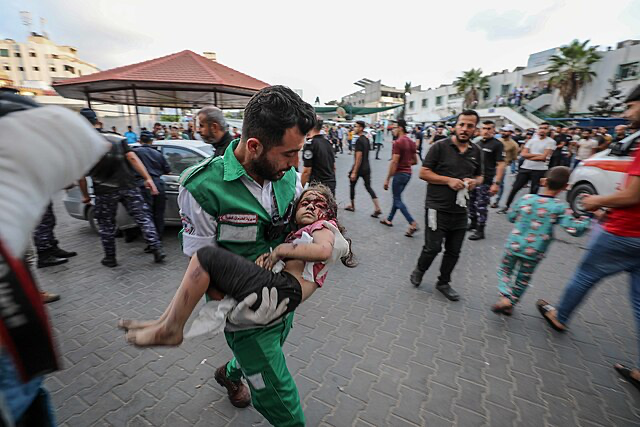
And still, doctors persist.
What emerges from Gaza: Doctors Under Attack and dozens of firsthand accounts is a portrait of not only suffering but also incredible bravery. These are those who continue to uphold their medical oath even after the world society has failed them. They are heroes, not in a sentimentalized way, but in the most genuine, visceral sense, keeping bodies together while the world allows them to come apart.
Their stories must be disseminated across all platforms, whether on television, in print, or through educational and public forums. Choosing not to convey their realities means disregarding the conflict’s devastating human toll. Despite the carnage around them, Gaza’s medics persevere with unshakable commitment, demonstrating resilience and compassion as they work to save lives amid the catastrophe.
In doing so, they show that medicine, at its core, transcends science; it becomes a courageous, ethical commitment to humanity.
Want more articles like this? Sign up for our e-newsletter!
Check out our blog here!