Subscribe
to receive news by email

Poll
Will the Trump Administration Shift U.S. Policy in Favor of Palestine?
- No (87%)
- Yes (13%)
 Loading ...
Copyright © 2026 Arab America
Go topEgyptian Museum Opening Signals Call for Returned Artifacts
By: Robert Jackson / Arab America Contributing Writer
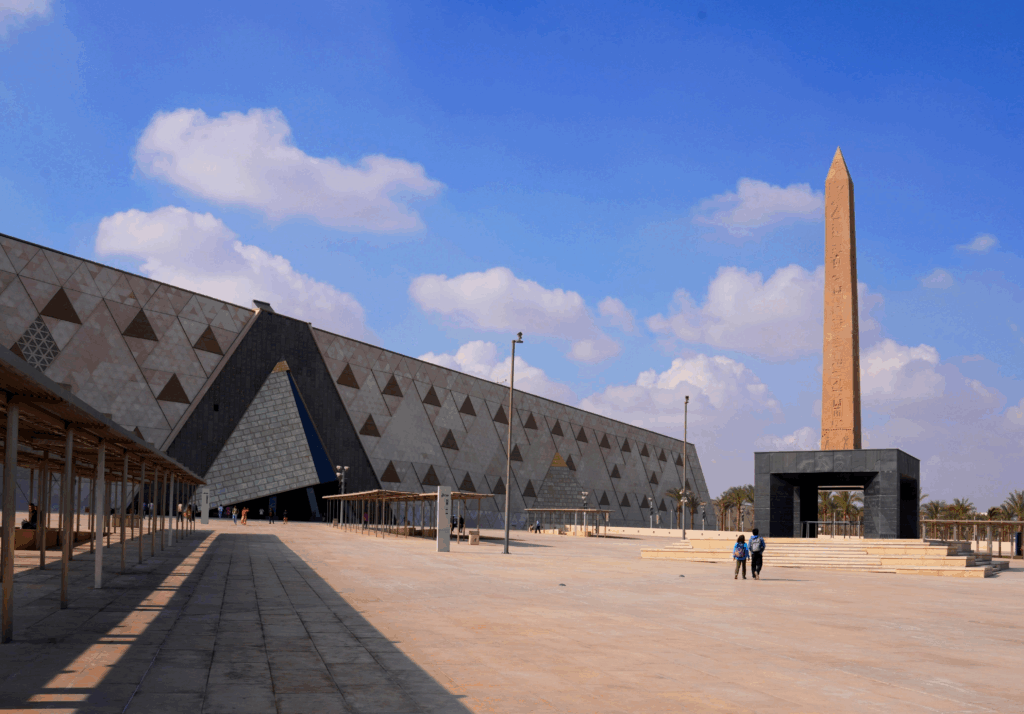
The Grand Egyptian Museum has opened to much fanfare, as the largest museum dedicated to a single civilization in the world. It has been built over the course of decades. The museum contains over 100,000 Egyptian artifacts spanning thousands of years of history. However, this triumph is not complete. All across the world, looted ancient Egyptian artifacts are being held, mainly in Europe and the United States. Though the Egyptian government has received thousands of returned artifacts in recent years, there are many that continue to be kept abroad. Of course, not all of these artifacts have been looted, stolen, or acquired unfairly. There are many on loan from Egypt or purchased legally, but especially for artifacts acquired before Egyptian independence, their status can be uncertain.
The Artifacts
There are thousands of such artifacts taken by colonial powers from Egypt. Some of the more famous ones include the four listed below:
- The Rosetta Stone: Current Location – The British Museum in London, UK
- Dendera Zodiac: Current Location – The Louvre in Paris, France
- The Neferititi Bust: Current Location – Neues Museum in Berlin, Germany
- The Bust of Prince Ankhhaf – The Museum of Fine Arts in Boston, USA
Dismantling Colonialism
Much of the removal of Egyptian artifacts occurred during the height of the colonial period, when Egyptian autonomy was at a low point. The movement to repatriate such artifacts is a crucial part of reckoning with that colonial legacy.
Since the beginning of Western colonial expansion, these powers have worked hard to project themselves as the center of cultural and political importance in the world. As part of these efforts, they sent missions to collect riches and antiquities for their museums. By retrieving these pieces, Egypt is shifting the narrative and restoring pride in its rich history. This process also has the added benefit of increasing tourism and accessibility to ancient culture for everyday Egyptians. No doubt, millions of visitors will come to see this museum and its incredible displays in the coming years, generating a significant source of revenue for local businesses and the country. For Egyptians, these objects are more than decorative curiosities. They are concrete links to millennia of civilization. Everything from royal tombs, funerary art, scrolls, rites, and statues has significant meaning. Holding those artifacts abroad means that large swathes of Egypt’s material heritage remain separated from its rightful inheritors.
Expanding Understanding
While one frequent counter-argument to returning cultural objects is that Western museums have better resources to preserve fragile antiquities. Many countries that’ve experienced similar cultural looting say this cannot be a justification for permanent retention by foreign museums. Even still, now that the Grand Egyptian Museum has been completed, that argument rings hollow. Moreover, returning artifacts to modern museums in their home country often expands interest in archaeology, fosters local expertise, and meaningful engagement. In addition, the artifacts that remain in Egyptian hands are often better contextualized alongside other discoveries, accompanied by information about provenance, excavation records, and conservation. When pieces are removed and scattered, their archaeological context may be lost. This can have the potential to diminish scientific or historical understanding by museum guests.
A Path Forward
Sadly, Egypt will never be able to recover all of its looted antiquities, but that doesn’t necessarily mean that Egyptian relics should be hoarded. Traveling exhibits showcasing ancient Egyptian relics spur interest and positive connections for visitors. By improving Egypt’s image abroad, these exhibits encourage people to travel to Egypt to see more. Museums and private collectors should collaborate with Egypt to establish ownership, export licenses, documentation, and ethical clarity. If an item is found to be collected in dubious circumstances, long‐term loans or partnerships between museums and Egypt can help bridge access until full return is possible. Stronger security and cooperation across borders against illicit smuggling operations should also be a priority. With these ideas in mind, Egypt will turn the corner into a new era with much stronger ties to its heritage.
The Takeaways
The repatriation of looted artifacts is a necessary part of cultural healing. The scars of colonialism run deep. The return of these shards of history is important, not just to Egyptians but as a wider symbol that nations that were once victims of colonialism can rebuild and demand their artifacts back. Hopefully, nations which have been robbed of their heritage can follow in Egypt’s footsteps and retrieve their artifacts for their own people to enjoy.
Want more articles like this? Sign up for our e-newsletter!
Check out our blog here!