Subscribe
to receive news by email

Poll
Will the Trump Administration Shift U.S. Policy in Favor of Palestine?
- No (87%)
- Yes (13%)
 Loading ...
Copyright © 2026 Arab America
Go topFrom TikTok to Upscrolled: Pro-Palestinian Speech and Digital Resistance

By: Emma Campbell / Arab America Contributing Writer
Upscrolled: The Newest Social Media Platform
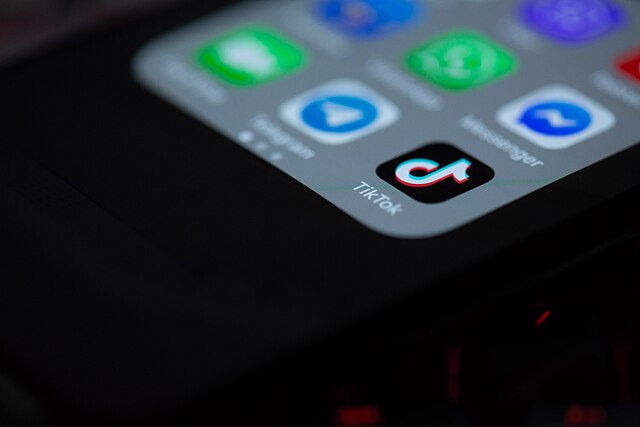
Upscrolled, a social media platform launched in June 2025 by Palestinian-Jordanian-Austrialian developer Issam Hijazi, has surged to the top of the app store charts amid growing skepticism of TikTok’s new ownership. Formerly under Beijing based ownership, TikTok is now under US ownership. Many former TikTok users have turned to Upscrolled as a free-speech-forward alternative, attracting users frustrated by content moderation on mainstream media applications.
Social media platforms are increasingly shaping how political narratives circulate, particularly during movements of policy change and public controversy. As TikTok faces scrutiny following its transition to US-based ownership, questions surrounding moderation, algorithmic control, and political speech have moved to the forefront. Against this backdrop, Upscrolled has emerged as a rapidly growing alternative. It attracts users who feel marginalized by mainstream platforms. Since its release, the app has gained attention for hosting unfiltered political content, including pro-Palestinian advocacy. Upscrolled’s sudden popularity highlights a broader debate over freedom of expression and who controls online discourse.
Release and Rapid Rise
Upscrolled originally launched as a microblogging and short-form video app seeking to differentiate from mainstream giants. Launched by Recursive Methods Pty Ltd., the app enables the sharing of photos, short-form videos, and test posts. According to Al-Jazeera, the app feels like a combination of X (formerly Twitter) and Instagram, with a layout and feed similar to X. Additionally, Upscrolled also closely mirrors X’s chronological posting style rather than algorithm-driven content curation.
The platform’s rapid growth followed TikTok’s ownership transfer in January 2026, a deal driven by Oracle and US investors. This has raised widespread concerns about moderation practices and platform stability. In the weeks following the transition, many users have reported technical issues and censorship fears, triggering migration to alternatives like Upscrolled. During this period, Upscrolled has soared in app-store rankings, and has even briefly reached number 1 of Apple’s free US app charts “social networking” category. The app recorded approximately 400,000 US downloads and over 700,000 global downloads since the app’s launch.

Founder and Platform Origins
Software developer Issam Hijazi, a Palestinian-Jordanian-Australian with Big Tech experience at Oracle and IBM, founded and developed Upscrolled. According to Al Jazeera, Hijazi chose to step away from his Big Tech career to build an alternative app he felt was not complicit in the censorship of politically sensitive content, particularly during Israel’s ongoing genocide in Gaza. Hijazi has spoken publicly about losing family members in Gaza. This experience deeply shaped his decision to create Upscrolled, as Hijazi wished to create a space centered around free speech and connection, without the censorship and overshadowing of hidden algorithms reflective of outside agendas.
Hijazi launched Upscrolled through his company, Recursive Methods Pty Ltd., with the goal of creating an environment where users could engage politically without fear of “shadowbanning” or content suppression. Although the app does not solely target political activism, its emphasis on free speech enables a broad range of viewpoints. The app’s founding principles have resonated strongly with politically engaged users, particularly those critical of existing moderation and censorship systems.

Pro-Palestinian Censorship, Free Speech, and Platform Identity
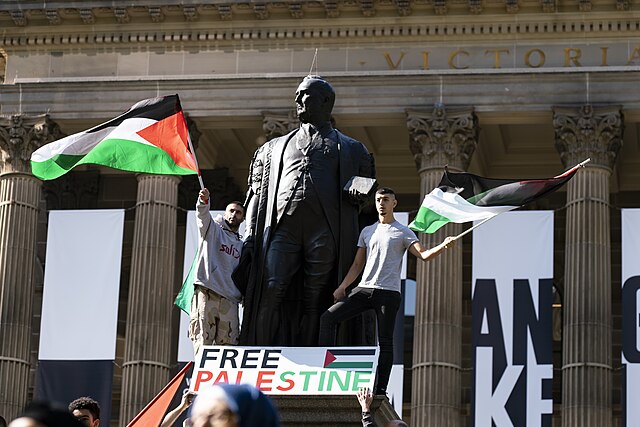
Growing concerns over the censorship of pro-Palestinian content on mainstream social media platforms have driven Upscrolled’s rise. For years, activists, journalists, and everyday users have accused platforms like TikTok and Instagram of suppressing content related to Palestine. This occurs through “shadowbanning”, unexplained removals of content, and reduced visibility. These concerns intensified during Isreal’s ongoing genocide in Gaza, as users have repeatedly documented takedowns of their posts. These posts typically depict Palestinian civilian life, humanitarian crises, and on-the-ground reporting.
One frequently cited example is award-winning palestinian journalist and content creator Bisan Owda, whose videos documenting daily life in Gaza have reached millions worldwide. Despite her prominence, Owda has publicly reported repeated content restrictions and removals across multiple platforms. Earlier this week, TikTok banned Bisan Owda and later reinstated her account after pressure from NGOs. These incidents fuel broader claims that platforms disproportionately moderate or silence Palestinian narratives.For many users, the multitude of these issues have come to symbolize a larger pattern of digital censorship.
Upscrolled positions itself in direct response to these concerns, marketing the platform as one that resists algorithmic suppression and inconsistent moderation practices. By relying on chronological feeds rather than engagement-driven algorithms, the app appeals to users who have been deprioritized due to their political speech. Pro-Palestinian advocacy has become especially visible on the platform. This is not due to explicit ideological alignment, but because users perceive Upscrolled as a space where such content can circulate without penalty. The platform has also received support from Tech for Palestine, a technology-focused collective that backs projects aimed at countering censorship and amplifying Palestinian voices, further reinforcing its appeal among politically engaged users.
Reclaiming Digital Space for Political Expression
The emphasis on free expression has helped shape Upscrolled’s identity as more than a TikTok alternative. Instead, it has become a gathering space for users seeking greater control over their online speech and visibility. Upscrolled’s popularity underscores growing dissatisfaction with how major platforms regulate their political expression – particularly when it comes to Palestine.
Want more articles like this? Sign up for our e-newsletter!
Check out our blog here!