
Subscribe
to receive news by email

Poll
Will the Trump Administration Shift U.S. Policy in Favor of Palestine?
- No (87%)
- Yes (13%)
 Loading ...
Copyright © 2026 Arab America
Go topGaza's Twenty Points Shrink to One
By: Ghassan Rubeiz / Arab America Contributing Writer
On the second anniversary of a war that has consumed countless lives, Israel shelled Gaza once more on October 7—a grim reminder that peace remains as elusive as ever. Had Israel genuinely intended to implement the Trump peace plan announced just days earlier, it would have ceased its bombardment over the weekend. Instead, 150 Palestinians died from Israeli strikes even as the plan was being universally welcomed. This bitter irony reveals the chasm between diplomatic gestures and the brutal realities on the ground.
As negotiators from Israel, Hamas, and the United States work through the final details of Trump’s 20-point peace plan in Sharm el-Sheikh, Egypt, this week, only one basic point seems to have been resolved so far: the release of remaining Israeli hostages in exchange for Palestinian prisoners. Yet the fundamental issues—Israel’s full withdrawal from Gaza, Hamas’s future, Palestinian governance—will likely be debated inconclusively and settled only with temporary, palliative solutions. Two highly consequential realities seem inescapable: Israel shows no willingness to withdraw completely from Gaza, and Hamas, as a political movement, will not disappear.
Netanyahu considers full withdrawal from Gaza as a significant opening for the formation of a Palestinian state: a major threat. And Hamas sees in military surrender the end of Palestinian resistance. Israel seems to be expected to maintain “security” in Gaza for the “foreseeable future”. “Foreseeable” for Israel means “forever”, given its appetite for Palestinian land and its record of an occupation which moves in one direction.
In improvising such an ambitious conflict resolution plan, Trump has underestimated the depth of Israel’s rejection of Palestinian statehood as well as the depth of Palestinian self-determination. Should we expect a politician who dismisses the impact of global climate change to settle the political climate in the Middle East? Do we expect a president who has sown division in his own country to bring peace to a region which has been in trouble for generations?
A new era of politics is needed to address the Arab-Israeli conflict squarely. Such a shift would occur only if and when there is a change in Israel’s outlook toward peace. Regrettably, Israel conceives peace as the incremental pacification of Palestinians through the continuation of ethnic cleansing and annexation of land. But this narcissistic ideological approach and short-sighted view of national security is bound to keep Israel insecure and ultimately isolated internationally.
The three (Hamas, Israel, US) sides may end the ongoing negotiations in a matter of a few days, in order to release the hostages quickly, while the door seems to be open. Israel is likely to continue the war after the release of the hostages. Netanyahu would expect to have a free hand in continuing the killing in Gaza. But with Trump’s deep involvement in Arab Gulf affairs, Netanyahu may no longer be as free as he would like to be. The future of Trump-Netanyahu relations is uncertain.
With Trump being equally committed to his business affairs with Saudi Arabia, Qatar and the UAE, it is not clear how he would react to Netanyahu’s endless campaign to achieve “total victory”.
Post-hostage Gaza will look much different. The extent to which Gaza and its people have been hurt has not been sufficiently recognized locally, regionally, and internationally. To what extent will Gaza be livable and governable?
The 20-point plan of Trump will look so shallow after the negotiators in Sharm el-Sheikh return to their homes nearly empty handed. War crimes have been shelved.
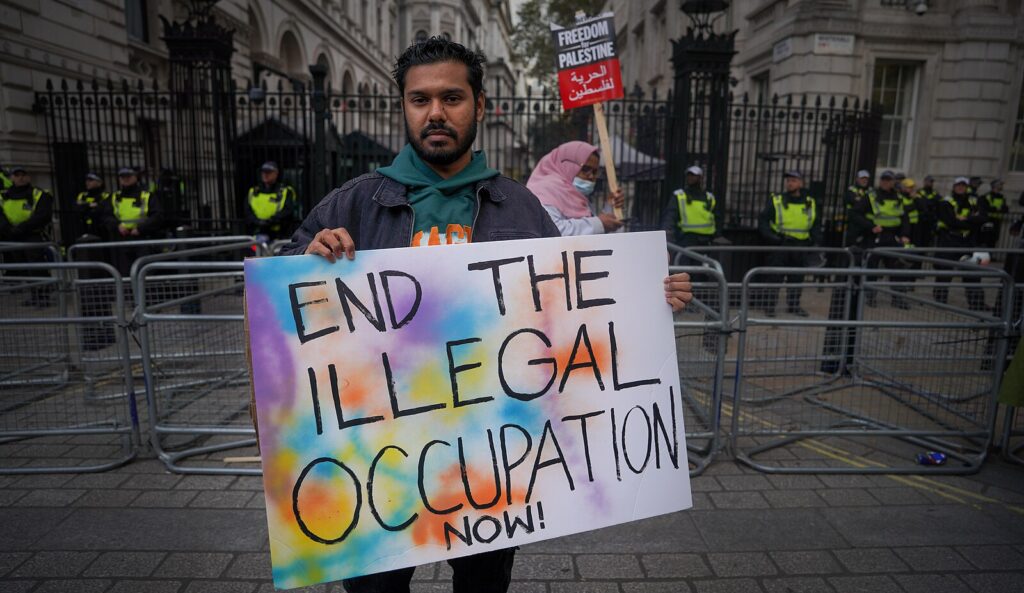
What we are witnessing is not reconciliation but theater—a carefully staged performance that masks the continuation of occupation under the guise of diplomacy. The twenty points collapse into one inescapable truth: without genuine commitment to ending occupation and recognizing Palestinian self-determination, no plan, however elaborate, can bring peace to Gaza. The hostages may be released, the cameras may capture handshakes, but the fundamental injustice will remain, and with it, the certainty of future violence. Until the world confronts this reality with more than empty plans and abandoned principles, Gaza will remain a testament not to peace, but to our collective failure to achieve it.
Ghassan Rubeiz is the former Middle East Secretary of the World Council of Churches. Earlier, he taught psychology and social work in his country of birth, Lebanon, and later in the United States, where he currently lives. He has contributed to political commentary for the past twenty years and delivered occasional public talks on peace, justice, and interfaith subjects. You can reach him at rubeizg@gmail.com
The views and opinions expressed in this article are those of the author and do not necessarily reflect the position of Arab America. The reproduction of this article is permissible with proper credit to Arab America and the author.
Want more articles like this? Sign up for our e-newsletter!
Check our blog here!