
Subscribe
to receive news by email

Poll
Will the Trump Administration Shift U.S. Policy in Favor of Palestine?
- No (87%)
- Yes (13%)
 Loading ...
Copyright © 2026 Arab America
Go topInvisible: The Politics of Arab American Archives
By: Laila Ali / Arab America Contributing Author
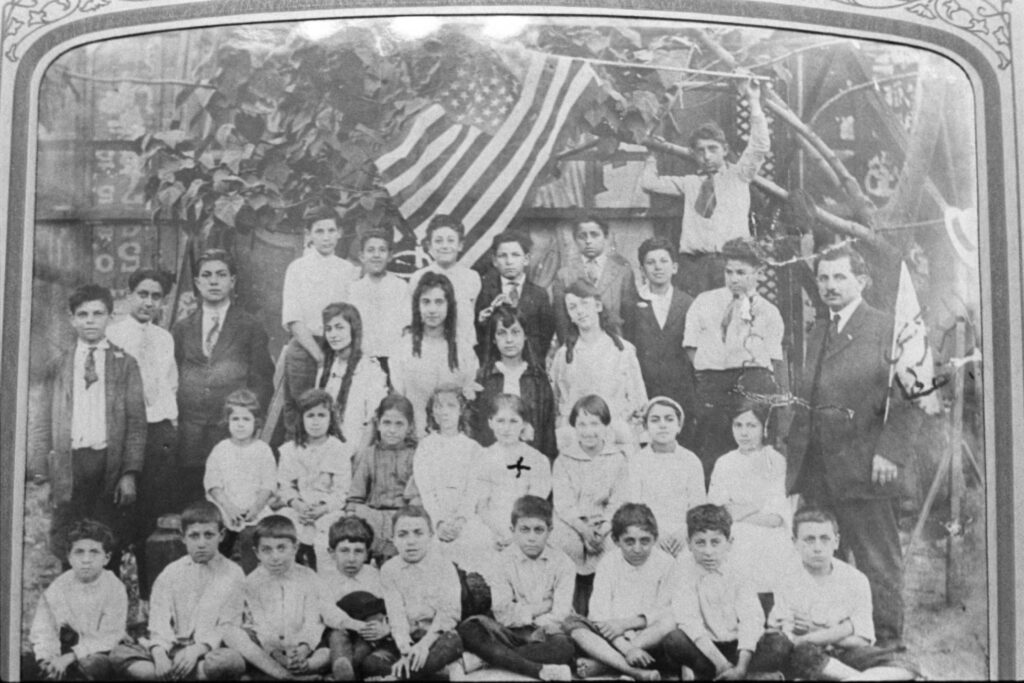
When we imagine Arab Americans, we might conjure up the images of a new arrival in the U.S. cultural imaginary. The first Arab immigrants to the U.S. arrived over 150 years ago. For over a century and a half, Arab American communities have built neighborhoods and businesses, raised families, organized and protested, written books and made films, and written themselves into the history of the United States in innumerable ways. So why is so much of this history so difficult to find? Part of the answer lies in what organizers and scholars are increasingly calling invisible archives: the fragmented, diffuse, and often intentionally ignored or erased collections of memory that don’t fit dominant narratives of who “belongs” in America’s story. Invisible archives hold memories of resistance, displacement, joy, and survival — but exist largely outside the spotlight of mainstream institutions.
What is an Invisible Archive?
The term invisible archive doesn’t mean that history didn’t happen. It refers to living, often informal collections that reside outside of state archives, university special collections, and national museums: oral histories, protest posters, family photographs, personal letters, and even Instagram slideshows. For Arab Americans, these archives are often intergenerational, passed down at dinner tables or at mosque gatherings or in family WhatsApp groups.
Invisible archives are also political. Invisibility is not accidental — it reflects systems of power that decide whose memories are preserved, funded, and legitimized.
Lost in the Census, Lost in the Nation
For decades, Arab Americans have been rendered invisible at the federal level in the absence of a Middle Eastern/North African (MENA) category on the U.S. Census. Many have had to either identify as “white” or write in their own identities, making it difficult to track migration patterns, demographics, and community needs. This lack of recognition was mirrored in archives: without consistent official documentation, the many migration waves — from Syrian and Lebanese Christian immigrants in the late 1800s, to Palestinians, Iraqis, Yemenis, and Egyptians fleeing war and colonization in the 20th and 21st centuries — remain under-documented in the national records.
The Long Road to Arab American Archives
African American and Asian American archival institutions were established decades ago, like the Schomburg Center for Research in Black Culture in 1925 and the Japanese American National Museum in 1992. Comparable national institutions for Arab Americans came much later. Dr. Alixa Naff’s oral-history work in the 1960s–80s eventually became the Faris & Yamna Naff Collection at the Smithsonian’s National Museum of American History, but it was never turned into a dedicated public museum. The Library of Congress has scattered Arab American photographs, manuscripts, and web archives; the New York Public Library maintains Arabic-language holdings and collections linked to literary figures like Kahlil Gibran.
Only in 2005, after decades of proposals rejected as “too political,” did the Arab American National Museum open in Dearborn, funded largely by local communities and the Kresge Foundation rather than federal seed money. This late arrival is not due to a lack of history but to a lack of political acceptance. Arab American identity — especially after the Gulf War and 9/11 — was often treated as too controversial for public investment, even as other ethnic museums were built with congressional backing or as part of national redress efforts. The result is a patchwork of collections that, while invaluable, remain more vulnerable to political pressures and public erasure than their counterparts.
Resistance Through Remembrance
Arab American communities have never waited for official recognition to tell their stories. Projects like the Syrian Oral History Project, the Palestinian Youth Movement’s arts initiatives, and digital zines, murals, document memory on their terms. Creative archives refuse the hierarchies of traditional collecting institutions. They prove that memory is not only something to be preserved in a vault — it is a living practice of survival, resistance, and cultural continuity.
A Living Archive
To talk about Arab American memory is to talk about migration, multigenerational struggle, and erasure — but also about the radical work of remembering together. We remember at kitchen tables and on picket lines. We remember the keffiyeh our grandparents carried across the ocean. We remember in protest videos shared across the country. We remember in the names we refuse to let be erased. To remember is to write ourselves back into history.
Want more articles like this? Sign up for our e-newsletter!
Check out our blog here!