
Subscribe
to receive news by email

Poll
Will the Trump Administration Shift U.S. Policy in Favor of Palestine?
- No (87%)
- Yes (13%)
 Loading ...
Copyright © 2026 Arab America
Go topIsrael and its Allies have always sought Iran’s Regime Collapse - Not Change
By: Ghassan Rubeiz / Arab America Contributing Writer
Until the war on Iran started last Saturday morning, the country was moving — slowly but unmistakably — toward an internal reckoning. Years of economic decay, corruption, and repression had hollowed out the regime’s legitimacy. A democratic transition rooted in Iran’s own social forces was beginning to take shape, requiring time, patience, and freedom from foreign interference.
Since the 1979 Islamic revolution, which installed the clerical rule of the Ayatollahs, every few years, Iranians have shed blood standing unarmed against their rulers. In recent weeks, they had achieved something historic: a permanent rupture that put the entire world on notice that this regime had no future. The last January massacre stood as a remarkable milestone on the long road to democracy.
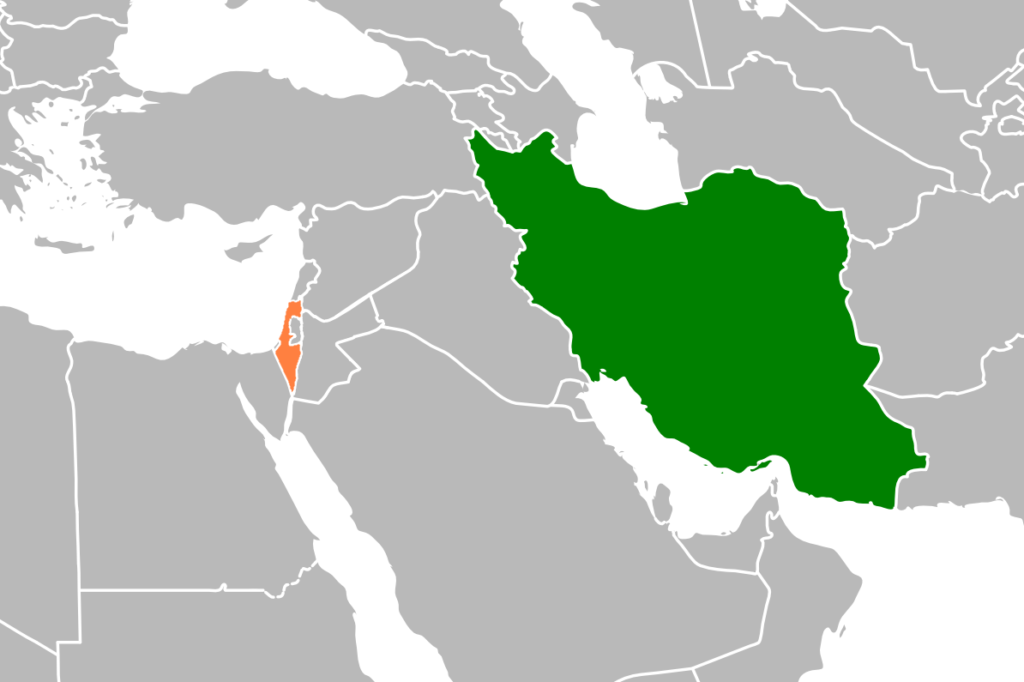
The joint US – Israeli attack has shattered that hopeful possibility. The same actors who devastated Gaza — those accused by many of war crimes and genocide — are now applying similar logic to a nation whose population dwarfs Gaza’s, claiming once again to be conducting a “surgical” operation against terrorism. It is telling that faith in force for dealing with adversarial regimes was something Trump and Khamenei shared as a governing philosophy.
Karim Sadjadpour of The Atlantic frames this war as a collision of two hubris: Trump’s is performative — his brand as the ultimate dealmaker makes military action more palatable than the appearance of having been out-negotiated. Khamenei’s was ideological — he saw his theocracy as divinely mandated and focused on the cold mechanics of survival. Both men chose confrontation over accommodation. Iran is now paying the price. (Karim Sadjadpour, “The Epic Miscalculations of Trump and Khamenei,” The Atlantic, February 2026.)
By striking Iran now, Washington and Tel Aviv might have effectively redirected the energy of many Iranians away from resisting their own repressive rulers toward resisting foreign armies and toward rebuilding a devastated country. The blood Iranians shed in their struggle for self-determination risks being overtaken by a war not of their choosing.
The rhetoric of “regime change” obscures the real objective. Neither Trump nor Netanyahu wanted to see a unified, democratic Iran emerge from within, in a process of self-determination. Israel has long feared a legitimate post-Islamic Republic state capable of rebuilding its economy, commanding national cohesion, and asserting an independent regional role — such a state would be far harder to contain. Netanyahu himself predicted the attack would “trigger the collapse of the regime.” The goal was always collapse, not change: a breakdown of central authority, leaving Iran fragmented and unable to project power for many years to come. Johns Hopkins scholar Vali Nasr confirms that Israel’s ambitions exceeded its stated objectives, that diplomacy was abandoned rather than exhausted, and that external attack redirects rather than liberates Iranian society. He warned that “the US doesn’t have a regime change option in Iran” and called Israel’s attack a “miscalculation.”
The killing of Khamenei and his ruling circle has created exactly that vacuum. A regime that falls under external attack often does not leave behind a society ready to rebuild. It usually leaves fragmentation along ethnic, sectarian, and regional lines; it invites militias and foreign proxies to compete for power; it opens the door to military rule potentially harsher than what preceded it. This is what happened in the US invasion and occupation of Iraq and the collapse of Saddam Hussein’s regime. And in 1953, the CIA orchestrated the overthrow of Iran’s democratically elected prime minister, Mohammad Mossadegh, reinstalling the unelected and increasingly unpopular Shah—who would himself be toppled a quarter‑century later by the founder of the current Iranian regime. And we still talk about the US government’s credibility in building democracy abroad.
Diplomacy was not exhausted — it was abandoned. The Omani foreign minister who mediated the Geneva talks expressed satisfaction with progress and suggested an agreement was within reach, with technical discussions continuing in Vienna. As Trump’s domestic standing eroded, aligning with Israel became politically irresistible. Greenlighting military action became a way to shore up support at home, even at the cost of regional stability of the Middle East.
The Iranian people were already on the path to change. They would have needed time and international support — not a war that has turned their struggle into someone else’s battlefield.
Before this conflict escalates and draws in Arab neighbors, Europe, China, and Russia, a ceasefire must be arranged under UN auspices, not managed by any single power. The United States must recognize that its negotiating demands of Iran had been unrealistic; Iran must acknowledge its obligation to address domestic grievances and end its destabilizing regional interventions; and Israel must confront the reality that its expansive territorial ambitions are a major root-cause of regional instability. Better to begin such reckoning now.
Ghassan Rubeiz is the former Middle East Secretary of the World Council of Churches. Earlier, he taught psychology and social work in his country of birth, Lebanon, and later in the United States, where he currently lives. He has contributed to political commentary for the past twenty years and has delivered occasional public talks on peace, justice, and interfaith topics. You can reach him at rubeizg@gmail.com
The views and opinions expressed in this article are those of the author and do not necessarily reflect the position of Arab America. The reproduction of this article is permissible with proper credit to Arab America and the author.
Want more articles like this? Sign up for our e-newsletter!
Check our blog here!