
Subscribe
to receive news by email

Poll
Will the Trump Administration Shift U.S. Policy in Favor of Palestine?
- No (87%)
- Yes (13%)
 Loading ...
Copyright © 2026 Arab America
Go topJerusalem: Britain's Christmas Present
By: Taim Al-Faraje / Arab America Contributing Writer
At the heart of the most religiously significant land on earth lies Jerusalem. It earns the arabic nickname Beit al-Maqdis, or “Holy House,” due to its revered status in all Abrahamic religions. For Jewish people, it’s the site of ancient Jewish temples, the Western Wall, and where prayer is focused. For Christians, it’s known to be where Jesus lived, taught, was crucified, buried, and resurrected. And for Muslims, it was the first prayer direction, the site of the Prophet Muhammad’s Night Journey and Ascension, and it contains al-Aqsa Mosque, the third holiest site in Islam. Because of these facts, among other political or logistical reasons, Jerusalem, and the land that hosts it, Palestine, has been a key piece and focus of almost every major empire that has made it to these ancient Canaanite lands. This includes the Assyrians, Persians, Greeks, Romans, Arabs, Crusaders, Ottomans, and most recently, the British.
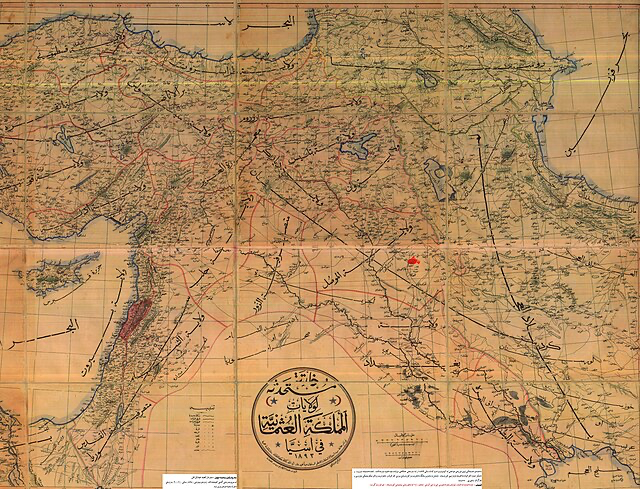
After being peacefully transferred from the Mamluks to the Ottomans in 1517, the Ottomans would hold Jerusalem for a period of 400 years. During this period, the religiously tolerant Ottomans made Jerusalem a center for religious co-existence. Synagogues, Churches, and Mosques could be found on the same street, or even within the same building. Compared to the rest of history, this was a high for religious tolerance. Religious issues wouldn’t arise until British imperial rule, after the Fall of Jerusalem in 1917. This article will detail the context, events, and aftermath of this battle, and how it affected the region politically.
Context to the Fall of Jerusalem (1917)
Less than a 100 years prior, the British found themselves supporting the Ottomans, keeping a crumbling, underdeveloped, unmodernized state alive. This was in the context of their war against Muhammad Ali Pasha, the Ottoman appointed governor of Egypt, who sought to take the empire for himself. After the Egyptian-Ottoman war in 1833, the Ottomans had lost control of Palestine, Syria, Crete, and the Arabian Peninsula. A crippling state, the Ottomans were due for change, and it seemed to be coming in the form of a new Monarch. Ali had threatened Constantinople, and it looked plausible.
His dream ended with the following 1839-1841 Egyptian-Ottoman War. This war began when the Ottoman Sultan intended to reconquer the areas taken by Egypt in the first war, namely Syria, Crete, Palestine, and Hejaz. They were swiftly defeated, and Muhammad Ali’s forces advanced into Asia Minor, making a run for Constantinople. At this point, the Western powers wanted to get involved, and while unsure how to at first, they knew supporting the crippling Ottomans during the Oriental Crisis of 1840 would be optimal.
Western Involvement in the Oriental Crisis of 1840
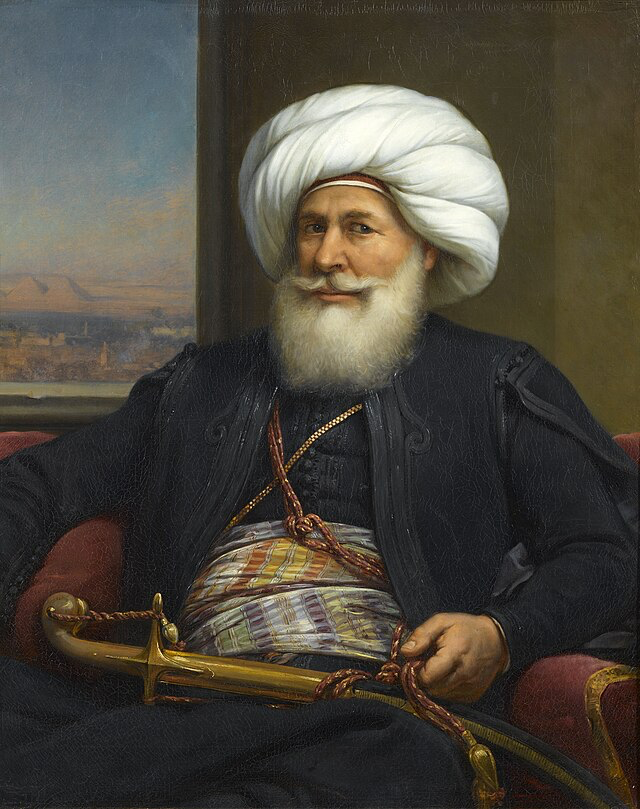
The West saw the Ottoman Empire in two parts: the powerful, modern, advanced Muhammad Ali essentially ruling Egypt and much of the Asian parts of the Empire, and the weaker, undeveloped Sultan ruling the European parts of the Empire. If Muhammad Ali came out on top of the Crisis, the Ottomans under him would remain a world power potentially for hundreds of years, and the Arab World would be off limits for the West. If the Ottomans remained, the West, and particularly the British, understood that as they’d be weaker and struggle to modernize, they would begin to fall within the century, and the British would be able to get their hands on the Arab World. The Arab world was important to Britain as it was the center between Asia, Africa, and Europe, and could serve as the lifeline to its Indian colony.
This led to immense support by Britain and British allies such as Prussia and Austria. The Ottomans would go on to regain their territories as Muhammad Ali refused to negotiate with the West and lost control of all territories gained during the first war, retaining only power in Egypt and Sudan.
At this point, Britain had secured their influence over the region. As long as they kept the weaker state of the area in power, they would have access to the Greater Syrian and North African regions and be able to colonize them as they had been colonizing the rest of the world.
World War 1 and Britain’s Campaign for The Sinai and Palestine
During World War 1, the Ottomans took the side of the Central powers for many reasons, including financial and diplomatic support by Germany. They believed it would be the best way for them to modernize.
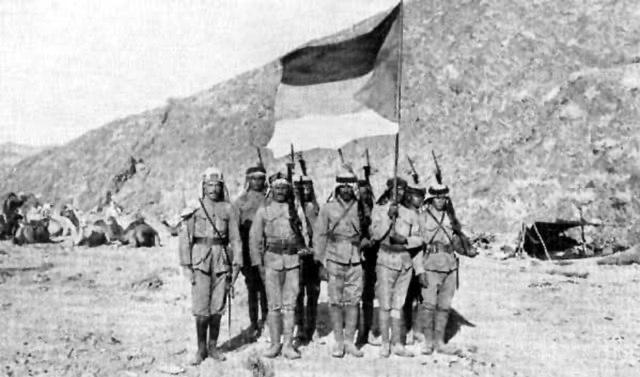
As the War ensued, they would quickly realize this may have been a mistake. Britain took this as an opportunity to officially take over Arab lands, as the Arab Revolt was in full swing in the Hejaz and other surrounding areas. After securing the Sinai, they would begin their battles in Palestine, in Gaza, Wadi el Hesi, Maghar, and Jerusalem.
The Fall of Jerusalem
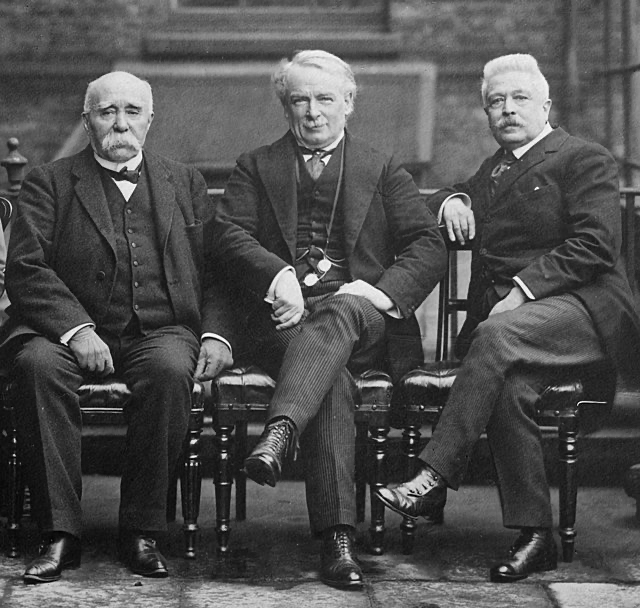
On November 17, 1917, British forces would advance into the areas surrounding Jerusalem to colonize all of southern Palestine, an advance towards the colonization of the Greater Syrian region. Days went by, and although the Ottomans defended the city to the best of their ability with help from Germany, their efforts would fail. On the 8th of December, the mayor of Jerusalem would cede the city to the British and surrender the Ottoman forces. A couple days later, General Alleny, the British Commander who was in charge of the Egyptian Expeditionary Forces, would make a formal entrance into Jerusalem.
Considering the losses of Mecca, Medina, and Baghdad just months prior, the loss of Jerusalem hit very hard. It was yet another Muslim holy place which the Empire had lost, and was an active example of their weakened state. After the city had been lost, Allenby described the capture as a “Christmas present for the British people.” Further than a Christmas present, it would be the beginning of centuries of exploitation and displacement the British would cause to Jerusalem’s native people.
Want more articles like this? Sign up for our e-newsletter!
Check our blog here!