Subscribe
to receive news by email

Poll
Will the Trump Administration Shift U.S. Policy in Favor of Palestine?
- No (87%)
- Yes (13%)
 Loading ...
Copyright © 2026 Arab America
Go topKnowledge in the Arab Tradition
By: Diksha Tyagi/Arab America Contributing Writer
Much of contemporary epistemology, the theory of knowledge, centers on debates brought by western philosophers such as René Descartes, David Hume, and Immanuel Kant. Restricted to these thinkers, with similar philosophical backgrounds and shared assumptions, it’s difficult to think about knowledge from a truly neutral perspective. Arab philosophers, however, can help us overcome this. Classical Arab epistemology operates from a completely different starting point. Thinkers like Avicenna and Al-Ghazali show us how knowledge doesn’t have to be and perhaps shouldn’t be considered solely as justified belief.
What is Epistemology?
In philosophy, epistemology is how we refer to the theory of knowledge. It encompasses numerous questions, including: What is knowledge? Can we have knowledge? How do we acquire knowledge? How do we justify knowledge? What are the limits of knowledge?
Thinkers in epistemology wonder how to distinguish between knowledge and opinion, how to find certainty, and what makes a belief justified. In particular, the roles of experience, perception, and reason are often interrogated.
Contemporary Epistemology
Today, many of the questions that epistemology focuses on are ones brought up by Early Modern western thinkers. In philosophy, this refers to the time period around the 17th and 18th centuries, beginning with René Descartes.
Descartes is thought to have begun this period because of his distinct approach to knowledge. In his Meditations, Descartes attempted to rid himself of all prior beliefs by beginning with radical doubt. This was meant to secure an indubitable foundation for knowledge, and the conclusion that he came to was “I think, therefore I am” or “cogito, ergo sum”. This placed the thinking self at the center of knowledge.
David Hume and Immanuel Kant drew on these works and went even further. Hume argued that all knowledge depends on sensory experience. Kant postulated that the mind’s structuring of experience is where our knowledge is founded, and that this therefore takes away from full certainty of any belief. Despite disagreements, these and many other western philosophers share a similar approach, where epistemology begins with the individual.
However, focusing on epistemology from only this perspective fails to take apart the assumptions and philosophical background that these western thinkers shared. Descartes, Hume, and Kant built on ideas that had been brought to western philosophy from Plato onward. Yet, their shared intellectual inheritance meant that their approaches to epistemology weren’t radically detached. This is where classical Arab epistemology diverges.
Arab Philosophers in Epistemology
Arab epistemology from the 9th to the 14th centuries did not begin with doubt. Instead, it operates from an assumption that reality is comprehensible and ordered, coming from a commitment to divine unity.
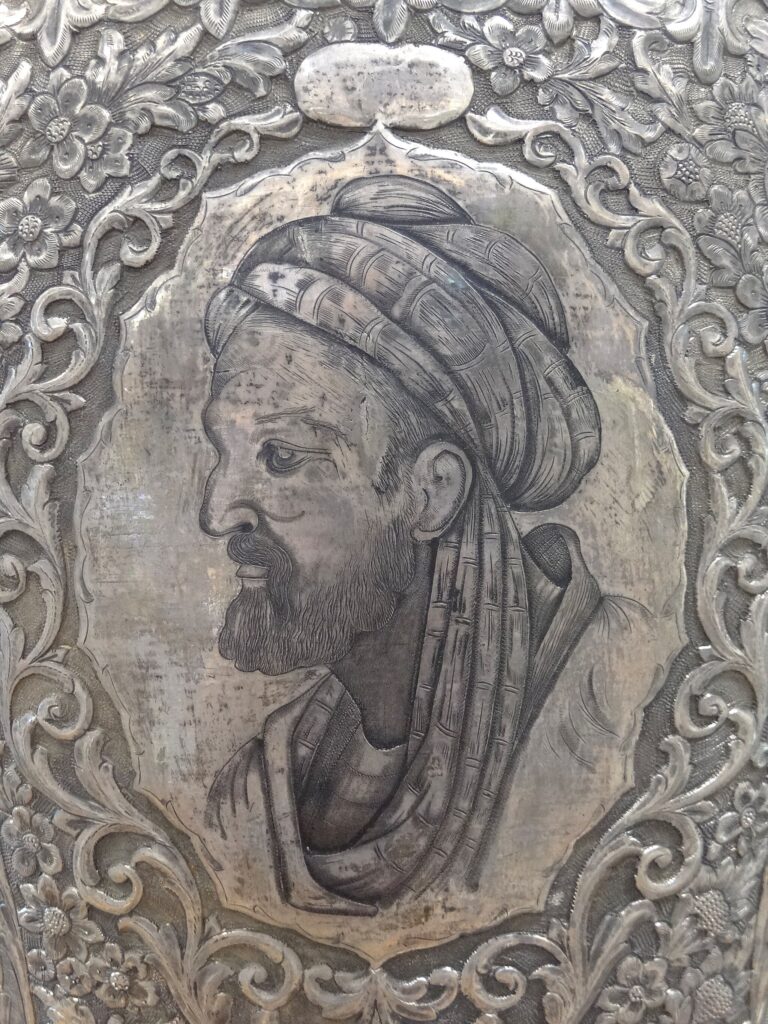
Avicenna, a thinker from the 10th century, argued that knowledge isn’t constructed internally from an isolated subject. Instead, the human mind uses sensory experience to construct universal forms. Knowledge therefore depends on reality itself being structured and intelligible.
Al-Ghazali, slightly later in the 11th century, began to doubt the reliability of both perception and rationality, which are often considered the two opposing sources of knowledge. This was because he realized that both sensory experience and rational arguments can mislead us, despite seeming consistent. Therefore, he concluded that certainty comes instead through divine illumination. This wasn’t to reject reason, but to show that knowledge requires an ethical and spiritual commitment for true certainty.
For these thinkers, epistemology is not independent. Ethics and metaphysics, the theory of the nature of reality, cannot be separated from true knowledge.
What We Can Learn
The western approach, specifically with its skepticism and the abstraction of epistemology, may seem like the easiest method to determine where knowledge comes from. Yet, this separation reflects an assumption that maybe shouldn’t be made. If in practice we cannot place knowledge and reality into two different spheres, why should we think about it as so?
Arab epistemological theories can help break down some of our assumptions and offer a different way to think about knowledge. It challenges Descartes’ legacy that epistemology must begin with skepticism. Knowledge could depend on the intelligibility of reality instead of suspicion of it. It also reintroduces the connection between knowledge and ethics, where knowledge requires a certain moral or spiritual character. Considering these possibilities, knowledge is not only justified belief, a question of true or false, but also something that’s ethical and teleological, oriented towards human flourishing.
Want more articles like this? Sign up for our e-newsletter!
Check out our blog here!