
Subscribe
to receive news by email

Poll
Will the Trump Administration Shift U.S. Policy in Favor of Palestine?
- No (87%)
- Yes (13%)
 Loading ...
Copyright © 2026 Arab America
Go topMalouf: A Traditional Music Genre in North Africa
By Nourelhoda Alashlem/Arab America Contributing Writer
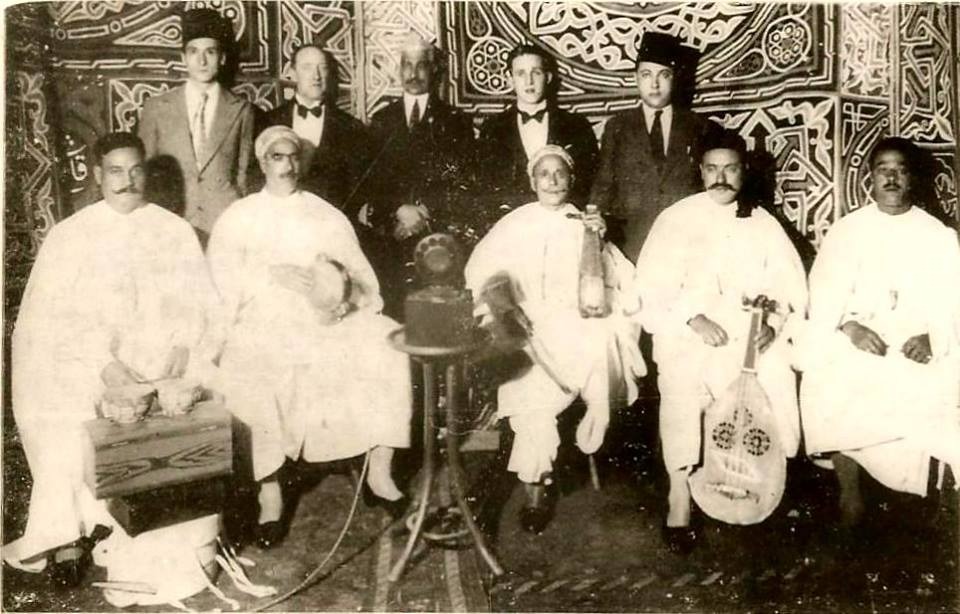
Malouf refers to the classical North African musical tradition rooted in Libya, Tunisia, and Algeria. The Arabic word ma’lūf, meaning “familiar” or “customary,” gives the tradition its name. Malouf refers to a refined art music tradition shaped by centuries of cultural exchange across the Maghreb. Its orgin lies in Andalusian music, from the Al-Andalus time period. Muslim and Jewish communities carried the tradition to North Africa following the fall of Muslim Spain.
Malouf evolved into a suite-based musical form centered on the nouba, combining complex melodic rhythms, and expressive vocal performance.Musicians perform it using instruments such as the oud, qanun, violin, ney, bendir, and darbuka.
Today, Malouf continues to offer people across the Maghreb a way to appreciate life and celebrate, as generations of musicians pass the tradition down and keep it alive.
Malouf in Libya
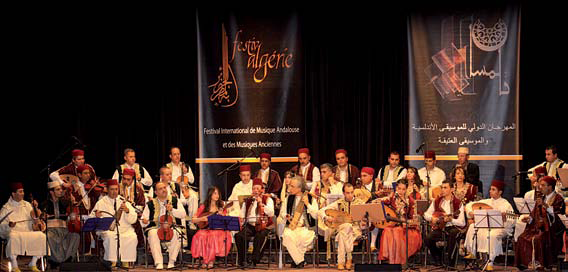
In Libya, Malouf holds a deeply spiritual and communal role. It is commonly performed during public celebrations such as Mawlid, the birthday of the Prophet Muhammad, where communities gather to sing, move through the streets, and celebrate together. Malouf also includes large processions through Tripoli’s old city, the capital of Libya. The tradition is also a staple at Libyan weddings, engagement parties, and major social gatherings.
At the heart of Libyan Malouf is the nouba, a musical suite made up of multiple poetic and rhythmic movements. A single nouba can include religious praise, Sufi devotion, and lyrical expressions of love. Slow melodies and steady rhythms unite these elements. Language often shifts between Classical Arabic and the Libyan dialect.
Mohamed Hassan is one of the most popular and widely recognized Libyan musicians of the twentieth century, helped expand the traditional musical structure forms by introducing additional instruments that reached mass audiences through radio and public performance. Another figure is Sheikh Hassan Aribi, who founded his Malouf ensemble in 1964 with many well-known Libyan names. In 1974, he was named the first president of Libya’s music board.
Libyan artists have played a key role in keeping this tradition alive across generations. One of the most deeply remembered figures is Salam Qadri. Raised in Tripoli, Qadri grew up singing tawashih (devotional hymns) with his family before joining Libyan Radio in the 1950s. His song “Saafar Mazal” (سافر مزال, Still Traveling) spread rapidly and became widely known. Another beloved piece, “Wa ‘Yuni Sahara” (وعيوني سهارى, My Eyes Stay Awake), has been re-performed and re-chanted by many artists in a modern twist, including the Libyan pop singer Cheb Jilani. A 2021 Al Jazeera report highlighted the revival of Malouf in Libya, documenting how traditional bands once again perform at weddings and religious holidays.
Malouf in Tunisia
In Tunisia, Malouf holds a special place as a national art form and a symbol of cultural heritage. Structured around the nouba, Tunisian Malouf endures through both popular practice and formal institutions.
Unlike Libya, where Malouf remained largely tied to communal spaces, Tunisia also formalized the genre through cultural institutions, most notably La Rachidia, founded in the early twentieth century to preserve Andalusian music.
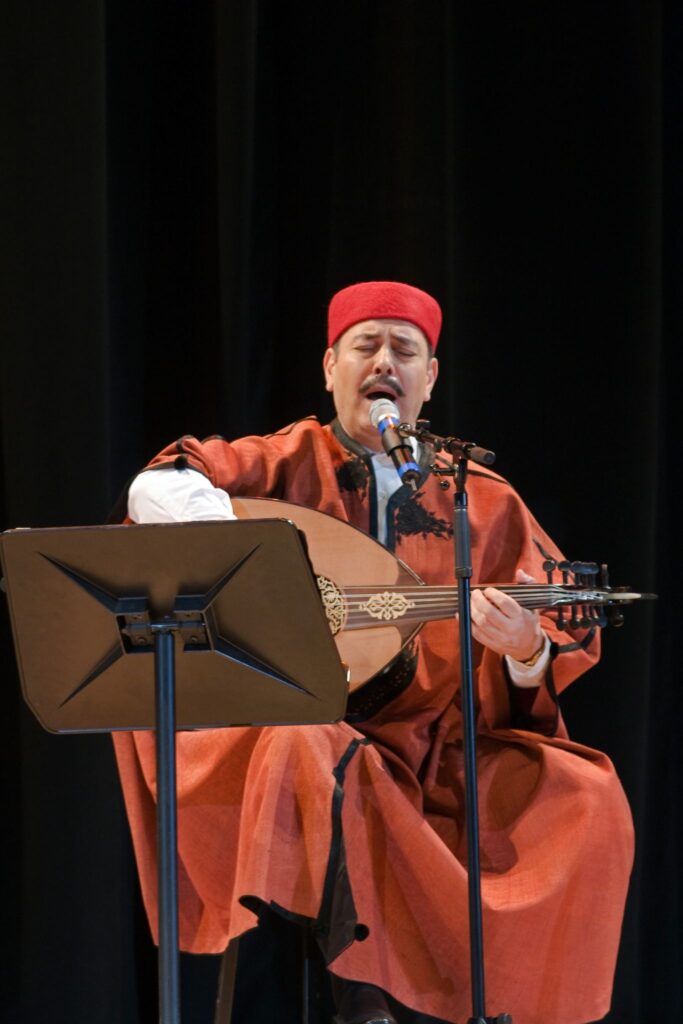
One of the most influential modern figures associated with Tunisian Malouf is Lotfi Bouchnak. Known for his powerful voice and delivery. Bouchnak helped introduce Tunisian Malouf to international audiences through modern renditions that remained traditional. His album Malouf Tunisien brought long poetic passages, slow rhythmic builds, and expressive vocals to listeners far beyond Tunisia and the Maghreb region in itself.
Bouchnak’s great influence lies in his ability to move between worlds. He performed Malouf alongside sacred chants, such as Egyptian tarab, and contemporary compositions, showing that Malouf could remain faithful to its origins while still speaking to modern listeners. In doing so, he helped position Tunisian Malouf as a living art form. The genre continues to evolve while honoring its past.
Malouf in Algeria
In Algeria, Malouf is most strongly associated with the historic city of Constantine, where it developed into one of the most respected forms of Andalusian music. Known locally as Malouf al-Constantini, this tradition traces its roots back to Al-Andalus, carried across the Mediterranean by Andalusian refugees and preserved through generations of oral teaching. Like its Tunisian and Libyan counterparts, Algerian Malouf also follows the nouba structure.
One of the most influential figures in Algerian Malouf was Cheikh Raymond, a master musician from Constantine whose work helped preserve the tradition during the twentieth century. His music reflected the shared Muslim and Jewish heritage of Algerian culture. It reinforced Malouf’s role as a unifying art form.
Another widely loved artist is Hamdi Benani, easily recognized by his white violin. Benani helped bring Malouf to a broader audience, performing on national and international stages while staying rooted in the Constantinian tradition. Today, the Malouf heritage continues to thrive through events such as the 13th International Malouf Cultural Festival in Constantine, where artists from across Algeria, Tunisia, and Libya gather each year to celebrate Andalusian music.
Why Malouf Still Matters in North Africa
This is the life story of Malouf, one of North Africa’s most enduring musical traditions. Centuries of migration, faith, and cultural exchange shaped it. Across the Maghreb, Malouf absorbed Andalusian poetry, Ottoman influences, regional dialects, and communal ritual, becoming something deeply familiar and widely shared.
In Libya, Tunisia, and Algeria, new performers learn traditional verses and festivals revive ancestral sounds. Through this process, Malouf continues to evolve as a living tradition shaped by those who carry it forward.
Want more articles like this? Sign up for our e-newsletter!
Check out our blog here!