

Subscribe
to receive news by email
Poll
Will the Trump Administration Shift U.S. Policy in Favor of Palestine?
- No (87%)
- Yes (13%)
 Loading ...
Copyright © 2026 Arab America
Go topMansa Musa’s Hajj and Its Impact On The Arab World
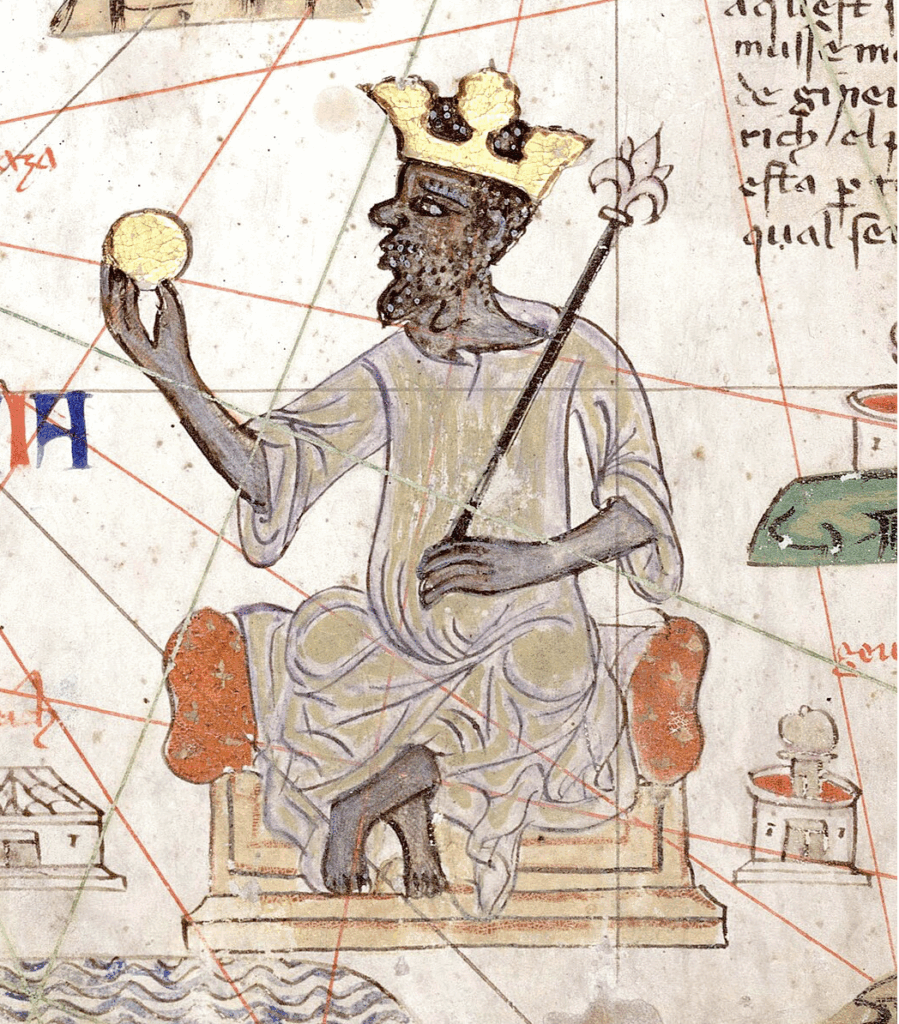
Detail from the Catalan Atlas Sheet 6 showing Mansa Musa. Bibliothèque nationale de France , Public domain, via Wikimedia Commons
By Jake Harris / Arab America Contributing Writer
Mansa Musa also known as Musa I was King of the Malian Empire in the first half of the 14th century, at the territorial peak of the empire. The extent of his wealth is known to have been extraordinary even for a monarch. Musa I, is considered by historians to be the wealthiest person in history. The vast supply of gold and ivory made the empire extraordinarily wealthy. Musa was also a devout Muslim. Musa’s Hajj to Mecca had a major impact on the Arab World and created a major flow of intellectual capital, and cultural diffusion from the Middle East to West Africa.
Mansa Musa’s Hajj
In 1324. Mansa Musa would perform his Hajj. A requirement for all Muslims that have the means to do so. A trip to Islam’s holiest site in Mecca, modern day Saudi Arabia. It is estimated that Mansa Musa brought 12,000 people with him on the journey, many of them slaves. Mansa Musa’s Hajj was a significant introduction to his power on the regional stage. Spanish Cartographers were depicting Musa with a gold crown over the area which the Malian Empire controlled on the Map. The map was called the Catalan Atlas. This indicates that even in European Christendom, Musa’s wealth and influence was catching imaginations.
Mansa Musa in Cairo
One of Musa’s major stops was in Cairo, Egypt, where he and his entourage gave away staggering amounts of gold. It got to the point where it had a noticeable impact on the regional economy. Shihab al-Umari, an Arab historian of the period noted in his writings that the amount of spending and influx of gold caused the price of gold to deteriorate and inflation to increase. Shihab al-Umari, who was a historian from Damascus is one of the main sources on Musa’s Hajj that is cited by historians today. Musa’s stop in Cairo was part of a larger effort by the monarch to strengthen ties between the Malian Empire and the Muslim world.
Musa was said to have met with the Emir of Cairo who was meeting with Musa on behalf of the Sultan of Egypt. Mansa Musa was said to have spoken the Arabic tongue fluently. Musa had declined to meet with the Sultan. He had made clear that he wanted the Hajj to be a spiritual journey rather than a diplomatic tour.
Development of Timbuktu into an Islamic Hub
When Mansa Musa returned from his Hajj, there was a renewed effort to make Mali a cultural and economic center in the Islamic world. One of the great projects of the monarch was the Djinguereber Mosque in Timbuktu. Timbuktu had been annexed by Mali while Mansa Musa was on his Hajj. Mansa Musa transformed Timbuktu from a smaller trading post to a major hub for the flow of goods. Musa brought scholars from the Arab world to Timbuktu following his Hajj. Architects from the Arab world also would migrate to this developing city to facilitate the construction of mosques, and universities.
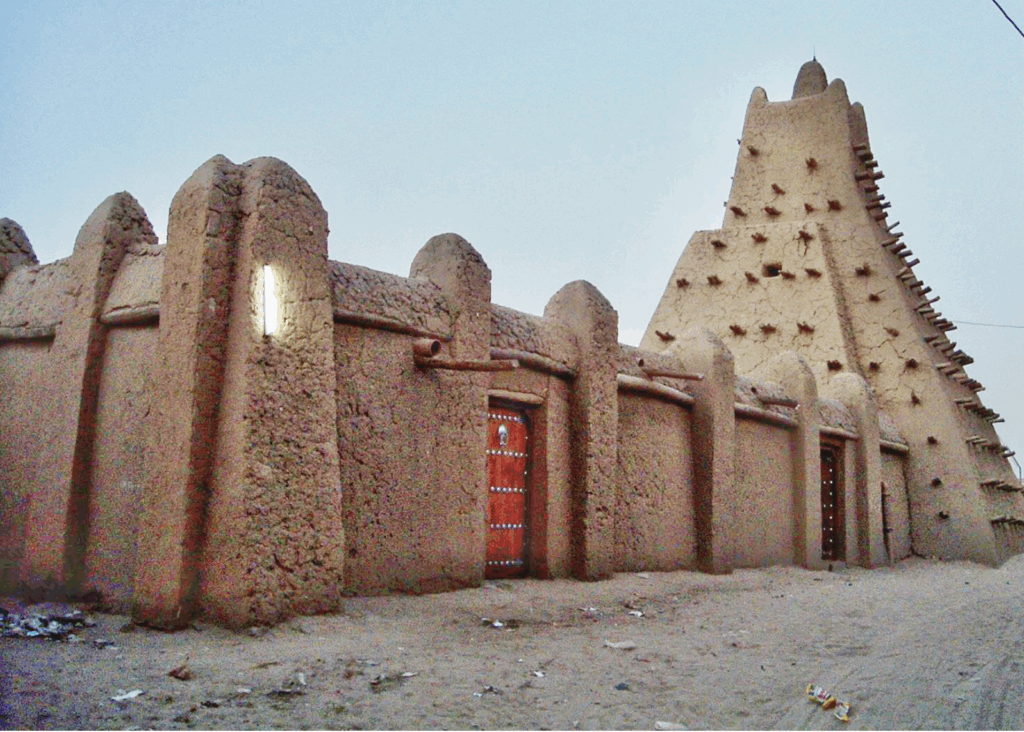
Anne and David, Public domain, via Wikimedia Commons
Legacy of Mansa Musa’s Reign
While Mansa Musa’s reign was nearly a century after the end of the Islamic Golden Age, he created his own golden age for the Malian Empire that became a major symbol of the spread of Islam from the Arabian peninsula all the way to West Africa. The Malian Golden Age also provides an important context to the era in which it happened. It shatters stereotypical educational tropes in the west that often focus on the great powers in Europe, treating Africa and Asia as this primitive afterthought. The rise of Mali as a hub in the Islamic world is also a crucial tale in the history of the Arab diaspora. Mansa Musa’s record shattering wealth will be what many remember him for in the context of global history. However, it must also be in the context that his reign was significantly impactful outside of the borders of his empire.
Want more articles like this? Sign up for our e-newsletter!
Check out our blog here!





.jpg)
