
Subscribe
to receive news by email

Poll
Will the Trump Administration Shift U.S. Policy in Favor of Palestine?
- No (87%)
- Yes (13%)
 Loading ...
Copyright © 2026 Arab America
Go topMarwan Barghouti: The Activist Dubbed “The Palestinian Mandela”
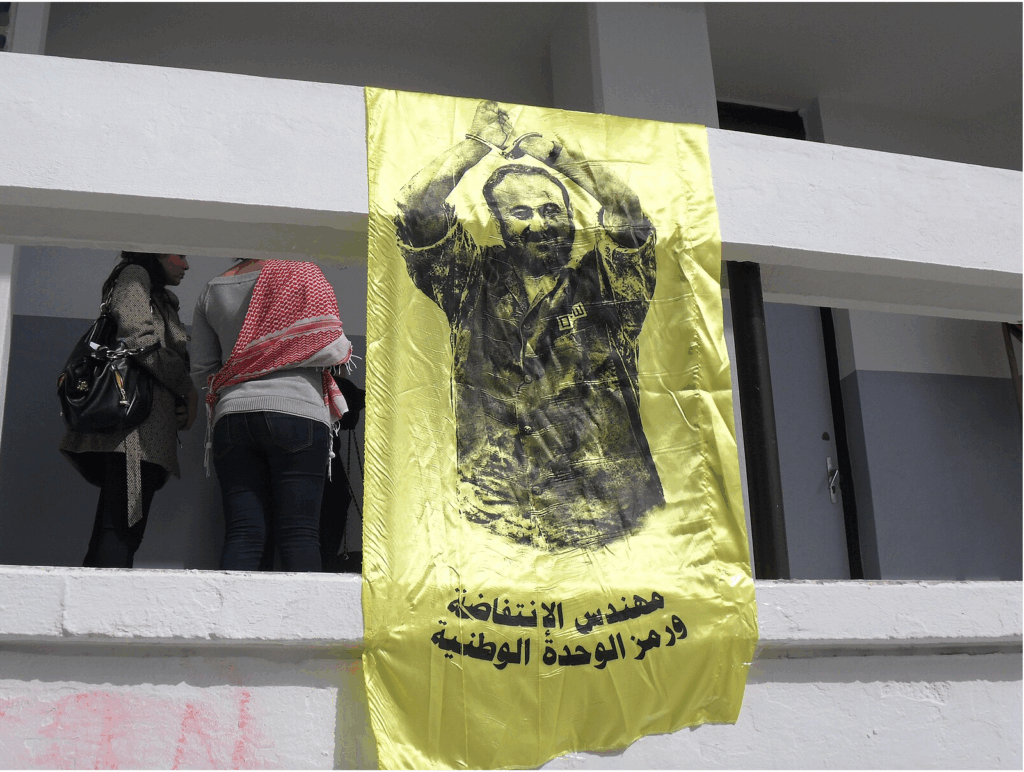
Photo by Ashoola, CC BY-SA 3.0, via Wikimedia Commons
By Jake Harris / Arab America Contributing Writer
There are often misconceptions about the political landscape of Palestine. Like any other nation, there are disagreements, factions and different road maps that groups believe would best lead Palestine to self-determination and full sovereignty. Marwan Barghouti is one of the most influential Palestinian activists coming from the Fatah movement. The Fatah movement has evolved from a guerilla warfare group to advocating for a negotiated settlement with Israel. They aim for peace through a two-state solution. Fatah, which is the largest faction within the Palestinian Liberation Organization (PLO) lost power to Hamas in the 2006 Gaza Strip Elections. They still hold considerable influence and control in the West Bank.
Barghouti’s Early Life and Activism
Marwan Barghouti was born in 1958 in the village of Kobar, near Ramallah in the West Bank. In 1967, the West Bank was occupied by Israel during the Six-Day War. Barghouti joined the Fatah movement at the age of 15. In the lead up to the first Intifada, Barghouti was primarily a student-activist who spoke at protests. He reiterated that the Palestinian people were resisting the “settlements, the arrests, the destruction”. In the late 1980’s, Barghouti was deported to Jordan by the Israeli government during the first intifada. Barghouti would be allowed to return to the West Bank as part of the Oslo Accords. Barghouti returned and became a member of the Palestinian Legislative Council. The council was founded in 1996 under the Oslo Accords’ delegation of powers to the Palestinian Authority.
Build Up To The Second Intifada
As the 1990s drew to a close and a new millennium began, the Oslo Accords began to show cracks. Barghouti began to become disillusioned with the idea that peace could be achieved through negotiations alone. The year 2000 involved a major summit called the Camp David Summit. It was meant to put a stamp on the Oslo Accords and create lasting peace. Ultimately no agreement was reached. This is largely because of disputes involving the status of Jerusalem, and settlements.
In September of 2000 the Second Intifada broke out. Ariel Sharon, an Israeli politician visited the Al-Aqsa Mosque in what was seen by the Palestinians as a provocative way of claiming Israeli sovereignty over the Holy Site for both Muslims, and Jews. Riots soon broke out and Barghouti reiterated that he is “not a pacifist or a terrorist” and that he “reserves the right to protect myself, resist the Israeli occupation of my country and fight for my freedom”
Arrest, Trial, and Imprisonment
During the Second Intifada, The Al-Aqsa Martyrs Brigade was formed. It was a militant wing of Fatah that carried out suicide attacks against civillians. Barghouti was arrested by Israeli authorities in 2002 and charged with membership in a terrorist organization and multiple counts of murder.
Barghouti refused to offer a defense because he refused to recognize the sovereignty of an Israeli court over him, arguing they had no jurisdiction. He also denied the allegations outright, admitting he supported armed resistance against the Israeli military while also denying targeting civilians. Whether or not Barghouti’s trial was fair has been a subject of debate. The Inter-Parliamentary Union, an international body in Switzerland that promotes Human Rights and the upholding of Parliamentary Democracy wrote a report in which they outlined the entire trial. They came to the conclusion that it is “impossible to conclude that Barghouti received a fair trial”.
Barghouti’s activism has continued behind bars. Marwan Barghouti assisted in getting militant leaders to form a truce in June 2003 with Israel. Unfortunately the truce collapsed shortly after in August of the same year.
In 2017, Barghouti was involved in a hunger strike over conditions for Palestinian Prisoners.
Prospects of Barghouti’s Release
The prospect of Barghouti being released has been a significant part of negotiations between Hamas and Israel to form a ceasefire in Gaza. It highlights how Barghouti is a unique figure in Palestinian politics whose popularity overcomes factional differences.
In hypothetical polling conducted prior to the October 7th attacks, Ismail Haniyeh of Hamas (now deceased) led Palestinian Authority Leader Mahmoud Abbas 54 percent to 36 percent. In this same polling, Marwan Barghouti led Haniyeh 61 percent to 34 percent. It makes one ponder the question as to whether releasing Barghouti would be in Israel’s best interests as he might provide a better alternative in an adversary than Hamas.
Want more articles like this? Sign up for our e-newsletter!
Check out our blog here!