

Subscribe
to receive news by email

Poll
Will the Trump Administration Shift U.S. Policy in Favor of Palestine?
- No (86%)
- Yes (14%)
 Loading ...
Copyright © 2026 Arab America
Go topMore Than a Name: The Ancient History Behind Palestinian Cities
By: Luma Alaraje / Arab America Contributing Writer
Each city worldwide holds a unique meaning in its name. For some, it reflects the climate or region; for others, it points to the city’s historical roots. Many Palestinian cities have names that originate with the first settlers on Palestinian land: the Canaanites. Major cities in Palestine, including Jerusalem and Yaffa, have names that may reflect ancient Canaanite language and history.
The Canaanites
The Canaanites were an ancient people who inhabited areas in the Levant between 3300 and 1200 BCE. Canaanites demonstrated considerable linguistic and writing skills reflecting the range of languages spoken in the region. The script of Canaanite language was an important precursor for later language developments, due to its simplistic characteristics, in contrast with the complex hieroglyphic writing systems used at that time. As ancient peoples of historic Palestine, Canaanites provided the country with many of the place names we see and use today.
The Canaanites also held strong religious beliefs. Their religious beliefs, practices and oral traditions influenced later religious traditions. These religious traditions may also be reflected in place names. Looking at Palestinian cities, we find evidence of these religious influences, offering clues into the historical origins of these names.
Roots in Religion
Cities in Palestine, such as Jericho, Jerusalem and Bethlehem, bear significant roots to traditional Canaan deities. Jericho, or Areeha, was known as Reeho, by the Canaanites. This name has been associated with Yarikh, a Canaanite moon deity. The name has led people to refer to Jericho as the, “City of the Moon.” Jericho holds this history within its name; however, it doesn’t end there. The word reeh, which appears in the proposed Canaanite name, is associated with fragrance. Jericho lives up to its name. As a historic city known for its natural beauty, it perfectly encapsulates its Canaanite origins.
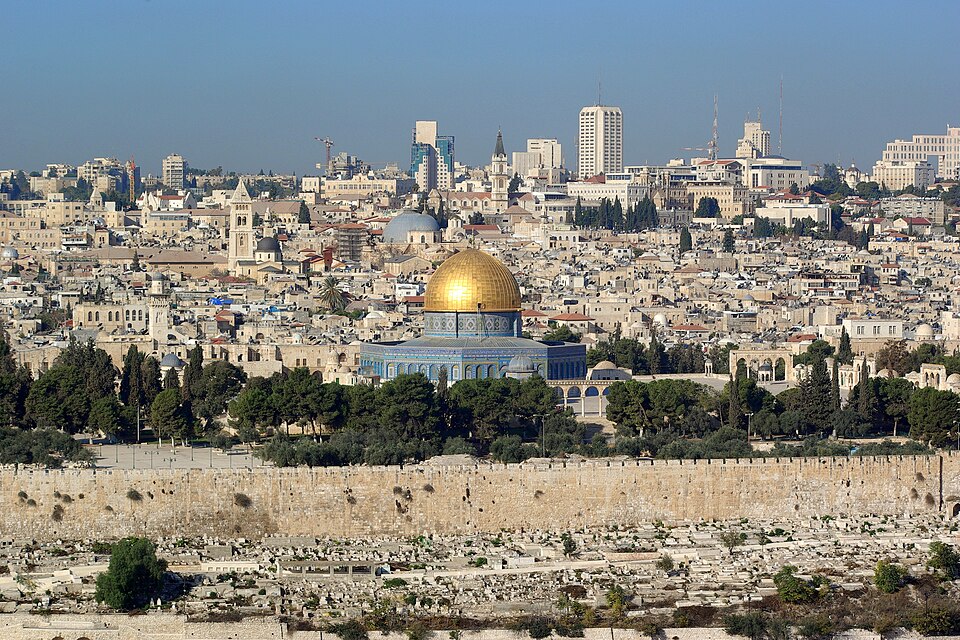
Jerusalem was referred to as Uru Shalem in Canaan, meaning, “Founded by Shalem.” Shalem was the Canaanite God of dusk. Jerusalem, situated on the top of a hill, was an ideal place to view the sunset. This illustrates how the Canaanites may have named places based on their religion.
Similarly, Bethlehem’s name origins refer to a Canaanite deity. At face value, the name Bethlehem, or Beit Lahm, means “House of Meat,” or “House of Food.” However, its roots run deeper in the Canaanite language. In Canaan, Bethlehem is referred to as Beit Lakham. This means, “House of Lachama.” Lachama was an ancient Canaanite deity who controlled prosperity and wealth. Bethlehem is referred to as the “City of Prosperity” because of its ties to Lachama. Although its name can be understood differently, Bethlehem is consistently associated with prosperity and abundance. Whether through Lachama, or as the “House of Meat.”
Geographical Place Naming
While the Canaanites sometimes used religion to guide their place naming in Palestine, other times they looked to other sources to inspire the names they created. Jaffa, a city on the Mediterranean coast, is referred to as Yaffo, in Canaan, meaning “beautiful,” or “pretty.” Being on the coastline, Jaffa was a major port for Canaanites to trade. The port’s coastal location, beauty and prosperity may have influenced the Canaanites to refer to Jaffa as “the beautiful city.” Jaffa continues to be a major port for trade in Palestine, while maintaining its beauty through its nature, beaches, and the shining sea.
Like the proposed religious interpretations of Bethlehem, Jericho and Jerusalem, Ramallah’s name has also been linked to religious meaning, while reflecting the city’s geography. In Arabic, Ramallah directly means God-willing, or God wished. However, in Canaan, the word Ramallah is actually broken into ram, meaning hill or elevated place, and al, meaning God. This translates to “The Elevated Place of God” in Canaan. Partially, this can refer to the status of Canaanite Gods, but it also refers to the position of Ramallah on the Judean Mountains. The physical geography of Ramallah holds weight in its name because of the Canaanites.
Likewise, Tulkarm maintains its Canaanite origins through the geographical meaning of its name. In Canaan, Tulkarm is broken up into Tur, meaning hill or mountain, and karm, which means grapevine or vineyard. The full meaning of Tulkarm is “The Mountain of Grapes,” a reflection of the city’s position in the mountains, and its fertile soil and abundance of vineyards.
Reflections of Its People
In other instances, the Canaanites named cities in Palestine in ways that may have reflected their inhabitants. For example, Hebron was associated with the name Habar, which is interpreted as meaning “partnership” and “alliance.” This was a reflection of the role of Hebron as a political center during the Canaanite era. The name may reflect the city’s historical associations with alliances and political relationships. The city of Hebron still holds this meaning, even in its Arabic name, Al-Khalil, meaning “the friend.”
Gaza provides another example of a city whose name has been interpreted in relation to strength or protection. Gaza, known as Ghazalo, in Canaan, means “the strong,” or “the protected.” The name Gaza was a characterization of its people and the strength of its land. The name takes on a poignant resonance when considering what Gaza and its people have endured.
The names given to Palestinian cities by the Canaanites are more than just a label, they reflect the ancient and ongoing history of Palestine and Palestinians. As we dig deeper to understanding the meaning of these names, we uncover connections to the religious beliefs, geographical landscapes and social relationships of the people who inhabited the land thousands of years ago. These names offer a glimpse into how the Canaanites understood their surroundings and how traces of their language and culture may have endured through generations. By exploring the origins of Palestinian city names, we gain a deeper appreciation for the layers of history embedded in the places Palestinians continue to call home.
Want more articles like this? Sign up for our e-newsletter!
Check our blog here!