

Subscribe
to receive news by email

Poll
Will the Trump Administration Shift U.S. Policy in Favor of Palestine?
- No (87%)
- Yes (13%)
 Loading ...
Copyright © 2026 Arab America
Go topA Night of Light and Legacy: The Grand Egyptian Museum Opens Its Doors to the World
By: Laila Mamdouh / Arab America Contributing Writer
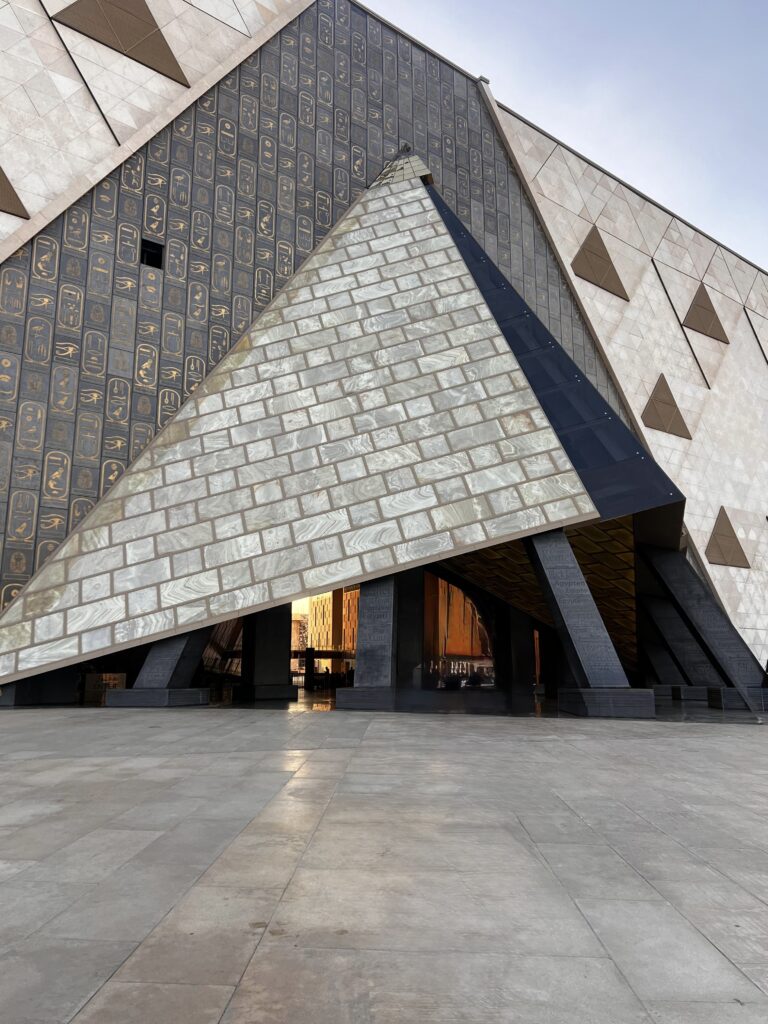
What began as a distant dream in the early 1990s has, after decades of determination, finally risen from the sands of Giza into shimmering reality. The Grand Egyptian Museum (GEM) , the largest archaeological museum in the world, has officially opened its monumental doors, standing as both an ode to Egypt’s ancient glory and a mirror of its modern spirit.
From the first sketches on blueprints to the final polish of glass panels reflecting the pyramids beyond, Egyptians of all walks of life have poured heart and heritage into this colossal undertaking. Engineers, curators, laborers, and historians each left fingerprints on a project that was as much about perseverance as preservation.
Announced in 1992 and beset by economic hurdles, political upheavals, and global delays, the GEM’s completion has been hailed as a triumph of Egyptian resilience. “This museum has waited for generations to open,” reported Reuters, marking it as a crowning achievement not only of architecture but of collective national will.
A Dream Decades in the Making
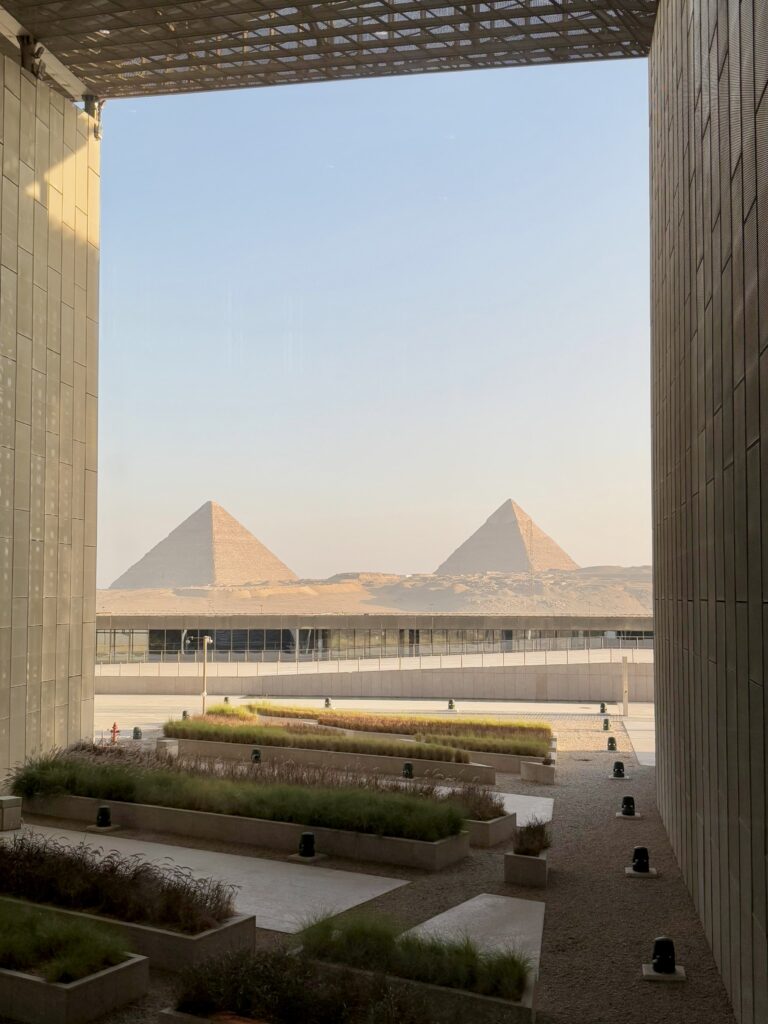
What began as a distant dream in the early 1990s has, after decades of determination, finally risen from the sands of Giza into shimmering reality. The Grand Egyptian Museum (GEM) , the largest archaeological museum in the world, has officially opened its monumental doors, standing as both an ode to Egypt’s ancient glory and a mirror of its modern spirit.
From the first sketches on blueprints to the final polish of glass panels reflecting the pyramids beyond, Egyptians of all walks of life have poured heart and heritage into this colossal undertaking. Engineers, curators, laborers, and historians each left fingerprints on a project that was as much about perseverance as preservation.
Announced in 1992 and beset by economic hurdles, political upheavals, and global delays, the GEM’s completion has been hailed as a triumph of Egyptian resilience. “This museum has waited for generations to open,” reported Reuters, marking it as a crowning achievement not only of architecture but of collective national will.
The Ceremony: Where Heritage Met Harmony
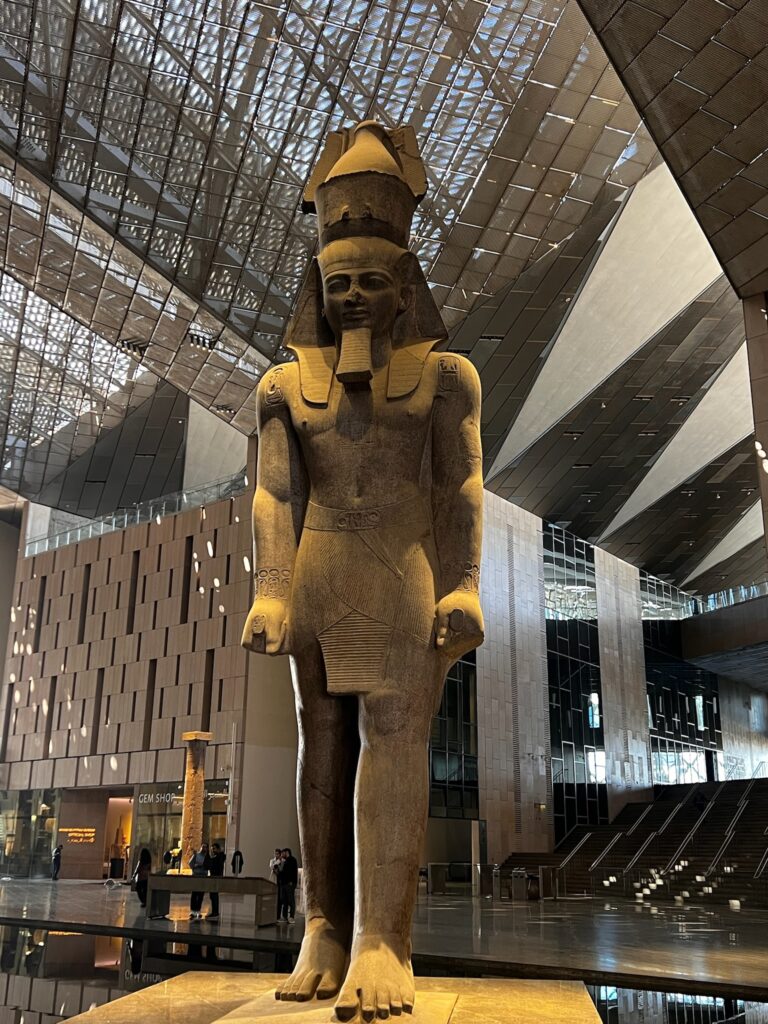
Inside the vast atrium where the colossal statue of Ramses II greets the world, art meets ancestry in a breathtaking ballet of light, sound, and symbolism.
The opening ceremony was nothing short of symphonic. A grand orchestra blended Islamic tonalities with Coptic hymns, weaving a musical mosaic that embodied the unity within Egypt’s diversity. It was performative yet profound; a reminder that Egypt’s strength lies not in sameness, but in symphony.
Dancers from across continents moved in swirling synchrony, robes flowing like the Nile, their choreography echoing the pulse of civilizations past. Costume designers paid homage to the old and the new, linen tunics stitched with golden threads, inspired by pharaonic attire yet framed in contemporary silhouettes. These garments were more than fabric; they were philosophy; heritage worn proudly, modernity woven gently through tradition.
Each element, the music, the movement, the mise-en-scène, was deliberate. It wasn’t spectacle for spectacle’s sake, but symbolism staged to speak. The coexistence of faiths through melody, of eras through design, of people through performance; each was a reminder of what Egypt has always been: a crossroads of culture, a cradle of coexistence.
A Message of Peace and Promise
When President Abdel Fattah el-Sisi took the stage, his words resonated with a solemn serenity. He spoke not in the language of politics, but of peace, emphasizing Egypt’s role as “a platform for dialogue, a destination for knowledge, and a beacon for all who love life and believe in humanity” (State Information Service).
His speech reached beyond borders. It was heard not just by dignitaries in attendance, among them heads of state, international cultural envoys, and global figures, but by millions of Egyptians abroad who saw in his message a quiet call: We honor your heritage here. You are part of this story, no matter where you are.
For Egyptians at home, the GEM embodies cultural renaissance; for those abroad, it offers an anchor, a reminder that even oceans away, the pulse of Egypt still beats within.
The World Watches in Wonder
The significance of the guests who attended underscored Egypt’s growing cultural diplomacy. Royals, artists, and global leaders gathered beneath the museum’s shimmering façade, a signal that this moment belonged not just to Egypt, but to the world.
As Le Monde noted, the GEM is now “the centerpiece of Egypt’s tourism and cultural industry, a new global beacon at the edge of the ancient world.” The presence of international artists and orchestras, the interplay of global and local traditions, and the choreography of unity all painted a message of shared humanity.
In that sense, the ceremony’s performative power transcended geography. It invited the Arab world to celebrate heritage without borders, to see Egypt’s light not as exclusive but as inclusive; a luminescent reminder that culture connects more than it divides.
More Than a Museum
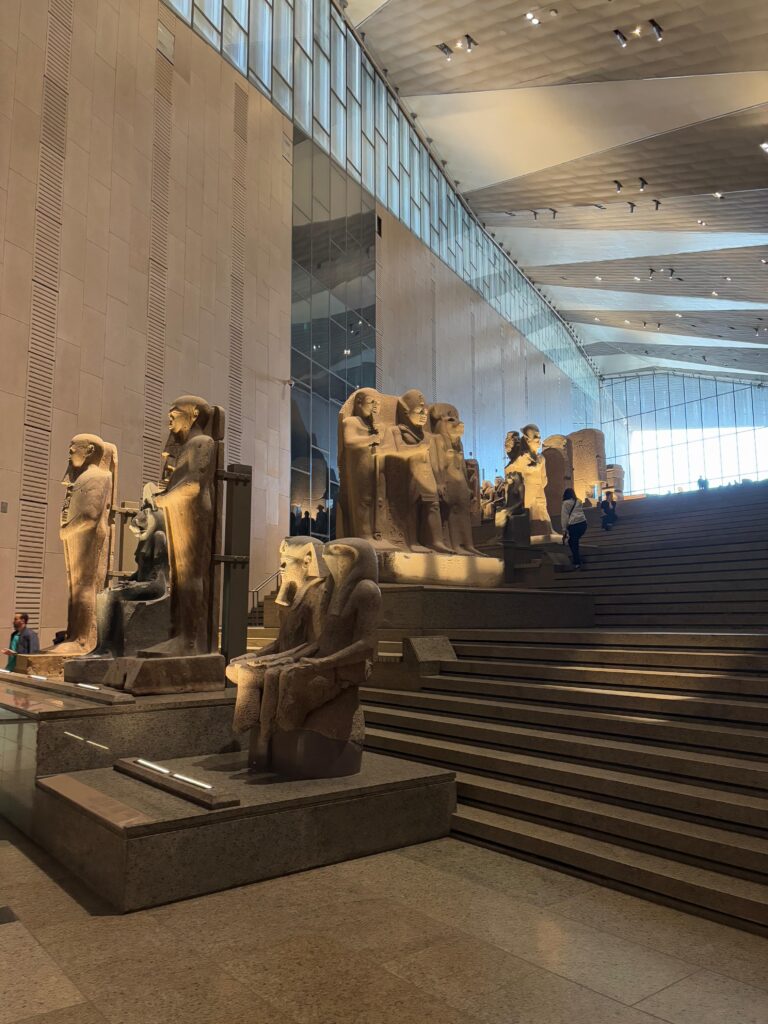
When the final notes faded and fireworks cascaded across the Giza Plateau, what lingered wasn’t just the spectacle; it was the sentiment.
The Grand Egyptian Museum is not simply a home for antiquities. It is a living bridge, between the ancient and the modern, between the local and the global, between memory and imagination. It stands as a testament to what the Arab world can achieve when creativity and conviction converge.
For Egyptians, it is a monument of pride; for the region, a mirror of possibility; for humanity, a sanctuary of shared heritage.
And as King Tut’s golden glow dimmed and the desert fell silent, the message of the night remained bright and eternal: From the sands of time rises a new light, Egypt’s story, ever ancient, ever new.
Want more articles like this? Sign up for our e-newsletter!
Check out our blog here!