Subscribe
to receive news by email

Poll
Will the Trump Administration Shift U.S. Policy in Favor of Palestine?
- No (87%)
- Yes (13%)
 Loading ...
Copyright © 2026 Arab America
Go topOctober 7: Two Years Later
By Emma Campbell / Arab America Contributing Writer
October 7: Two Years Later
October 7, 2023, has erupted into history as another turning point in the Arab-Israeli conflict. Now, just over two years later, anniversaries have become more than remembering the dead and dying – but a way to discuss political change. What real progress has been made since then? How do political shortcomings continue to influence the war? Arab America contributing writer, Emma Campbell, analyzes how the aftermath of October 7th continues to redefine Arab-Israeli relations and the broader struggle for Palestinian self-determination. As Palestinians continue to die daily, and the Trump Peace Plan is in its beginning stages, the world is reflecting on the past two years – as well as the past century of conflict, wars, massacre, and genocide.
Past to Present: What Progress Has Been Made?
The late 1800s and early 1900s continued to build aspirations for a Jewish state, particularly from the World Zionist Organization and Zionist Congress. These aspirations were realized in 1917 with the creation of the Balfour Declaration, which declared Palestine the national home for Jewish people. Additionally, with the British Mandate for Palestine (1920), the British government became the leading authority of the League of Nations mandate to establish both a Jewish national home and protect the rights of the existing Arab population. Following Israel’s founding in 1948, many Western powers have been considered allies of Israel – including the US, UK, Germany, France, and many more.
With the ongoing assault on Gaza since October 7, foreign policy has gradually changed – particularly within the Western world. Countries that were once long considered allies of Israel have signed declarations to support a Palestinian state. A new wave of these Western declarations came after the UN’s 80th Session of the General Assembly (UNGA). As of September 22, 2025, 157/193 UN member states have recognized Palestine – or 81%. In addition to UN member states, Palestine has also been recognized by the Holy See – the Catholic Church and Vatican City’s governing body with UN non-member observer status. Additionally, as of 2025, famine (IPC) and genocide (UNHRC) have been declared in Gaza by UN authorities, which is a good step to holding Israel accountable.
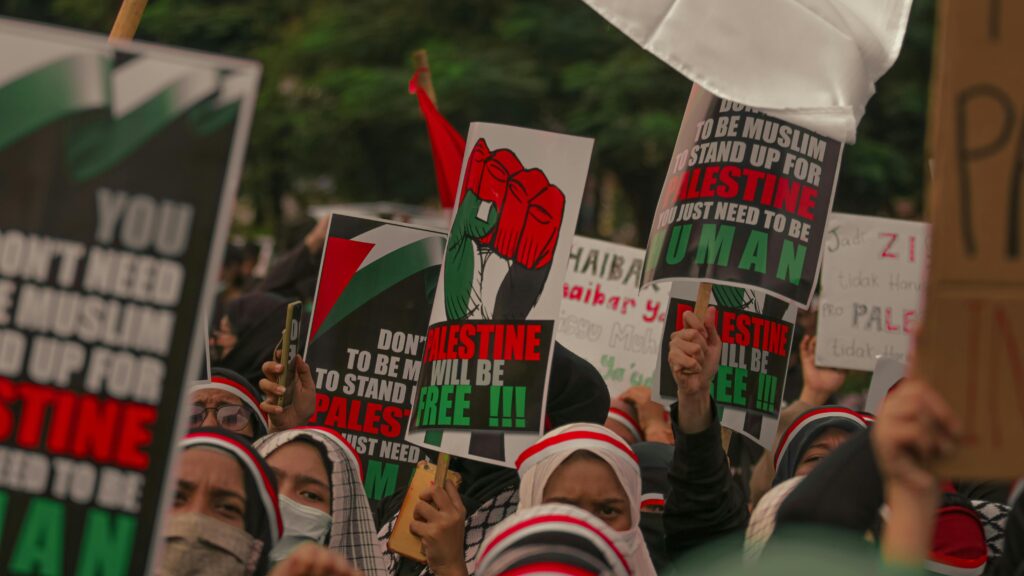
For Israel, recognition of Palestine means holding Israeli authorities accountable for occupation while also increasing pressure for a Two-State Solution. While this does not have immediate effect on Israeli policy within the occupied Palestinian territories, the increasing recognition of Palestine reflects a surge of international backing, circulating hope for the people of Palestine. Additionally, the world has seen mass pro-Palestinian protests, including on the attack’s two year Anniversary: from the US to UK, alongside Indonesia and Japan, Pro-Palestinian voices are not dying down – but rising.
Shortcomings
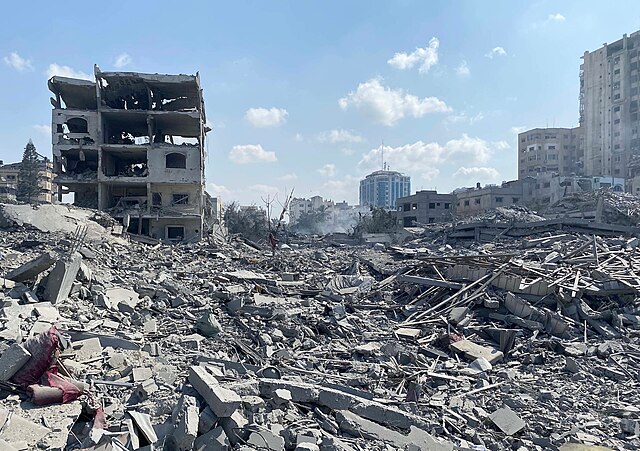
While progress continues to be made, it is hard not to recognize the multitude of catastrophes Israel has perpetuated onto Gaza in the name of “taking down Hamas”. According to Arab News, 11% of Gaza’s 2.1 million population has been killed or injured, half of which being women and children. Additionally, every four out of 100 children have lost one or both of their parents, and every eight of ten buildings that stood pre-October 7, 2023 have been damaged or flattened. According to the Gaza Health Ministry, 67,000 people are dead, and 170,000 have been injured. Of those 170,000, over 40,000 have life-altering injuries (WHO). Additionally, the projected death toll does not include the many thousands believed to be buried under the rubble. According to the Committee to Protect Journalists, the genocide in Gaza is the deadliest conflict for journalists, health workers, and UN aid workers in history. The British Medical Journal has also stated that patients with explosive injuries in Gaza compare in data to US soldiers injured in Iraq and Afghanistan.

Despite Trump’s Peace Plan, Israeli attacks continue to bombard Gaza. Cemeteries are overflowing, and mass graves are everywhere. Nearly the entire population in Gaza has been displaced multiple times, and tent cities sprawl across much of Gaza’s south – with Israel controlling a majority of land. Most land has been flattened or bulldozed, with Gaza City and agricultural towns being replaced with roads and Israeli military posts. According to Arab News, the rubble in Gaza is twelve times the size of the Great Pyramid of Giza, and 30% of people have gone days without eating.
However, people still wonder if peace is possible. With Israel blaming Hamas for every aspect of the genocide – death toll, displacement, destruction, etc.- and Netanyahu stating there will be no Palestinian state, hope for peace seems to shrink by the day. Israel’s track record of disregarding ceasefire agreements, as well as the continued bombardment under the Trump Peace Plan, makes the idea of lasting peace feel more like a mirage than a goal.
The Road Ahead
Two years after October 7, the international community must enforce ceasefires, and take accountability when they are violated. While there has been progress for a Palestinian state, the path to peace and ending the genocide requires Palestinian sovereignty to continuously be at the fore-front of the conversation. The call for justice is echoing louder, and action must follow.
Want more articles like this? Sign up for our e-newsletter!
Check out our blog here!