
Subscribe
to receive news by email

Poll
Will the Trump Administration Shift U.S. Policy in Favor of Palestine?
- No (87%)
- Yes (13%)
 Loading ...
Copyright © 2026 Arab America
Go topOil and the Modern Arab State
By: Diksha Tyagi/Arab America Contributing Writer
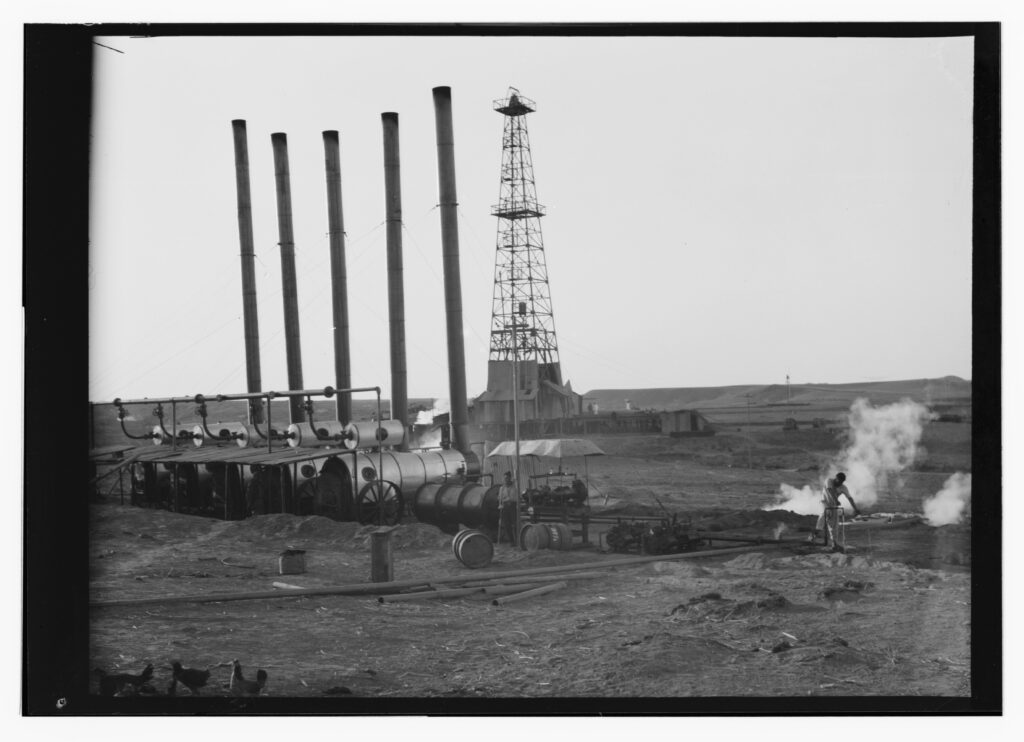
To truly understand the modern Middle East and North Africa, the importance of oil cannot be overstated. Ever since the discovery of large petroleum reserves in the early twentieth century, oil has been the determinant of the diverse economic and political trajectories across the Arab world. This article will examine the significance of Arab oil and its rapidly changing future.
Historical Foundations
The first major deposit of oil in the Middle East was discovered in 1908 in modern-day Iran. Soon after, oil was found in Iraq in 1927, followed by the first commercial-scale discovery in Saudi Arabia in 1938, and later in Kuwait, the UAE, Qatar, and Libya. However, oil didn’t immediately change the global energy landscape. Until after World War II, the world was primarily reliant on coal.
Following 1945, the rapid acceleration of industrialization made large-scale oil production in the Middle East truly begin. With the Arab region under colonial control following the abolishment of the Ottoman Empire, oil from Arab states was extracted and owned by mainly foreign companies. By the 1950s, Western companies under pressure began to share profits with host governments, and the founding of OPEC in 1960 led to Arab countries coordinating and resisting western control. Today, Arab governments mostly oversee their oil resources through national oil countries, or NOCs.
The 1973 Oil Embargo in particular was a major turning point. This was where Arab OPEC members cut oil production and stopped oil exports to the west, creating worldwide economic consequences. With the crashing of western economies and quadrupling of prices, Arab states realized and demonstrated the immense power they had.
Oil-Rich and Oil-Poor States
Oil-rich Arab states followed very different development trajectories from neighboring oil-poor states. Today’s oil-rich states include Saudi Arabia, the UAE, Qatar, Kuwait, Bahrain, Oman, Algeria, Libya, and Iraq. For these states, a significant share of their GDP and government revenue comes from oil revenues. Oil money allowed states to fund massive infrastructure projects, create universal healthcare and education systems, and build global cities like Dubai and Doha.
Oil-poor states include Morocco, Tunisia, Jordan, Lebanon, Palestine, and Egypt. These states lack significant oil reserves and did not have the capital to finance similar projects. Therefore, their economies had to rely more on diversified sectors like tourism, agriculture, and remittances from migrant workers employed in oil-rich states. These disparities have led to a persisting regional hierarchy, where oil-rich states attract migrants and accumulate wealth from oil-poor states that remain dependent on remittances and the Gulf as a whole.
Political Repercussions
Governments of oil-rich states have historically not needed to tax citizens due to being financed by external oil revenue. This led to the formation of rentier states. These are states where a substantial portion of national revenue comes from external rents instead of domestic taxation. Rentier states typically provide extensive welfare, subsidies, and public-sector jobs, but political participation is limited as citizens have little leverage over their government. Therefore, oil wealth helps to sustain authoritarian but highly stable political systems.
On the other hand, oil-poor states must depend on taxation, loans, and external aid. Their governments are more vulnerable to the demands of their citizens and do not have the economic cushion that oil-rich states do. They are therefore more prone to political turmoil.
Current Considerations
Today, however, this oil dominance is waning. Due to global efforts to reduce carbon emissions and transition towards renewable energy, oil-rich governments are realizing that sole reliance on oil poses a threat to their sovereignty. Certain oil-rich states have launched initiatives to diversify their economies, including Saudi Arabia’s Vision 2030. This program aims to reduce dependency on oil and grow other economic sectors. In addition, It plans on modernizing society and improving quality of life. This program and others represent the recognition that these countries must adapt to a changing global economy.
Implications
Oil has shaped and will continue to shape the modern Arab world, but this coming century will see many differences in the role oil will play. Though oil made extraordinary economic development possible and laid the foundations for many political systems today, it can also become a vulnerability going forward. Meanwhile, oil-poor states must face structural economic challenges, while oil will continue to complexify geopolitics. The coming decades will see whether the foundation built on oil could persist in a developing, post-oil world.
Want more articles like this? Sign up for our e-newsletter!
Check out our blog here!