
Subscribe
to receive news by email

Poll
Will the Trump Administration Shift U.S. Policy in Favor of Palestine?
- No (87%)
- Yes (13%)
 Loading ...
Copyright © 2026 Arab America
Go topPathbreakers of Arab America—Alexander Michel Odeh
By: John Mason / Arab America Contributing Writer
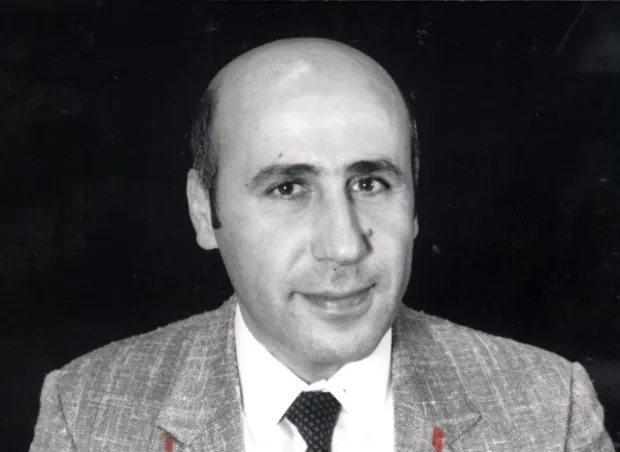
This is the one-hundred and third in Arab America’s series on American pathbreakers of Arab descent. The series features personalities from various fields, including entertainment, business, sports, science, the arts, academia, journalism, and politics. Our one-hundred and third pathbreaker is Alexander Michel Odeh, a trailblazing Palestinian-American human rights activist, who was brutally murdered on October 11, 1985. He was a passionate defender of Palestinian rights and an advocate for interfaith unity among Jews, Muslims, and Christians. Odeh has been honored in a documentary film, “Who Killed Alex Odeh?”, which will be featured at the Sundance Film Festival in 2026.
Alex Odeh: Trailblazing Palestinian American human rights activist and advocate for interfaith unity
Palestinian-American Alex Odeh was a passionate defender of Palestinian human rights, a loving husband and father, and a talented poet. Alex was born to a Christian family in the town of Jifna, Palestine, on April 4, 1944. That was a time of mass expulsions of Palestinians as Israel established a Jewish state in 1948. He also lived through Israel’s occupation of the West Bank in 1967, around which time he became an ardent advocate for Palestinian rights. With a strong interest in poetry, Alex attended Bir Zeit University and Al-Najah University in the occupied West Bank, then studied economics at the University of Cairo. He immigrated to the U.S. in 1972 and enrolled at California State University, Fullerton, for a master’s in political science. As a poet, Alex published a volume of his poetry, ‘Whispers in Exile.’
Alex’s move to the U.S. gave him an opportunity for a full voice in advocating for Palestinians and, in fact, all Arabs. His commitment to justice and advocacy was first fulfilled in a position at the Saudi Arabian Cultural Mission in Los Angeles. He also taught Arabic at Cal State Fullerton and, at Coastline Community College, Middle East history and politics. There, Alex also served as an elected member of the Academic Senate. In those early years in the U.S., Alex also became known for his community work, for example, in helping Saudi students adjust to the new American culture and assisting Yemenis with labor disputes. He was viewed as a person of “care and compassion.”
In his community role, Alex began serving as secretary of the Arab American Association of Orange County, which brought together Arab-American immigrants from various Arab countries. He not only helped newly-arrived Arabs adapt to the American cultural and political scene, “Alex knew how to draw on the talents of the community which included people from all walks of life; he had an outgoing personality and the skill to bring people together. He believed in the dignity of every person and treated people with respect.
That was 1980, when the American-Arab Anti-Discrimination Committee (ADC), founded by James “Jim” Zogby and James Abourezk, began to scout someone to run the ADC office in Southern California. Alex was the perfect candidate. According to Zogby, “He was a marvelous colleague. He was passionate about our mission and worked so very hard to build our presence in his region. Because he was so loved and trusted by so many in the community, he was more than an employee. He became the face of ADC—and it was a perfect face for our new organization.”
Alex’s role as the ADC’s Regional Director included tireless work in combating the stereotyping of Arabs and biased Middle Eastern reporting in the media. This resulted in his becoming a public figure and a recognized leader. His involvement in Arab American matters went hand-in-hand with his support for the Palestinian cause. Alex became one of the leading figures in the Palestinian cause, always seeking peace and justice for his beleaguered people.
Alex had temporarily returned to Palestine to marry, and the couple, returning to the U.S., became the parents of three daughters.
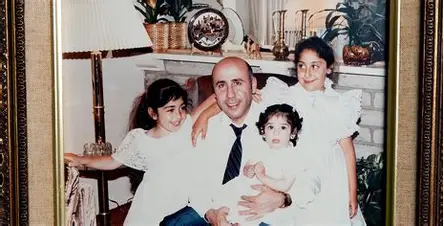
Alex Odeh’s devotion to the Palestinian cause was linked to his assassination at the ADC office on October 11, 1985
Odeh’s assassination was part of a string of such murders at ADC regional offices. On August 16, 1985, the Boston office of the ADC was bombed, injuring two officers. The bombing that killed Odeh came the day after the ending of the Palestinian Liberation Front–sponsored ‘Achille Lauro’ hijacking, in which Leon Klinghoffer, a Jewish American, was murdered. The night before his death, Odeh had explained to the media that “the Palestine Liberation Organization (PLO) was not involved in the hijacking and PLO leader Yasser Arafat was ready to make peace.”
The day of his murder, October 11, Odeh had been scheduled to speak at Friday prayer services at a synagogue in Fountain Valley, California. Shortly before his killing, Alex had appeared on the television show ‘Nightline,’ which featured a lively discussion between Alex and a representative from the Jewish Defense League (JDL). After that program, Odeh was killed by a bomb as he opened the door of his office at 1905 East 17th Street in Santa Ana, California.
The FBI officially reported the assassination as follows: “Odeh, the Western Regional Director of the ADC, was killed when he unlocked and opened the door of the ADC’s office at approximately 9:00 a.m. In addition to killing Odeh, the bomb injured several other people and caused massive damage to the building.” On August 27, 1996, the FBI announced a $1 million reward for information leading to the arrest of Odeh’s killers. JDL members heckled the FBI spokespersons announcing the reward. The assassins were eventually apprehended and prosecuted after they had fled for their protection in Israel.
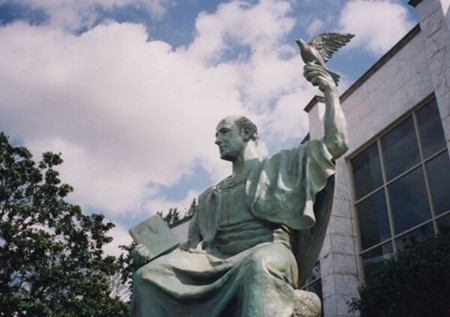
Later, in April 1994, to honor Odeh, the Alex Odeh Memorial Statue, created by Algerian-American sculptor Khalil Bendib, was erected in front of the Santa Ana Central Library, despite protests by the JDL. “On October 11, 1996, the eleventh anniversary of Odeh’s murder, vandals defaced the statue. On February 6, 1997, vandals poured two gallons of red paint on the statue. JDL chairman Irv Rubin commented, “I think the guy [Odeh] is a war criminal.” However, to this day, the life and work of Alex Odeh is celebrated in gatherings around the statue erected in his honor.
George Washington University professors launch a U.S. documentary competition film, ”Who Killed Alex Odeh?” for screening at the Sundance Film Festival 2026
The film is described: “Using archival footage and contemporary investigation, directors Jason Osder and William Lafi Youmans take us back to the time of Odeh’s murder and trace the extremist forces that may have been behind his death and the disturbing ramifications that remain today.” While Osder has a broad filmmaking experience, technical skills, and industry connections, Youmans, an Arab American, contributed research and subject-matter expertise to producing ”Who Killed Alex Odeh?”
Osder described the privilege of screening their film at Sundance: “Sundance really stands alone in the independent documentary landscape. Starting at Sundance puts your film into the conversation about what the important films of the year will be.” Youmans came up with the idea for the film after watching another of his colleague Osder’s documentaries. The two began talking about how different communities carry different historical narratives, and how certain events are widely known in some circles but unfamiliar in others.
“There was a moment of recognition,” Osder recalled. “We were two Americans working at the same university, roughly the same age, and we realized we didn’t fully share the same history. Depending on where you grew up and who you are, you carry different stories with you. That realization was the beginning of the project.” The collaboration between the two filmmakers remained central as the project developed over a decade. Youmans is also the author of “Unlikely Audience: Al Jazeera’s Struggle in America” and a nationally recognized scholar whose work has appeared in publications including The Washington Post, Newsweek, Variety, and The New York Times.
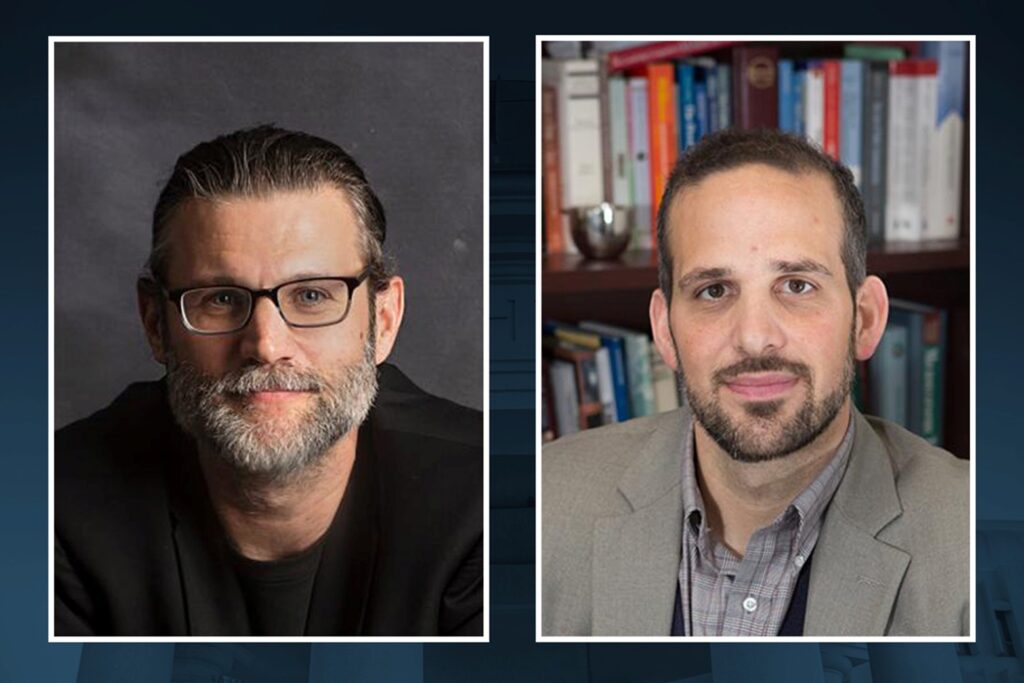
Youmans said that when he learned that “Who Killed Alex Odeh?” had been accepted into Sundance, “he was overcome with emotion. I had tears of joy at the news. We worked for so long and faced so many rejections…And I thought about what it would mean for Alex’s family, who entrusted us with telling their story.”
“Who Killed Alex Odeh?” is the perfect tale to reveal to American and international audiences, most of whom are seeing it for the first time, the character and courage of one Palestinian Arab who struggled for his people. For Osder and Youmans, this documentary film was the perfect vehicle for using their skills and knowledge in addressing a complicated yet important issue.
Sources:
-“Alex Odeh,” Wikipedia Series on Arab Americans, 2025”
-“Alex Odeh: Trailblazing Palestinian-American Human Rights Activist,” Institute for Middle East Understanding, April 02, 2021
-“Status Quo and Monument of Reconciliation Frameworks: Alex Odeh Memorial Statue,” Santa Ana, California. World Heritage USA
-“Alex Odeh: 37 Years and Still No Justice For A Civil Rights Hero,” the American-Arab Anti-Discrimination Committee (ADC)
-“GW Professors’ Documentary Selected for 2026 Sundance Film Festival, GWToday
John Mason, Ph.D., focuses on Arab culture, society, and history and is the author of LEFT-HANDED IN AN ISLAMIC WORLD: An Anthropologist’s Journey into the Middle East, New Academia Publishing, 2017 and of his new novel, WHISPERS FROM THE DESERT: Zaki, a Little Genie’s Tales of Good and Evil (2025), under his pen name, Yahia Al-Banna. He has taught at the University of Libya in Benghazi, Rensselaer Polytechnic Institute in New York, and the American University in Cairo. John served with the United Nations in Tripoli, Libya, and consulted extensively on socioeconomic and political development for USAID and the World Bank in 65 countries.
The views and opinions expressed in this article are those of the author and do not necessarily reflect the position of Arab America. The reproduction of this article is permissible with proper credit to Arab America and the author.
Want more articles like this? Sign up for our e-newsletter!
Check out our blog here!