
Subscribe
to receive news by email

Poll
Will the Trump Administration Shift U.S. Policy in Favor of Palestine?
- No (87%)
- Yes (13%)
 Loading ...
Copyright © 2026 Arab America
Go topPathbreakers of Arab America—Ibrahim Abu Lughod
By: John Mason / Arab America Contributing Writer
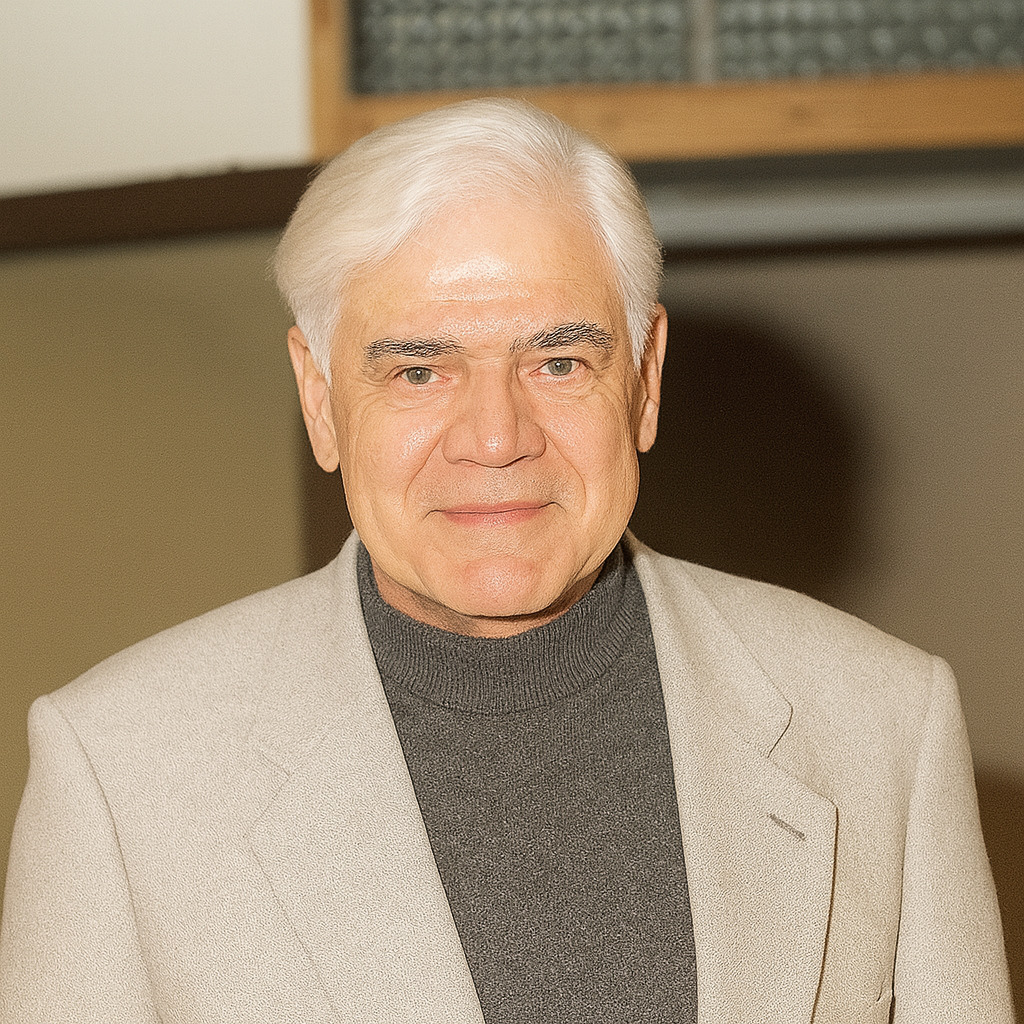
This is the ninety-first in Arab America’s series on American pathbreakers of Arab descent. The series features personalities from various fields, including entertainment, business, sports, science, the arts, academia, journalism, and politics. Our ninety-first pathbreaker is Ibrahim Abu-Lughod, a Palestinian-born academic and activist who was one of the first to introduce Arab Americans to the world of national liberation struggles and post-colonial politics.
Abu-Lughod’s passion for a free Palestine taught us the difficulty for national movements to address failure and press on through a life of constant action
Ibrahim Abu-Lughod was born in Jaffa, a port city in the British Mandate for Palestine, on May 23, 1929. His father was a metal manufacturer. Abu-Lughod was both an academic and an activist, as well as an international official who applied his vast knowledge of Palestinian history, life, culture, and political development to support the reality of a vibrant Palestine.
He was portrayed by fellow Palestinian scholar, Rashid Khalidi, “as one of the first Arab-American scholars to have a severe effect on the way the Middle East is portrayed in political science and in America”. More specifically, Abu-Lughod was a pioneer in the challenging endeavor of interpreting U.S. politics and society for the Palestinian community and in expressing Palestinian aspirations to the rest of the world.
According to Wikipedia’s series on Arab Americans, Abu-Lughod was involved in the Palestinian struggle from his student days. He reportedly demonstrated against the British and skirmished with local Zionist settlers. He completed high school in March 1948, after which he volunteered to work for the National Committee in Jaffa to discourage residents from leaving the city in the face of what were reported as “Zionist assaults.” As a result, Ibrahim’s family left shortly after, on April 23, 1948. Being active in the resistance, Abu-Lughod remained behind for a few weeks, but left finally on May 3, 1948, on the Belgian ship, ‘Prince Alexander’—purportedly the last ship out of Jaffa, headed to Beirut.
Ibrahim stayed in Beirut only briefly, from where he departed as a refugee to the U.S. He then entered the University of Illinois, from which he received a B.A. He then moved on to Princeton University, where he received a Ph.D. in Middle East studies in 1957. Following his Ph.D., Abu-Lughod joined UNESCO for three years as a field expert in Egypt. There, he directed the social science research department.
Abu-Lughod returned to the U.S. to begin a long academic career. He served on the faculties of Smith College, McGill University in Montreal, followed by a 34 year teaching career at Northwestern University. There, he held positions of professor of political science, department chairman, Director of Graduate Studies, and founder of Northwestern’s Institute of African Studies. Abu-Lughod also founded the Association of Arab-American University Graduates and the journal ‘Arab Studies Quarterly.’ He continued to consult with UNESCO posts in Beirut and Paris. In 1975, he became a U.S. citizen.
Abu-Lughod developed a reputation as “the leading Arab academic activist in North America”, with “an encyclopedic knowledge of the third world, Arab culture, history and language, and the western tradition of rationalism and humane understanding…” His course on the politics of the Middle East was known to attract many Jewish students, who invariably praised him for “his knowledge and even-handedness in dealing with the difficult political issues in the region.”
In his role as an internationalist, Ibrahim was elected in 1977 to the Palestine National Council (PNC), remaining on the Council until 1991. His attempt through UNESCO to establish a Palestine national open university in Beirut was undercut by the 1982 Lebanon War. That war involved the Israeli invasion of Lebanon after repeated attacks and counter-attacks between the Palestine Liberation Organization (PLO) operating in southern Lebanon and the Israeli Defense Force that had caused civilian casualties on both sides of the border.
Following his return to Northwestern, he and a younger Palestinian American, Edward Said were to meet in April 1988 with U.S. Secretary of State George Shultz to share with him their conviction that “the Palestinian people were prepared to coexist with Israel if their self-determination was insured by a Middle East peace plan.” They averred that “What was needed was a mode of sharing and coexistence between two national communities in historic Palestine.”
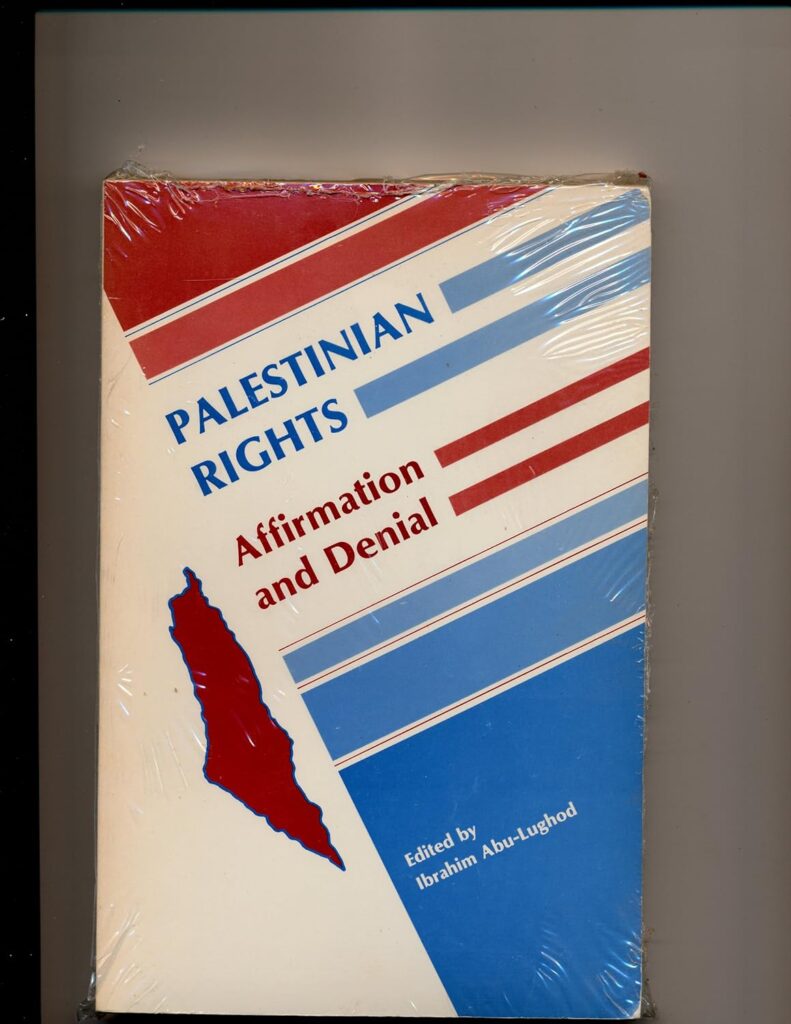
Ibrahim later resigned from the PNC in 1991, and due to his American citizenship, he was permitted to return to his homeland for the first time since 1948. During the last decade of his life he was a professor and vice-president of Bir Zeit University on the West Bank, where the university credited him with being “a pioneering champion” in establishing the faculty of graduate studies. He insisted that Palestinian society needed to develop its own competence through higher education.
Abu-Lughod, according to one source, “never gave up working for a free, independent, and democratic Palestine.” He was married in 1951 to Janet Abu Lughod, an Urban Historian in her own right; the marriage ended in a 1991 divorce. He was survived by three daughters, Lila (an anthropologist of the Middle East featured in an earlier Pathbreaker article), Mariam, and Deena, a son, Jawad, and six grandchildren. He died of a lung disease in Ramallah, aged 72, and was buried in the family plot in Jaffa. Bir Zeit University honored him posthumously, naming the Ibrahim Abu-Lughod Institute of International Studies after him.”
Abu-Lughod’s support of the Palestinians was a model of what it means to have been dedicated to an idea through education and activism
Abu-Lughod designed his life so that he could accept defeat just as easily as triumph. According to Edward Said, his life “was a version of Palestine, lived in all its complexity by one of the finest Palestinians of our time.” Furthermore, Said described Ibrahim as “Palestine’s foremost academic and intellectual…a brilliant teacher, scholar and organizer.” Abu-Lughod was as much in demand for “his forceful presence as for his personal generosity and warmth.”
In an article titled “My Guru,” Said reveres his mentor, Abu-Lughod. Said makes the following elegant depiction of his mentor’s life: “Ibrahim’s rich life and his death both reflected and clarified the turbulence and suffering that have been at the core of the Palestinian experience: this is why his life bears scrutiny.” In yet another assessment, Said describes Abu-Lughod’s complex thinking about his homeland—”For him, Palestine was an interrogation that is never answered completely – or even articulated adequately. Everything in his personality confirmed that restlessness, from his gregariousness to his moody introspection, from his optimism and energy to the immobilizing sense of powerlessness that has claimed so many of us.”
Relevant to Arab Americans of both today and yesteryear, Said waxes eloquently about his hero: “Nearly every Arab American who fights against racial stereotyping, the ideological racism suffered by Palestinians, and the perennial antagonism to Islam, owes Ibrahim a tremendous debt. He began the fight, and for most of us, he made fight possible in the first place.”
We complete our review of this important Arab American by again citing the work of Ibrahim’s great friend, Edward Said: “In the end, Dr. Abu-Lughod’s legacy cannot be diminished by his critics. He served his country and Arab Americans with his heart and soul, never recovering from the loss of his homeland. His over four decades of struggling with this loss in America will not go in vain. In fact, Dr. Abu-Lughod’s memory continues to live on at Bir Zeit University, West Bank, Palestine. His impact as Bir Zeit’s Vice President from 1992 until his passing is preserved at the Ibrahim Abu-Lughod Institute of International Studies (IALIIS). There is also a prestigious scholarship award named after him at Columbia’s Center for Palestine Studies. Truly, Dr. Abu-Lughod was an honorable man whose name brings honor to whomever is associated with it.”
Sources:
–“Ibrahim Abu-Lughod,” Wikipedia Series on Arab Americans, 2025
–“Obituary, Ibrahim Abu-Lughod. “One of Palestine’s leading academics and intellectuals, he campaigned for his people around the world,” Edward Said, The Guardian, 6/12/2001
–“My Guru,” Edward Said, London Review of Books Vol. 23 No. 24, 12/13/2001
–”Dr. Ibrahim Abu-Lughod: Palestine’s Foremost Academic and Intellectual,” Qaïs S. Ahmadī, Arab America, 7/7/2021
John Mason, Ph.D., focuses on Arab culture, society, and history and is the author of LEFT-HANDED IN AN ISLAMIC WORLD: An Anthropologist’s Journey into the Middle East, New Academia Publishing, 2017. He has taught at the University of Libya in Benghazi, Rensselaer Polytechnic Institute in New York, and the American University in Cairo. John served with the United Nations in Tripoli, Libya, and consulted extensively on socioeconomic and political development for USAID and the World Bank in 65 countries.
The views and opinions expressed in this article are those of the author and do not necessarily reflect the position of Arab America. The reproduction of this article is permissible with proper credit to Arab America and the author.
Want more articles like this? Sign up for our e-newsletter!
Check out our blog here!