Subscribe
to receive news by email

Poll
Will the Trump Administration Shift U.S. Policy in Favor of Palestine?
- No (87%)
- Yes (13%)
 Loading ...
Copyright © 2026 Arab America
Go topPathbreakers of Arab America—Jack Shaheen
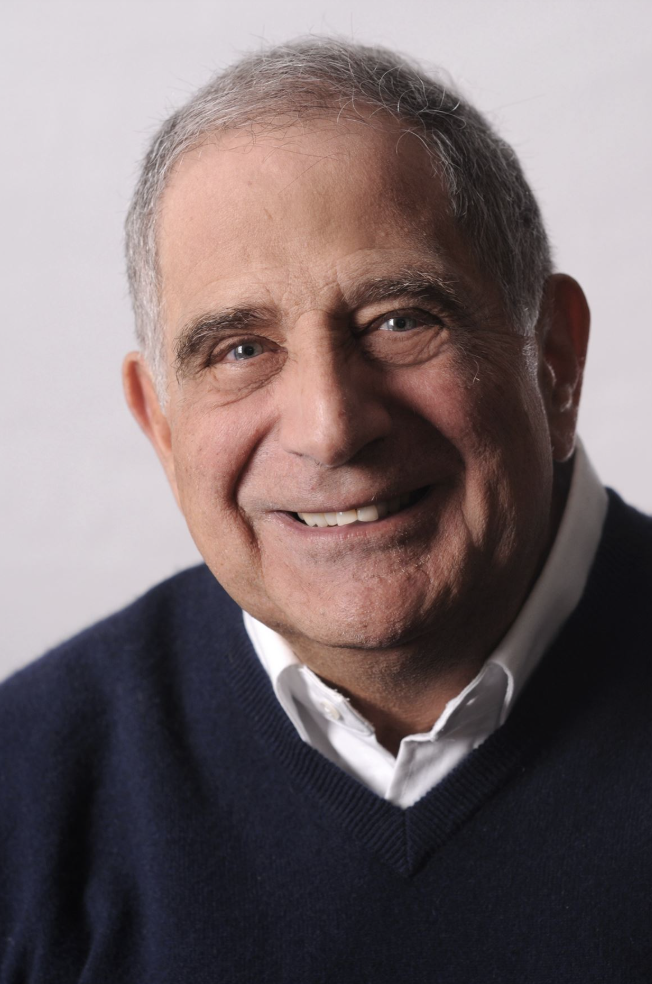
By: John Mason / Arab America Contributing Writer
This is the ninety-ninth in Arab America’s series on American pathbreakers of Arab descent. The series features personalities from various fields, including entertainment, business, sports, science, the arts, academia, journalism, and politics. Our ninety-ninth pathbreaker, American scholar, author, and activist, Jack Shaheen, dedicated his life to challenging and exposing racial and ethnic stereotypes of Arabs in film and television. He died on July 9, 2017 (aged 81) in Charleston, South Carolina.
Shaheen—a life dedicated to challenging and exposing racial and ethnic stereotypes of Arabs in film and television
Jack Shaheen was born to Lebanese Christian immigrants on September 21, 1935, in Pittsburgh, Pennsylvania. The family belonged to the Greek Orthodox Church, a tradition he continued throughout his life. He grew up in nearby Clairton and graduated from Clairton High School in 1953, followed by a Bachelor of Fine Arts from the Carnegie Institute of Technology in 1957. He completed a master’s degree from Pennsylvania State University in 1964, and in 1969, he received a PhD from the University of Missouri. Jack married Bernice Rafeedie, a Palestinian American, in 1966, and they had two children and several grandchildren.
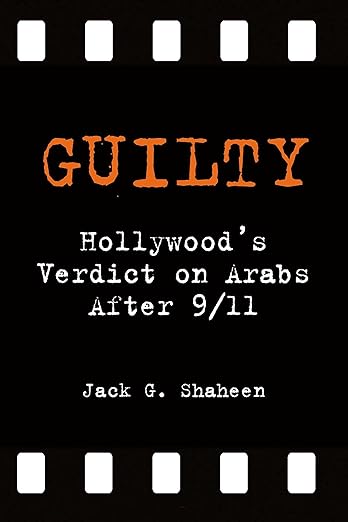
Dr. Shaheen embarked on his lobbying campaign against xenophobia in Hollywood films and on television in 1974, according to the Wikipedia series on Arab Americans, after his 6-year-old son and 5-year-old daughter interrupted their Saturday morning cartoon viewing to complain, “Daddy, Daddy, they’ve got bad Arabs on.” Captured in his book-length study, “Guilty: Hollywood’s Verdict on Arabs after 9/11,” Shaheen averred, “Nothing will be the same again,” a sentiment many Americans scarred by the experience of 9/11 often express.
Nevertheless, Hollywood’s stereotyping of Arabs remained the same. Shaheen noted that nearly all of Hollywood’s post-9/11 films legitimize a view of Arabs as stereotyped villains and the use of Arabs and Muslims as shorthand for the “Enemy” or “Other.” Along with an examination of 100 recent movies, Shaheen addressed the cultural issues at play since 9/11: the government’s public relations campaigns to win “hearts and minds” and the impact of 9/11 on citizens and the imagination. He suggested that winning the “war on terror” would take shattering the centuries-old stereotypes of Arabs. He framed the solutions needed to begin to tackle the problem and to change the industry and culture at large.
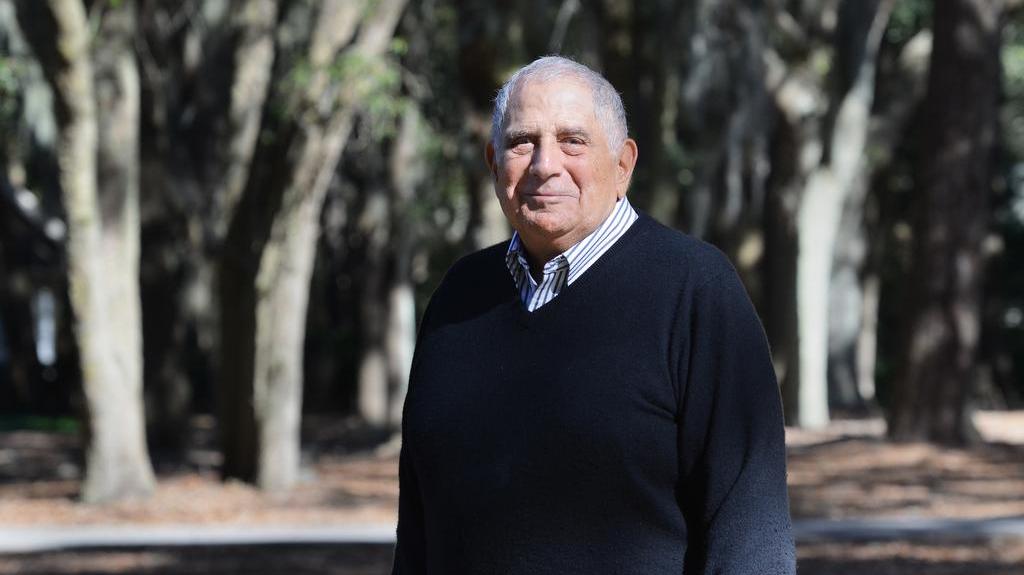
During his long career as an academic and public advocate, Shaheen focused on racism and Orientalism, particularly in popular culture such as Hollywood films. He delivered over 1,000 lectures on the issue across the United States and on three continents. He described his life’s work in 2015 to Tavis Smiley as “dedicated to trying to humanize Arabs and Muslims and to give visibility to American Arabs and American Muslims — to have us being projected no better, no worse, than anyone else.”
Shaheen was also a former CBS News consultant on Middle East affairs, a U.S. Army veteran, and professor emeritus of Mass Communications at Southern Illinois University at Edwardsville. In a New York Times obituary of Shaheen, he is credited for his seminal “Jack Shaheen versus the Comic Book Arab” (1991), which a multitude of scholars have cited.
An example of one scholar’s comments, Jehanzeb Dar, cited Shaheen as a secondary source for the observation that “Batman speaks Farsi in Beirut” in a comic book storyline. Shaheen additionally contended that, in this same storyline, Batman searched for a “‘Shiite Extremist Group.'” Early Hezbollah’s influence in the Beqaa Valley, Batman/Bruce Wayne’s destination, thus made the organization a candidate for the vilified “radical Shiite captors” as “bandits-in-bedsheets” in “Death in the Family.” Shaheen also first pointed out that the Joker, garbed in “Arab” attire depicted as “Iranian,” referred to the “insanity” of Iran.
Shaheen lobbied strenuously to shatter demeaning stereotypes of Arabs and Muslims in popular culture
The Times obituary characterized Shaheen as a person “who diplomatically but tenaciously lobbied to shatter demeaning stereotypes of Arabs in popular culture as, “billionaires, bombers, belly dancers and boisterous bargainers.” In a more personal retrospective of his life, his family characterized him as follows:
“For Jack, every individual was a unique person worthy of being known. He never confused a person’s occupation or financial position with their value. Jack’s mother, Nazara, a Lebanese immigrant, worked as a janitress at the local school. When your mother is one of the best people on the planet and has a role that is invisible to others, then you are sensitized. No one was invisible to Jack. They were all visible and valued. It may have come as a surprise to those who did not know him better that this man with the bright smile was also an internationally recognized humanitarian and scholar.”

Shaheen’s legacy is his pioneering of an entirely new area of research, rigorously documenting and challenging the images of Arabs and Muslims in American media. Notably, he widely publicized the results of his work, including regular discussions of media stereotypes on national programs and networks such as CNN, MSNBC, National Public Radio, Nightline, Good Morning America, 48 Hours, and The Today Show. Shaheen also served as a consultant with motion picture and television companies such as DreamWorks, Warner Brothers, Hanna-Barbera Productions, and Showtime, and wrote scores of op-ed pieces for newspapers and contributed three hundred plus feature magazine essays published in central US and international venues.
In addition to Shaheen’s participation in public media events, he gave over one thousand lectures throughout the US and on three continents. He was a prolific writer, as well, having published the following books: “The Survival of Public Broadcasting” (1973), “Nuclear War Films” (1978), “The TV Arab” (1984), “Arab and Muslim Stereotyping in American Popular Culture,” “Guilty: Hollywood’s Verdict on Arabs after 9/11,”(2008), and the award-winning “Reel Bad Arabs: How Hollywood Vilifies a People” (2001). The last book served as the basis for the Media Education Foundation’s video documentary in 2006 and for a second documentary in 2012, “A is for Arab: Archiving Stereotypes in U.S. Popular Culture.”
Shaheen’s family is especially proud of the legacy established as “The Jack G. Shaheen Collection on Arabs in US Film and Television at the NYU Tamiment Library & Robert F. Wagner Labor Archives, Hagop Kevorkian Center for Near Eastern Studies, and Asian/Pacific/American Institute.” That legacy includes Jack’s extensive research collection of nearly 3,000 motion pictures and television programs, toys, posters, and other material.
Jack Shaheen is remembered as an Arab American who strenuously resisted the stereotyping of Arabs. Not only that, but he meticulously cataloged everything there is to know about such anti-Arab stereotyping and, perhaps even more critical, how to combat it.
Sources:
-“Jack Shaheen,” Wikipedia Series on Arab Americans, 2025
-“Guilty: Hollywood’s Verdict on Arabs after 9/11, by Jack G. Shaheen, 12/28/2012
-“Jack Shaheen, Who Resisted and Cataloged Stereotyping of Arabs,” Dies at 81 NYT 7/12/2017
-Jack Shaheen Obituary,” (by his family), The Island Packet 7/13/2017
John Mason, Ph.D., focuses on Arab culture, society, and history and is the author of LEFT-HANDED IN AN ISLAMIC WORLD: An Anthropologist’s Journey into the Middle East, New Academia Publishing, 2017 and of his new novel, WHISPERS FROM THE DESERT: Zaki, a Little Genie’s Tales of Good and Evil (2025), under his pen name, Yahia Al-Banna). He has taught at the University of Libya in Benghazi, Rensselaer Polytechnic Institute in New York, and the American University in Cairo. John served with the United Nations in Tripoli, Libya, and consulted extensively on socioeconomic and political development for USAID and the World Bank in 65 countries.
The views and opinions expressed in this article are those of the author and do not necessarily reflect the position of Arab America. The reproduction of this article is permissible with proper credit to Arab America and the author.
Want more articles like this? Sign up for our e-newsletter!
Check out our blog here!