Subscribe
to receive news by email
Poll
Will the Trump Administration Shift U.S. Policy in Favor of Palestine?
- No (87%)
- Yes (13%)
 Loading ...
Copyright © 2026 Arab America
Go topPathbreakers of Arab America—Mohja Kahf
By: John Mason / Arab America Contributing Writer
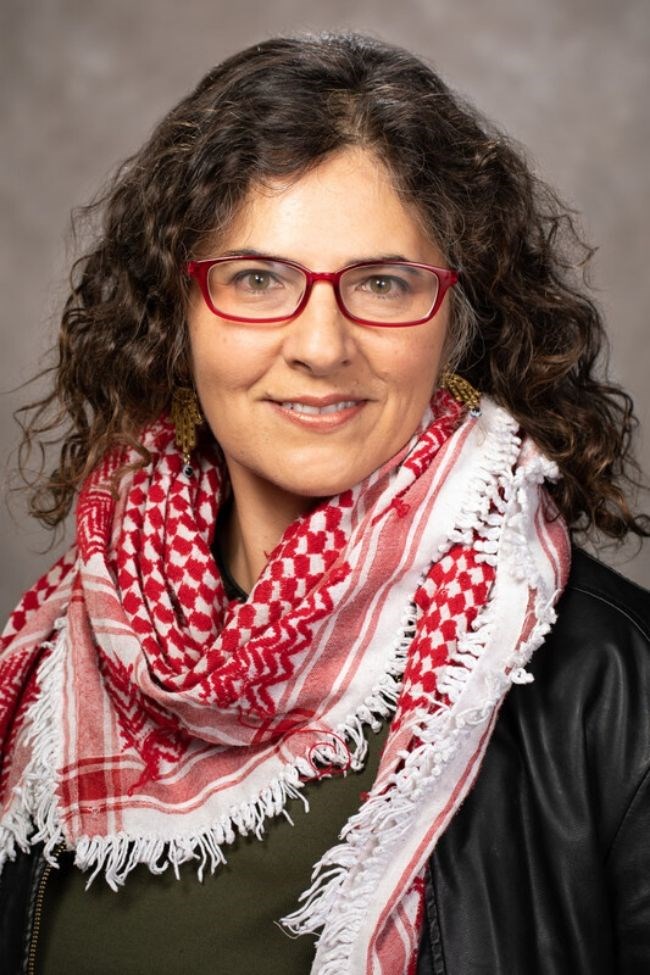
This is the one-hundred and sixth in Arab America’s series on American pathbreakers of Arab descent. The series features personalities from various fields, including entertainment, business, sports, science, the arts, academia, journalism, and politics. Our one-hundred and sixth pathbreaker is Mohja Kahf, a Syrian-American poet, novelist, and professor, whose work explores themes of cultural dissonance and overlap between Muslim American and other communities, both religious and secular. Mohja’s work lends credence to the anti-Orientalist perspective typified by such eminent Arab American scholars as Edward Said.
Pro-feminist, pro-Syrian poet, novelist, and teacher, Arab American Mohja Kahf excels in supporting people who are different
Born in Damascus, Syria, in 1967, Kahf was raised in a devout Muslim household. In 1971 at the age of three and a half she moved with her parents to the United States. Her parents enrolled at the University of Utah, and after graduation, the family moved to Indiana and then to New Jersey.
Kahf’s Syrian descent is important for several reasons, given her prominence in the Syrian Nonviolence Movement. First, her maternal grandfather, who was a member of the Syrian parliament in the 1950s, was exiled from Syria because of his opposition to the Ba’athist regime. Second, her father was a member of the Muslim Brotherhood, an organization that was banned in Syria, and he, too, was exiled from Syria as a result.
Kahf entered Douglass Residential College, a part of Rutgers University, which describes itself as providing students “a feminist lens” to their education. During college, she did one semester as a visiting student at King Abdulaziz University in Jeddah, Saudi Arabia. She graduated from Douglass in 1988 and then entered the Rutgers doctoral program in comparative literature. In 1994, she received her Ph.D. Building on her feminist interests, while working towards her PhD. at Rutgers, Kahf taught courses in theories of feminism, Palestinian resistance women, and Black Power movement women.
Following her PhD., Kahf accepted a professorship at the University of Arkansas. There, she serves in the Program for Comparative Literature and Cultural Studies and is a faculty member in the University’s King Fahd Center for Middle East and Islamic Studies.
Kahf’s work, according to Wikipedia’s series on Arab Americans, “explores themes of cultural dissonance and overlap between Muslim American and other communities, both religious and secular.” Themes she features in her work include Syria, Islam, ethics, politics, feminism, human rights, the body, gender, and erotics. In her poetry book ‘Emails From Scheherazad,’ for example, Kahf explores many different Arab and Muslim identities and practices, frequently using humor.
Our Pathbreaker’s ‘Hagar Poems’ is notable for winning honorable mention in the 2017 Book Awards of the Arab American National Museum. Kahf won a Pushcart Prize for her creative nonfiction essay, “The Caul of Inshallah,” about the difficult birth of her son, first published in River Teeth in 2010. Kahf’s first book of poetry, the aforementioned ‘E-mails From Scheherazad,’ was a finalist for the 2004 Paterson Poetry Prize.
In 2004, Kahf had a column exploring sexual topics on the progressive Muslim website MuslimWakeUp! .com. The column, called “Sex and the Umma” (Umma = Islamic community or nation), featured short stories by her and guest writers. Kahf’s work on ‘Sex and the Umma’ “earned her a torrent of attacks…the author, though at once playful and mischievous verbally and thematically, seems to be putting across an alternative image of Islam…a more progressive…one,” according to one reviewer.
In defense of women specifically, Kahf’s poetry and essays strike a note of compassion for all humanity
Among her most noted works of poetry is Kahf’s ‘Hagar Poems,’ as noted above, published in 2016. One review suggests that Hagar “continues a venerable feminist practice: the reclamation of sacred texts.” She focuses on the lives of women revered in Judaism, Christianity, and Islam. Hajar herself is an important personage in Islam, “the young Black woman whose trials on facing exile in the Hijazi desert would form a crucial junction between the Abrahamic faiths and the inspiration for a number of significant Hajj rituals.” As Muslims know, Hajar is “Celebrated as the mother of Ismail, progenitor of the miracle of Zamzam, and founder of Mecca.” Hajar is also known for the fact that she was exiled and her life before the point of exile has nevertheless remained obscure within conventional Islamic tradition.
The Hajar poems tie in with the contemporary lives of “ordinary women in extraordinary circumstances.” Kahf offers readers “renewed insights on the value of a spiritual practice which consists of simply reflecting on one’s actions and asking how things might have been different.” She shows how “different Quranic verses imagine the voices of Asiya, wife of Egypt’s tyrannical Pharaoh; Bilquis, the Queen of Sheba; Mary, mother of Jesus; Fatima, daughter of Muhammad. Following in the discursive path of the Quran itself, it is deserving of wide attention.”
Kahf’s writing, according to another review in the journal ‘Religion,’ “debunks dominant narratives that construct Arab Americans as perpetual foreigners to U.S. culture and history.” She sees her work as belonging to a “long tradition of Muslim American literature, including the Black Arts movement, diasporic writing, and second- and third-generation literatures.” Using Arabic, Islamic, and mainstream U.S. cultural references and imagery, “Kahf’s work meditates on the challenges of hybridized identities,” meaning how people from different cultures integrate into the larger American culture.
Kahf also confronts the Orientalist perception head-on, objecting to how Muslim women are depicted as “perpetual victims of an oppressive religion, and challenges anti-Muslim racism and xenophobia.” In her novel, ‘The Girl in the Tangerine Scarf,’ she relates how growing up as a Muslim woman in America is defined by “its complex relationships and nuanced representations of Muslim American characters.” Kahf asserts there is an Islamic feminist ethos, and she challenges stereotypes of Arab and Muslim Americans. She “celebrates women’s sexuality and desire and condemns the policing of women’s bodies.”
Yet another review of Kahf’s work, Cambridge University Press, addresses the question of the Muslim woman’s experience of liberty and the impact of the European perception of all Muslims, not just women, as “just another enemy who was not particularly different from the pagans of Europe.” This attitude preceded the more specific anti-Islamic hatred of the later Orientalism, as expressed by such literary giants as Edward Said and also practiced by Kahf herself. This earlier hatred of Islam later became the justification for European colonialism, which was rooted in the reality of the Muslim world’s once more powerful role in the world than Europe’s.
Kahf has played a significant role in defining and establishing a powerful place for Muslim women, and Christian Arab women by implication, in contemporary America. In this moment of suppression of differences among Americans, her work stands out as a beacon of hope, inspiration, and joy. May Kahf’s work continue the important tradition of prior Arab Americans in standing up for their rights, culture, and religion.
Sources:
-“Mohja Kahf,” Wikipedia Series on Arab Americans, 2025”
“Hagar Poems: A Selected Reading,” The Expuritan, Mohja Kahf, no date
-“Mohja Kahf,” Religion, 2/22/2023
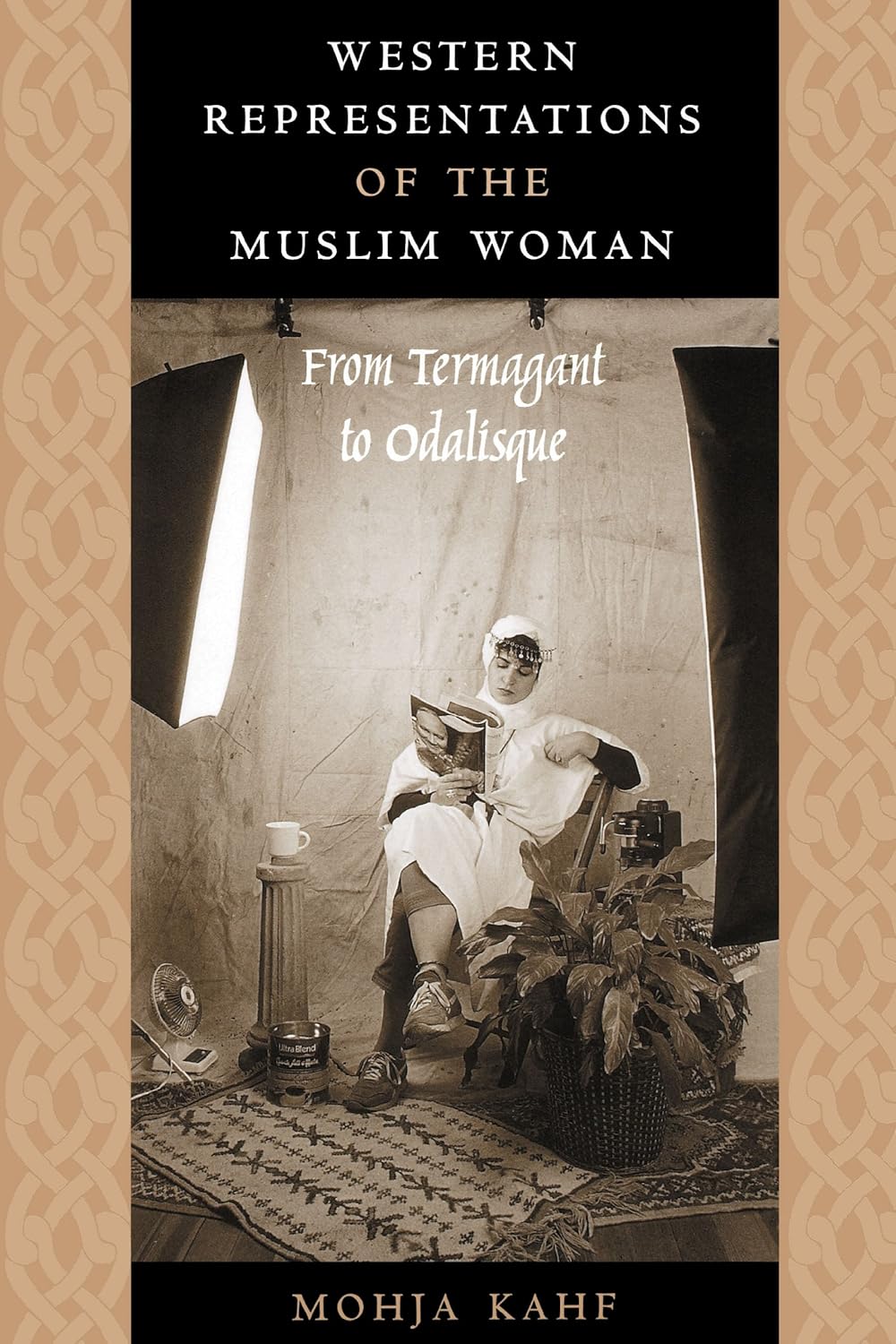
-“Review of MOHJA KAHF, ‘Western Representations of the Muslim Woman: From Termagant to Odalisque,’” (Austin: University of Texas Press, 1999), Cambridge University Press, 5/20/2002
John Mason, Ph.D., focuses on Arab culture, society, and history and is the author of LEFT-HANDED IN AN ISLAMIC WORLD: An Anthropologist’s Journey into the Middle East, New Academia Publishing, 2017 and of his new novel, WHISPERS FROM THE DESERT: Zaki, a Little Genie’s Tales of Good and Evil (2025), under his pen name, Yahia Al-Banna. He has taught at the University of Libya in Benghazi, Rensselaer Polytechnic Institute in New York, and the American University in Cairo. John served with the United Nations in Tripoli, Libya, and consulted extensively on socioeconomic and political development for USAID and the World Bank in 65 countries.
The views and opinions expressed in this article are those of the author and do not necessarily reflect the position of Arab America. The reproduction of this article is permissible with proper credit to Arab America and the author.
Want more articles like this? Sign up for our e-newsletter!
Check out our blog here!