Subscribe
to receive news by email

Poll
Will the Trump Administration Shift U.S. Policy in Favor of Palestine?
- No (87%)
- Yes (13%)
 Loading ...
Copyright © 2026 Arab America
Go topPathbreakers of Arab America—Mona Hanna, MD
By: John Mason / Arab America Contributing Writer
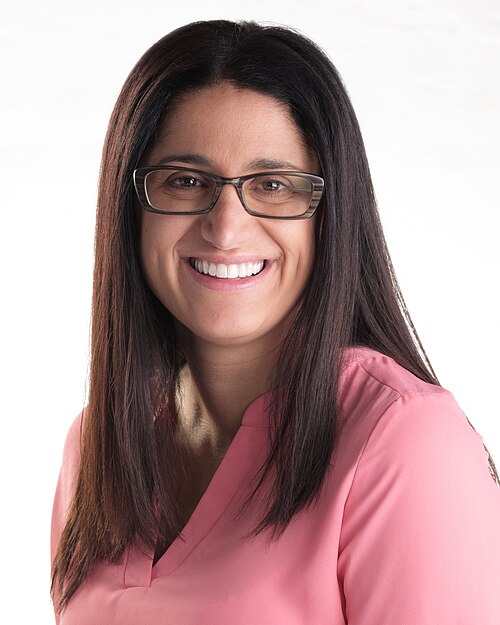
This is the ninety-sixth in Arab America’s series on American pathbreakers of Arab descent. The series features personalities from various fields, including entertainment, business, sports, science, the arts, academia, journalism, and politics. Our ninety-sixth pathbreaker is a medical doctor and professor, Mona Hanna, recognized as one of USA Today’s Women of the Century for her role in uncovering the Flint water crisis and leading recovery efforts. She is of Iraqi descent.
Early signs that Mona was headed towards a career in medicine, signs that proved more than true
Born Mona Hanna-Attisha on December 9, 1976, in Sheffield, England, her parents are Iraqi scientists and dissidents who fled Iraq during the Ba’ath regime. Hanna-Attisha and her family then immigrated to the United States in 1980 to Houghton, Michigan, when she was 4 years old. Wikipedia’s series on Arab Americans reports that her father continued his education in Michigan as he pursued a post-doctorate degree.
Mona noted, in an article in ‘The Arab American News,’ that she “vividly recalls childhood inspirations which drove her to study medicine, including the television program “MAS*H”, with characters like the passionate Dr. “Hawkeye” Pierce and Lebanese American Maxwell Klinger from Toledo, Ohio.” Contributing to her early understanding of the role of medicine, Hanna (formerly known as Hanna-Attisha) was seriously injured with a broken neck and fractured jaw in a car accident with her family, not long after arriving in the United States, a time when they knew little English. In her book, “she recalls one of her female doctors with dark skin and hair comforting her.”
Hanna grew up in Royal Oak, Michigan, and graduated from Kimball High School. She received her Bachelor of Science from the University of Michigan School for Environment and Sustainability, her Master of Public Health degree in Health Management and Policy from the University of Michigan School of Public Health, and her medical degree from Michigan State University College of Human Medicine. Mona completed her residency and chief residency at Wayne State University/Children’s Hospital of Michigan.
Presently, Hanna is Associate Dean and C.S. Mott Endowed Professor, Public Health, College of Human Medicine, Michigan State University, and Professor, Pediatrics and Human Development, Michigan State University College of Human Medicine. Her specialty is pediatrics, and she is also a scientist, activist, and author. Mona was named one of Time magazine’s 100 Most Influential People in the World and recognized as one of USA Today’s Women of the Century for her role in uncovering the Flint water crisis and leading recovery efforts.
One of Hanna’s overarching goals is to reimagine “how society can come together to eliminate infant poverty with a first-in-the-nation program, Rx Kids.” Hanna is also the Founding Director of the Michigan State University and Hurley Children’s Hospital Pediatric Public Health Initiative in Flint, and the Leader of the first-in-nation program, RxKids, which aims to eliminate infant poverty. She can be followed on X at @monahannaa. Mona is the proud mother of two daughters.
An essential part of Hanna’s work has been testifying before the U.S. Congress, which she has done on several occasions. She has also lectured at dozens of colleges and universities, and frequently contributed to national media outlets championing the cause of children in Flint and beyond. Importantly, Mona is the author of the widely acclaimed and New York Times 100 most notable books, “What the Eyes Don’t See: A Story of Crisis, Resistance, and Hope in an American City.” This is the story of her critical role in uncovering the problems of lead pollution in Flint and her foremost place in solving those problems.
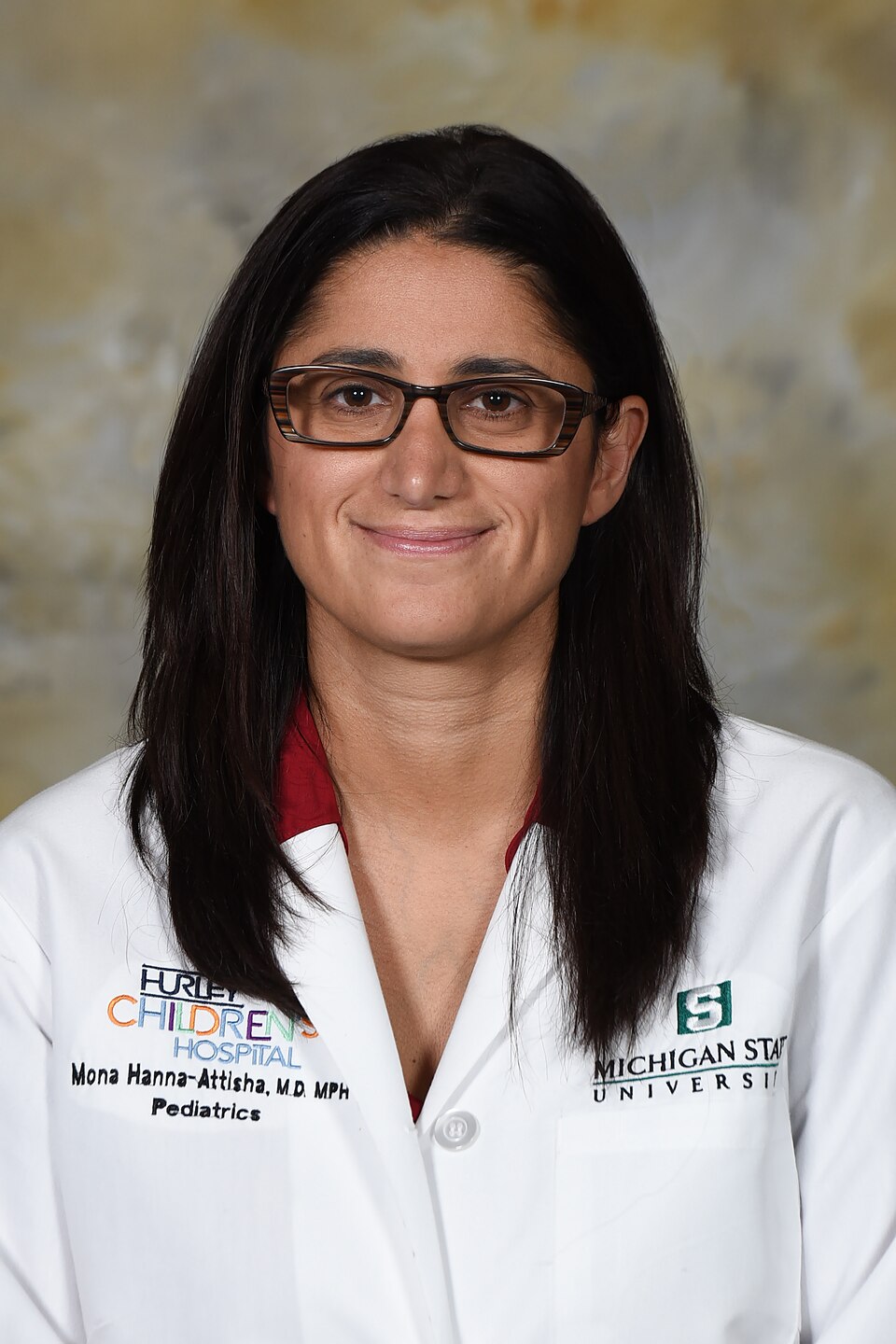
In addition to educating the next generation of physicians, Dr. Hanna now directs the Michigan State University and Hurley Children’s Hospital Public Health Initiative, an innovative and model public health program to research, monitor, and mitigate the impact of lead in Flint’s drinking water. She leads RX Kids, a first-ever citywide cash prescription program that provides $ 1,500 to pregnant women and $500 per month in the infant’s first year, with no strings attached. The five-year pilot program is expected to serve about 1200 mothers per year (6000 over five years).
Dr. Hanna’s critical role in revealing the problem of lead pollution in Flint, Michigan’s water, and in solving it in a way that improved countless children’s health
Hanna’s entry to the story of Flint’s disastrous drinking water problem started in 2015. It began when Elin Warn Betanzo, an engineer and certified water operator and a friend of Hanna, shared that there was a lack of proper drinking water treatment in Flint. The problem arose from an increased potential for lead in the city’s water following a recent change in the water source. The problem was that city officials did not consider the potential for lead pollution.
Hanna had also learned that a Virginia Tech civil/environmental engineer had found during a visit to Flint in March 2015, “the lack of corrosion inhibitors in the new Flint water source was causing corrosion of water pipes and leaching of lead into drinking water.” Mona then began a new research study using data available in electronic medical records. Her study found that “the percentage of children in Flint with over 5 micrograms per deciliter of lead in their blood increased from 2.1 percent to 4 percent after the city’s water source changed from Lake Huron to the Flint River and that the areas of Flint with the highest water lead levels showed the most drastic increases in elevated lead levels in children.”
Because of the public health implications of her research, Mona “revealed her findings publicly and advocated for action at a 24 September 2015 press conference before her research was scientifically peer reviewed.” The next day, Flint issued a health advisory for residents, particularly children, to minimize exposure to Flint tap water. While Hanna’s findings were initially contested by State officials, the Detroit Free Press published its own findings consistent with those found by Hanna. Later, State environmental officials publicly apologized to her.
Many technical reports reinforced Hanna’s findings on the Flint situation. One, an editorial titled, “Promise of Early Intervention for Children Exposed to Lead,” stated, “When considering the known developmental effects of low-level lead poisoning, including lower IQ, impaired attention and executive functioning, and worse academic outcomes, this statistic is deeply concerning.”
Another technical/editorial report, titled “Parent report of child behavior: Findings from the Flint Registry cohort,” stated, “Results [of the Flint study] reveal a substantial burden of parent-reported behavioral problems in Flint Registry children. This is clinically significant and indicates that a large number of children may require comprehensive neuropsychological evaluation and potential medical and/or educational services.”
We present these technical findings to underscore the critical moral, ethical, and medical and technical roles Dr. Mona Hanna has played in revealing and helping solve a critical health problem—especially as it implicates children. She continues to rely on the same values in addressing issues of childhood exposures to environmental hazards.
Sources:
-“Mona Hanna,” Wikipedia Series on Arab Americans, 2025
-“Mona Hanna,” Detroit Regional Chamber (no date)
-“Arab American doctor who uncovered Flint Water Crisis writes memoir,” The Arab American News, 7/26/2018
-“Study of parent-reported behavioral outcomes of children (ages 2–17) who enrolled in the Flint Registry between December 2018 and December 2020,” Flint Registry
-“Promise of Early Intervention for Children Exposed to Lead,” Mona Hanna, et al. JAMA Pediatrics Editorial, 2022
-“Parent report of child behavior: Findings from the Flint Registry cohort,” Mona Hanna-Attisha, et al., NIH, National Library of Medicine, 5/16/2022
John Mason, Ph.D., focuses on Arab culture, society, and history and is the author of LEFT-HANDED IN AN ISLAMIC WORLD: An Anthropologist’s Journey into the Middle East, New Academia Publishing, 2017. He has taught at the University of Libya in Benghazi, Rensselaer Polytechnic Institute in New York, and the American University in Cairo. John served with the United Nations in Tripoli, Libya, and consulted extensively on socioeconomic and political development for USAID and the World Bank in 65 countries.
The views and opinions expressed in this article are those of the author and do not necessarily reflect the position of Arab America. The reproduction of this article is permissible with proper credit to Arab America and the author.
Want more articles like this? Sign up for our e-newsletter!
Check out our blog here!