Subscribe
to receive news by email

Poll
Will the Trump Administration Shift U.S. Policy in Favor of Palestine?
- No (87%)
- Yes (13%)
 Loading ...
Copyright © 2026 Arab America
Go topPathbreakers of Arab America—Mustafa El-Sayed
By: John Mason / Arab America Contributing Writer
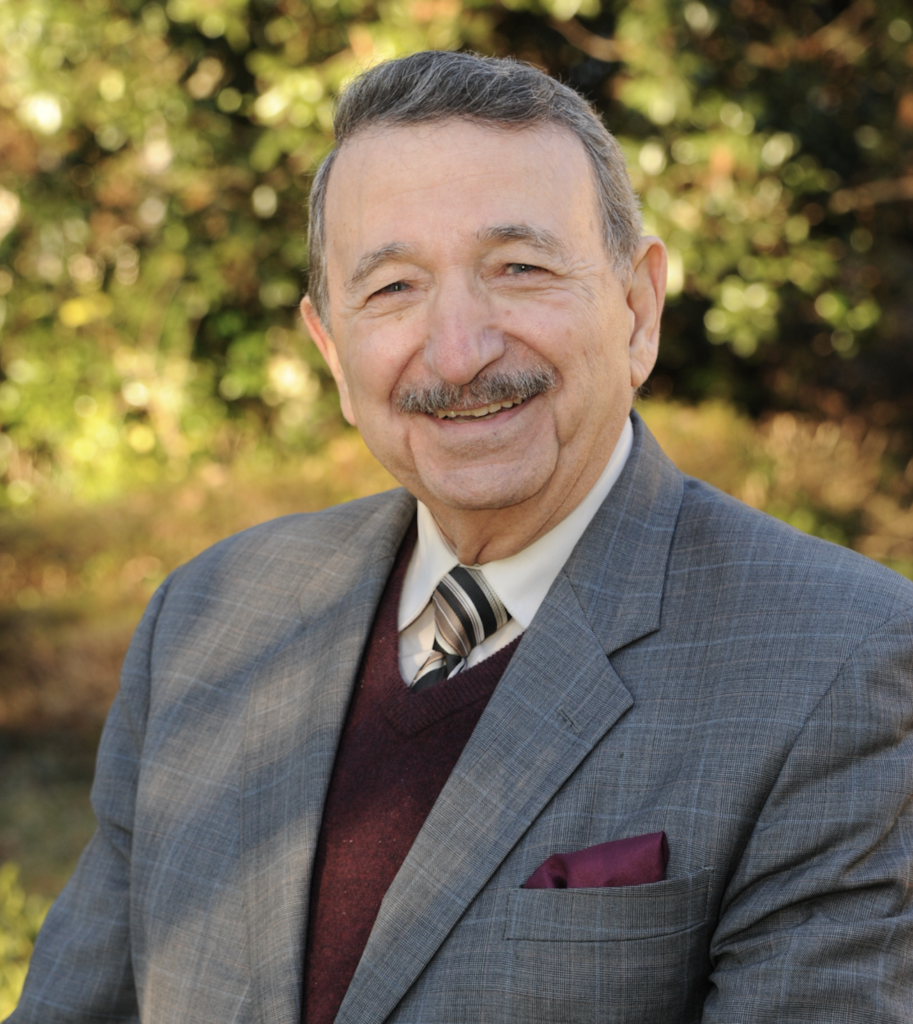
This is the one-hundred and eleventh in Arab America’s series on American pathbreakers of Arab descent. The series features personalities from various fields, including entertainment, business, sports, science, the arts, academia, journalism, and politics. Our one hundred and eleventh pathbreaker is Egyptian American physical chemist, Mustafa Amr El-Sayed, a nanoscience researcher, member of the National Academy of Sciences, and U.S. National Medal of Science laureate. Known for the spectroscopy rule named after him, the ‘El-Sayed rule,’ he is considered the first Arab American to receive the U.S. National Medal of Science, the highest US honor in science, for his achievements in applying this technology to the treatment of cancer.
Starting in a small Egyptian village, moving on to Cairo, then to the U.S., El-Sayed became a pioneer in physical chemistry and the treatment of cancer
Mustafa El-Sayed was born on May 8, 1933, in the small village of Zifta, Gharbia Governorate, in what was then the Kingdom of Egypt. The youngest of seven children, Mustafa lost both his parents when he was only ten years old. Nevertheless, Mustafa remembers a childhood full of love, raised in the family of his older brother Mohammed and his wife.” While El-Sayed attended primary school in the village, it is reported that his father, who was a mathematics teacher, prior to his death, took Mustafa to Cairo for secondary school. Following that, Mustafa joined the Higher Teachers Academy. There, one source reported, after “Only two months after the start of the study, the students staged a sit-down and demanded that the teachers’ diploma be converted to a bachelor’s degree.”
El-Sayed graduated with a B.S. degree from the Faculty of Science at Ain Shams University in 1953. He then moved on to a career as a teacher in the faculty, where, he is quoted as having said, he “used to spend entire days at the university teaching and conducting experiments in the laboratories.” During his studies at Ain Shams, one day, he became aware quite by accident of a newspaper ad for fellowships in his field at Florida State University. Mustafa applied for a fellowship there, and “soon found himself in Tallahassee taking course equivalency exams, all of which he passed, to the amazement of his examiners, as he was the first foreign student to do so.”
After receiving his PhD from Florida State University in 1958, El-Sayed returned to Egypt, but soon found it impossible to support his wife and children on his Ain Shams monthly salary, so he returned to the United States and embarked on a series of one-year post-doctoral research positions at prestigious American universities: Yale, Harvard, and the California Institute of Technology. In an ‘Al-Ahram Weekly’ interview, he recalled, “Each university offered me the best facilities in terms of labs, finance, and salaries.”
In 1961, he joined the Department of Chemistry and Biochemistry at the University of California at Los Angeles, where he taught until he joined the Georgia Institute of Technology Department of Chemistry and Biochemistry in 1994. He was, up until his recent retirement, the Julius Brown Chair and Regents Professor at Georgia Tech, where he also heads the top-ranked Laser Dynamics Laboratory.
While attending graduate school, El-Sayed met and married Janice Jones, his wife of 48 years. Unhappily, she was diagnosed with breast cancer and died about five years after she contracted the disease. His future work was directed at developing an experimental technique to treat cancer. By chance, one of El-Sayed’s five children, his son, Dr. Ivan H. El-Sayed, has been working with him on cancer research. Together with two other authors, father and son published a very technical, yet prescient study on the diagnosis and treatment of cancer involving what is defined as ‘photothermal therapy.’
A person of great achievement, El-Sayed has won the highest academic honors and national recognition for his invaluable work
Throughout his career, El-Sayed has been awarded honors and awards almost too numerous to mention. Chief among these is the King Faizal International Prize in the Sciences-Chemistry (considered by some the Arabian Nobel Prize) in 1990, and in 2002, the Langmuir Award, presented “to recognize and encourage outstanding interdisciplinary research in chemistry and physics.” He received the 2007 U.S. National Medal of Science in Chemistry “for his contribution to . . . understanding of the electronic and catalytic properties of nanostructures and nanomaterials.” In 2009, he was awarded the Ahmed Zewail Prize in Molecular Sciences “for his seminal contributions to the understanding of the electronic and molecular dynamics and properties of biomedical systems.” In the same year, he was also awarded the First Class Medal of the Egyptian Republic.
In addition to his honors and awards, El-Sayed and his research group, the Laser Dynamics Laboratory at Georgia Tech, have contributed to many important areas of physical and materials chemistry research. Their research, while highly technical, has added important understandings and applications, including an effective treatment for skin cancer. That research led to a way to “kill cancer cells that appear under the microscope as light spots, leaving healthy cells unharmed.” El-Sayed says that the treatment must undergo a lengthy approval process by the U.S. Food and Drug Administration.
El-Sayed’s research is represented in over 500 journal publications, and he has been responsible for supervising the research of over 70 Ph.D. students, 35 postdoctoral fellows, and 20 visiting professors, several of whom hold key positions in the scientific fraternity. El-Sayed is also known for El-Sayed’s rule, which is described in most chemistry textbooks as a technique that is “applied in various fields to understand and predict the behavior of molecules and materials.”
Professor El-Sayed has been nominated for the Nobel Prize, but an Egyptian newspaper, Al-Ahram, interviewed him and noted that while he had nominated Ahmed Zewail, an Egyptian American chemist, for the 1999 Nobel Prize, El-Sayed said that he himself “had not thought of being nominated for or receiving the prize. ‘I am working hard for human beings and not for a Nobel Prize, which [I think] should be given to those who discover the genetic causes of cancer.”
El-Sayed has spoken frequently of education in both the United States and Egypt, emphasizing his belief that “spending money on scientific research is an investment in the future because it will improve social and economic conditions in the long run. Industries in Egypt will never improve if we do not improve our scientific research…We have to provide a reasonable budget for scientific research immediately, particularly because the population is increasing and resources are decreasing.”
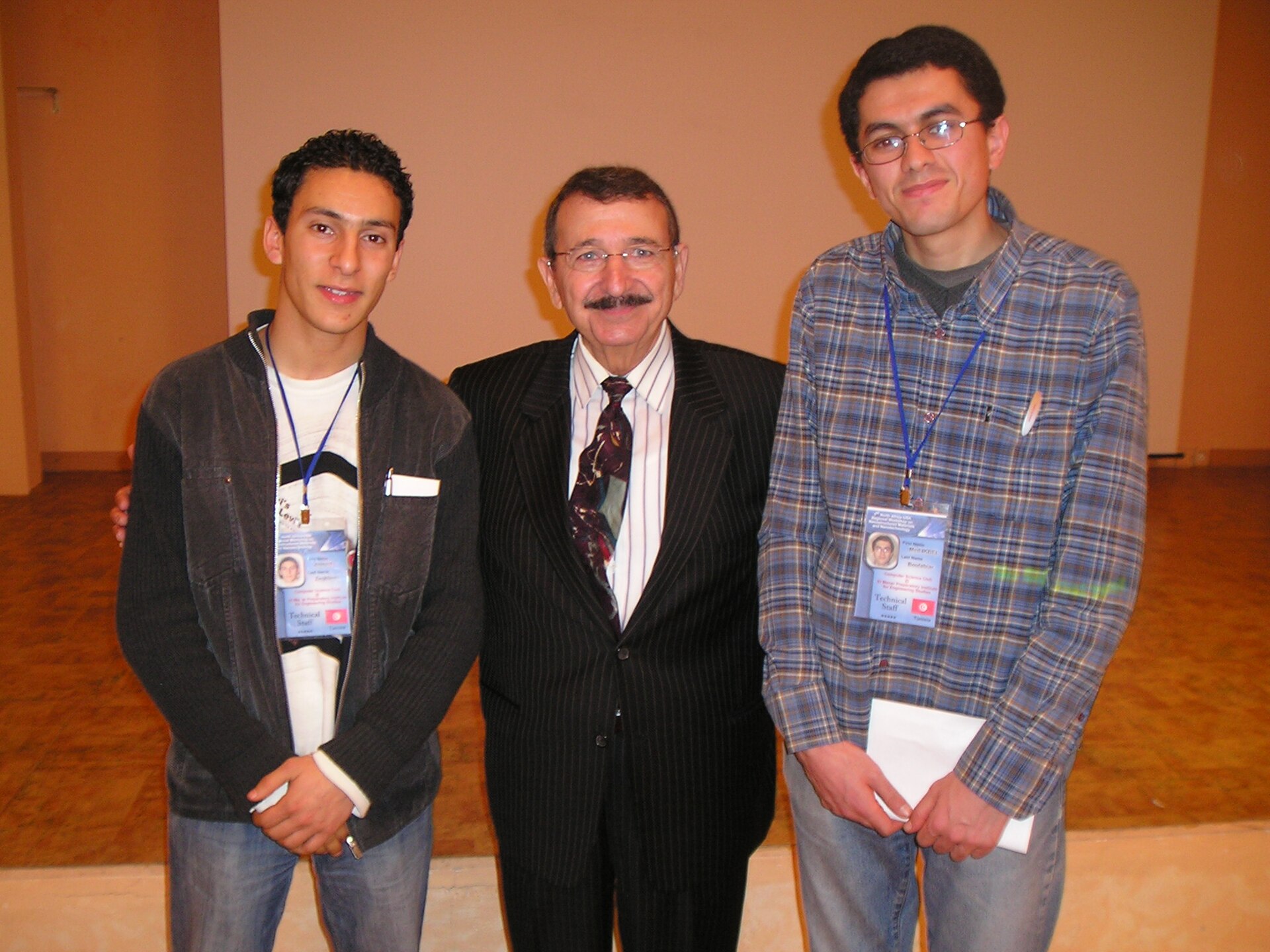
In 2016, El-Sayed won the prestigious Priestley Medal, the American Chemical Society’s (ACS) highest honor. In modestly accepting the award, he noted, “This is wonderful news, just fantastic…I am lucky to have been in the right place and with the right society (ACS). One of his colleagues expressed high praise for El-Sayed, noting his “significant and seminal contributions to several areas of physical and biophysical chemistry.” Pointing to recent cancer studies, his colleague remarked, El-Sayed “masterfully shows his innovative and creative approach and the ability to tackle interesting and broad-ranging problems.”
A final note of praise for El-Sayed from another colleague says it all: El-Sayed’s work is “truly groundbreaking…and it is fitting that El-Sayed be recognized for inspiring students throughout his career.”
Now, at age 92 and only recently retired, El-Sayed can truly rest on his laurels.
Sources:
-“Mustafa El-Sayed,” Wikipedia Series on Arab Americans, 2026
-“Mustafa El-Sayed Wins Priestley Medal,” Chemical and Engineering News, 6/15/2015
-“Mustafa El-Sayed, Academic career,” ChemEurope, 2025
-“Mustafa El-Sayed-Honorary Doctorate,” American University in Beirut, no date
-“Mustafa El-Sayed,” Egypt Famous,1/26/2022
John Mason, Ph.D., focuses on Arab culture, society, and history and is the author of LEFT-HANDED IN AN ISLAMIC WORLD: An Anthropologist’s Journey into the Middle East, New Academia Publishing, 2017 and of his new novel, WHISPERS FROM THE DESERT: Zaki, a Little Genie’s Tales of Good and Evil (2025), under his pen name, Yahia Al-Banna. He has taught at the University of Libya in Benghazi, Rensselaer Polytechnic Institute in New York, and the American University in Cairo. John served with the United Nations in Tripoli, Libya, and consulted extensively on socioeconomic and political development for USAID and the World Bank in 65 countries.
The views and opinions expressed in this article are those of the author and do not necessarily reflect the position of Arab America. The reproduction of this article is permissible with proper credit to Arab America and the author.
Want more articles like this? Sign up for our e-newsletter!
Check out our blog here!