Subscribe
to receive news by email

Poll
Will the Trump Administration Shift U.S. Policy in Favor of Palestine?
- No (87%)
- Yes (13%)
 Loading ...
Copyright © 2026 Arab America
Go topPathbreakers of Arab America—Susan Muaddi Darraj
By: John Mason / Arab America Contributing Writer
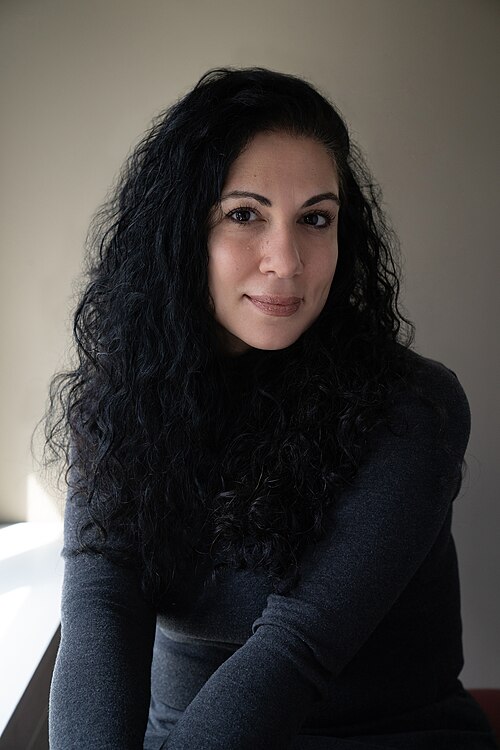
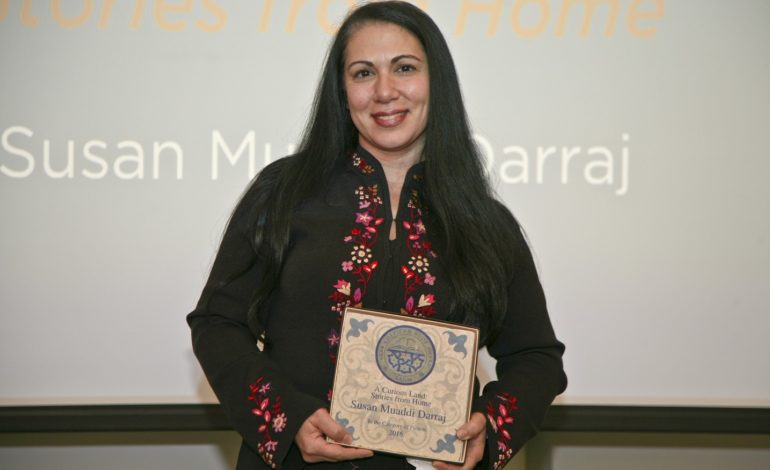
This is the ninety-fourth in Arab America’s series on American pathbreakers of Arab descent. The series features personalities from various fields, including entertainment, business, sports, science, the arts, academia, journalism, and politics. Our ninety-fourth pathbreaker is Susan Muaddi Darraj, a Palestinian American writer of young adult and children’s books, as well as academic and personal essays and articles. She is a tenured professor of English Literature at a Maryland community college and a senior lecturer in creative writing at a major university in Baltimore.
Muaddi Darraj, a major force in the Palestinian literary world, depicts her people with verve, emotion, and respect
Susan Muaddi Darraj is a Palestinian American writer, born in Philadelphia on May 11, 1975, to Palestinian immigrant parents. She received a master’s degree in English Literature from Rutgers University – Camden, N.J. Per Wikipedia series on Arab Americans, Susan has authored several collections of fiction, young adult, and children’s books, as well as academic and personal essays and articles. Muaddi Darraj is a tenured professor of English Literature at Harford Community College in Maryland, as well as a Senior Lecturer in Creative Writing at The Johns Hopkins University. Susan lives in Baltimore.
Muaddi Darraj’s writings are prolific. Her first work of fiction is “The Inheritance of Exile,” published in 2008. It includes several connected stories narrated by Palestinian American women and their immigrant mothers. The stories are based on a working-class neighborhood of South Philadelphia, where residents deal with their different ethnic and religious identities.
Another collection of short stories Susan authored, “A Curious Land,” for which she is most recognized, is known as a mosaic novel —a group of closely related tales about the inhabitants of a fictional Palestinian West Bank village, Tel al-Hilou (“the pretty hilltop”). This collection won Muaddi Darraj the prestigious American Book Award. It follows and traces their intertwined lives from the era of the Ottoman Empire through the first Intifada. Spanning almost a century, the stories are mostly love stories, set amidst turbulent times.” “A Curious Land” was also shortlisted for a Palestine Book Award.
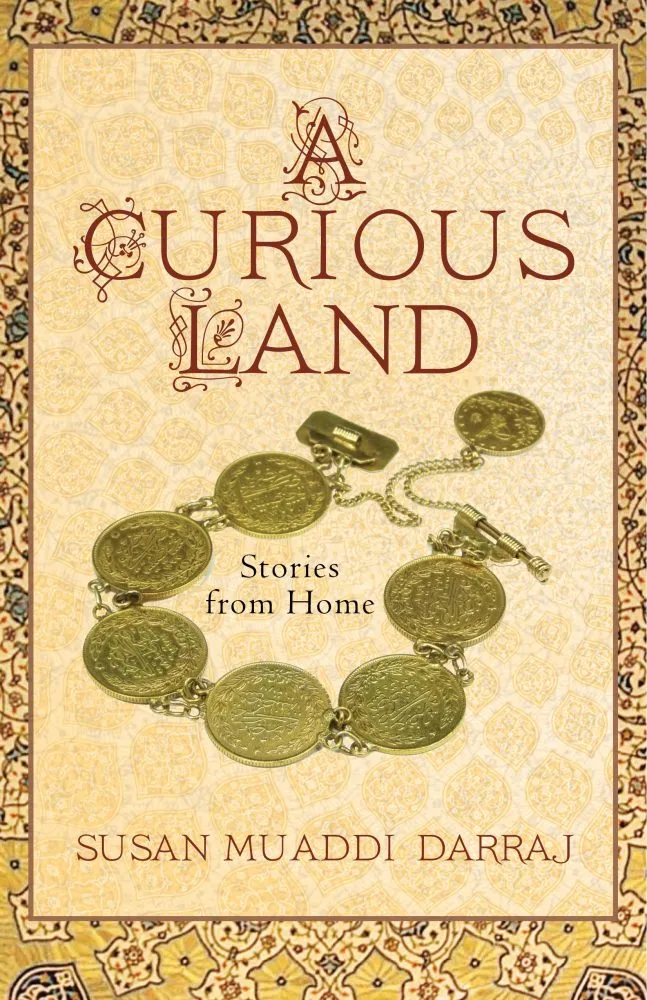
The book opens with a tale of a group of Bedouin refugees fleeing violence during the 1916 famine, which wreaked havoc across the Levant during the First World War. It ends with a story set in 1998 about Adlah, the daughter of one of the heroines of the 1987 Intifada, who returns to Tel Al-Hilou from her comfortable home in America.
Susan is equally well-known for her children’s book series, “Farah Rocks,” which tells the stories of a Palestinian American girl named Farah Hajjar. It is the first series in North America to focus on a Palestinian American or Arab American protagonist. This series garnered her a starred book review by the School Library Journal, which described Farah as “a well-rounded character with ambitions and struggles; readers will identify with her challenges and root for her to succeed.” It is described as eye-opening for its portrayal of “a happy, healthy and well-adjusted child of Arab immigrants, which contradicts the usual ‘crisis plot’ in which children of color are cast.”
“Behind You is the Sea,” Muaddi Darraj’s first novel, published in January 2024, is characterized by her publisher as “Funny and touching…[bringing us] into the homes and lives of three main families—the Baladis, the Salamehs, and the Ammars—Palestinian immigrants who’ve all found a different welcome in America. Their various fates and struggles cause their community dynamic to sizzle and sometimes explode.” Her novel received high praise in several reviews, one of which said, “In this episodic debut novel, Darraj portrays the joys, resentments, and yearnings of three generations of a tight-knit Palestinian American community. . . Marvelous and moving.”
Muaddi Darraj is a prolific author of articles, including several on Arab and Arab American women and feminism. Two of these, titled “Understanding the Other Sister: The Case of Arab Feminism” and “It’s Not an Oxymoron: The Search for an Arab Feminism,” are widely read and taught.
A strong cultural and political advocate for Palestinian identity and representation
Muaddi Darraj initiated the “#TweetYourThobe” social media campaign in 2019 to promote Palestinian culture and support Rashida Tlaib’s congressional campaign. According to a review, “The campaign went viral and garnered much attention for Palestinian women’s artwork and Palestinian culture. #TweetYourThobe was covered widely by CNN, The New York Times, Forbes Magazine, Business Insider, NPR, Public Radio International, and other venues.”
In another article, “Understanding the Other Sister: The Case of Arab Feminism,” Muaddi Darraj discusses the way Arab women are represented in the American media. She notes, “I understood—and not for the first time—the astounding disconnection between the lives of Arab women, and the lives of Arab women as represented by the American media and entertainment industries, thus as perceived by Americans themselves…Many Americans continue to purchase wholesale the neatly packaged image of the veiled, meek Arab woman. This pitiful creature follows her husband like a dark shadow, is forced to remain silent and obey her husband at all times, is granted a body only to deliver more children, perhaps even in competition with her husband’s other wives.”
Muaddi Darraj expounds on Israel-Palestine war: “A love letter to my Palestinian family around the world”
In her letter to fellow Palestinians, published in Middle East Eye in late 2023, Susan starts, “We will not be erased. The Palestinian community is a family. And we will survive as families do, by consoling each other; by gifting each other the gentleness the world denies us.” Her purpose is not strictly to analyze Palestinian problems, but to encourage “you to donate to Gaza or to press your governments to demand a ceasefire. This message is also important from an emotional, psychological, and mental health perspective.”
Muaddi Darraj touches our heartstrings, beseeching, “Who can forget the image of a man, holding his dead, charred baby, screaming out in anguish because words fail him? Who can dissociate from the picture of a bewildered little girl weeping by the corpse of her mother? Who can ignore the news that Gazans were writing their names on different parts of their bodies – hands, legs, torsos – in case their corpses were found strewn around in multiple parts?
If we think this description of body parts is horrific, consider the following: “In Gaza, the hospital was our last place of sanctuary. Then Israel bombed it.” Susan avers that we are “experiencing survivor’s guilt intensely, and you’re having trouble functioning at work, in school, among your friends and family.”
In another section of Muaddi Darraj’s letter titled, ‘Your heart is busted,’ she lectures at us: “Your heart aches. You scroll. You cry. You’re repeatedly stunned by the brutality you’re witnessing. Your grandparents may have been born outside of Palestine. Maybe you’ve never ever seen Palestine yourself. Maybe you don’t speak or understand Arabic at all. In the past, these factors have made you feel distanced from your heritage. Still, this moment reminds you of how Palestinian you truly are, especially as you realize something we all do: there is a concerted effort to erase us.”
In a final tribute to her fellow Palestinians of Gaza, in the letter’s section, “As bombs fall, children of Gaza ask: Why do they kill us?” Susan depicts the following scenario, from a video:
“…a little boy, who survived a bombing, is being interviewed by a news crew; he cannot stop trembling as he struggles to speak. A doctor passing by notices and tells the interviewer to stop. The doctor scoops the boy into his arms, kissing his forehead and murmuring, “Don’t be afraid. I’m with you”. It’s only then that the boy bursts into tears, when he senses he’s safe with someone who loves him.”
Muaddi Darraj ends her letter: “And there, my dear cousin, is your playbook. Take this message from the people of Gaza…Of our ancestors and their dreams. Of our passion for life and our great love for the world, despite how it has treated us. This is how we have always kept our stories—and ourselves—alive. Trust us to gather around you and keep your heart safe…We will not be erased.”
Sources:
-“Susan Muaddi Darraj,” Wikipedia Series on Arab Americans, 2025
-“Understanding the Other Sister: The Case of Arab Feminism,” Susan Muaddi Darraj, Monthly Review, 2025
-“A Curious Land,” Susan Muaddi Darraj, New Source Book Review (no date available)
-“Israel-Palestine war: A love letter to my Palestinian family around the world,” Susan Muaddi Darraj, Middle East Eye, 10/31/2023
John Mason, Ph.D., focuses on Arab culture, society, and history and is the author of LEFT-HANDED IN AN ISLAMIC WORLD: An Anthropologist’s Journey into the Middle East, New Academia Publishing, 2017. He has taught at the University of Libya in Benghazi, Rensselaer Polytechnic Institute in New York, and the American University in Cairo. John served with the United Nations in Tripoli, Libya, and consulted extensively on socioeconomic and political development for USAID and the World Bank in 65 countries.
The views and opinions expressed in this article are those of the author and do not necessarily reflect the position of Arab America. The reproduction of this article is permissible with proper credit to Arab America and the author.
Want more articles like this? Sign up for our e-newsletter!
Check out our blog here!