Subscribe
to receive news by email

Poll
Will the Trump Administration Shift U.S. Policy in Favor of Palestine?
- No (87%)
- Yes (13%)
 Loading ...
Copyright © 2026 Arab America
Go topReclaiming a Stolen Unity: The Case for Pan-Arabism
By: Taim Al-Faraje / Arab America Contributing Writer
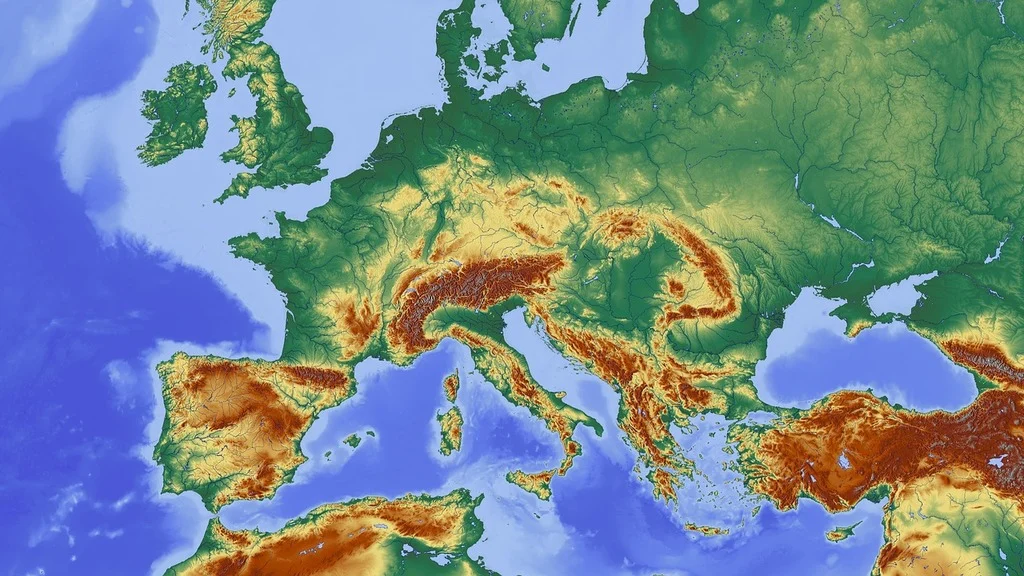
In modern times, Arab countries have been isolated within the Arab world in terms of identity. When an Arab is asked where they’re from, they respond simply: with their country. A Syrian says he’s from Syria, an Egyptian says he’s from Egypt, a Moroccan says he’s from Morocco, so on and so forth. While this may seem normal, Arab countries aren’t comparable to European and other countries in a national identity sense. Rivers and mountains naturally created European country borders. On a map like the one below, the origins of these borders become immediately clear. Certain nations would occupy the majority of a landmass, and the river or mountain range that separates them from another nation would be the border between those two nation-states. The map below displays this.
Why don’t Arabs respond, “Arab,” when asked such a question? It’s comparable to an American not saying they’re American when asked where they’re from, but saying they’re “Californian” or “Texan.” Minor differences don’t set apart the fact that these countries all house one nation of people. For Arabs, this mindset reveals that colonialism divided not only their lands, but also their way of thinking. This article will detail why.
What is a Nation State?
A nation-state is a country whose population consists of a single nation, with shared customs, food, dances, and cultural practices that bind that nation together.
Almost all European countries are nation-states. Germans make up 85% of Germany, Frenchmen make up 77% of France, 90% of Spain is Spanish, etc. The majority of these countries consist primarily of the nation they are named after, and those populations are not widely present in neighboring states. It’s also important to point out that the people from these nations don’t have much in common with those of other nations. They don’t share language, food, culture, politics, history; the list goes on.
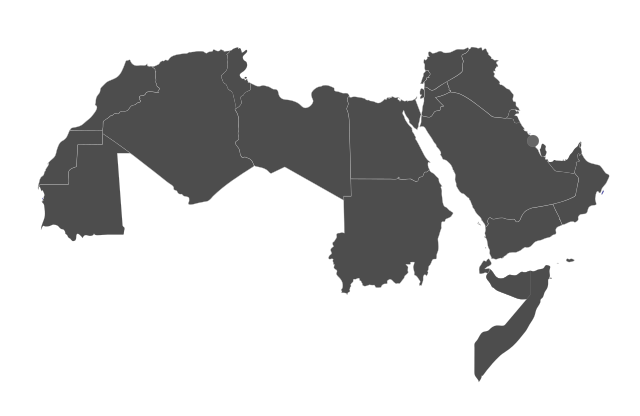
This is the main difference between Arabs and Europeans in this sense. The Arab world is not made up of nation-states. Arabs across the 19 Arabic-speaking countries share language, food, culture, politics, history, and more, yet artificial borders—often drawn hastily by colonial powers—separate them. If you look at a map of the Arab world without borders, deciphering modern day borders would be nearly impossible. Just look at the map below. Half the borders are straight lines that lie right on top of deserts, holding no tangible significance.
Why Are Arab Borders Senseless?
For the longest time, Arab lands were subject to the empires that ruled them- The Rashiduns, who unified the Arabs, the Umayyads, the Fatimids, and lastly, the Ottomans. During these times, borders shifted time to time depending on the extent of the empire. However, Arabs continued to share political and military struggles.
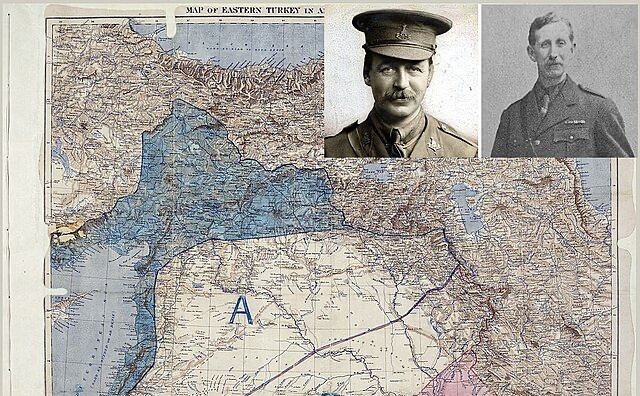
After the Ottoman Empire lost its Arab territories to Britain following the Arab Revolt and World War I, Britain assumed control over how Arab lands would be governed and administered. Although Britain originally promised the Arabs a connected empire stretching from Aleppo to Aden under Sharif Hussein, it later broke that promise by signing the secret Sykes–Picot Agreement with France, dividing Arab lands into colonies ruled by the two powers. This was also the period when the British promised Baron Lionel Walter Rothschild, a zionist and friend of the future first president of Israel, a “national home for the Jewish people” in Palestine.
Sykes-Picot Agreement
The Sykes–Picot Agreement famously split the Greater Syria region between Britain and France, betraying the Arabs. This conference did not have the interest or input of the Arabs in the slightest, focusing solely on Western aspirations. For the first time, Arab countries imposed strict borders between one another, installed separate leaders who often became enemies, and, most importantly, shaped their political structures and laws to serve their colonizers, surrendering rights and resources in the process. The Arab people would lose their unity, sovereignty, and far more.
Between World Wars I and II, the Arab lands would remain colonized, as their colonial borders began to solidify. It wasn’t until after World War II that Arab anti-colonial movements began winning their battles, whether diplomatically or by force. When these countries became independent, they had to work their way from the ground up, as centuries of Ottoman neglect and Western colonization had put the Arabs behind. Education, military, economic, and social factors of these countries were lackluster, and would likely continue to lack in the form of a corrupt king like in Iraq or with a series of never-ending coups like in Syria.
The Centuries After Independence
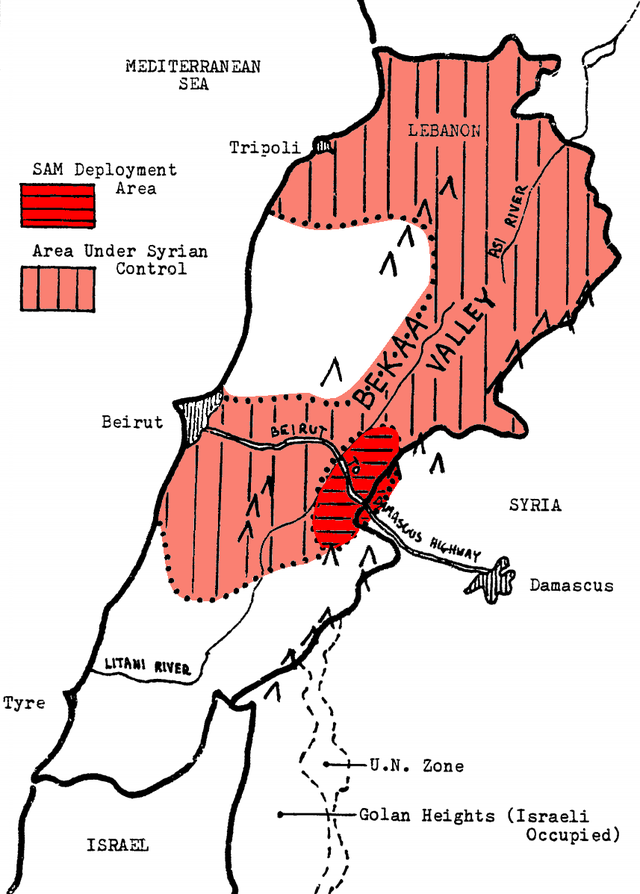
At this point, division overtook the Arab states. Their governments would fight or befriend each other, recognizing the non-existent difference that lies between them. This would go on to put the idea that an Arab from an Arab country other than one’s own was different than him, although just decades earlier, there was no such issue.
How This Leads to Today
Today, Arabs have completely mentally separated themselves from one another. They think their brother from another modern Arab country is significantly different from them, often thinking negatively of them due to borders that were drawn not even two generations ago by the West. This effectively puts us on the path to recognizing 22 new nations rather than one unified Arab nation, which is embarrassing, puts us at a major loss, and leaves the complex and beautiful history of the Arab nation in the past.
Cultural differences within the Arab world do exist, but the differences are not enough to make them separate nations. In America, for example, the people who live on the West Coast have different slang, accents, food, clothing style, among other differences, from those who live on the East Coast or the South. Despite this, in a political sense, they set aside their differences and recognize that they’re all American, cooperating to create the best and most powerful life for themselves and those around them, their American brothers.
Pan-Arabism – The Solution
Arabs should strive to do the same. This idea in Arab politics is known as Pan-Arabism: the belief that all Arab countries form a single Arab nation and should ultimately unite into one state, creating a true nation-state.
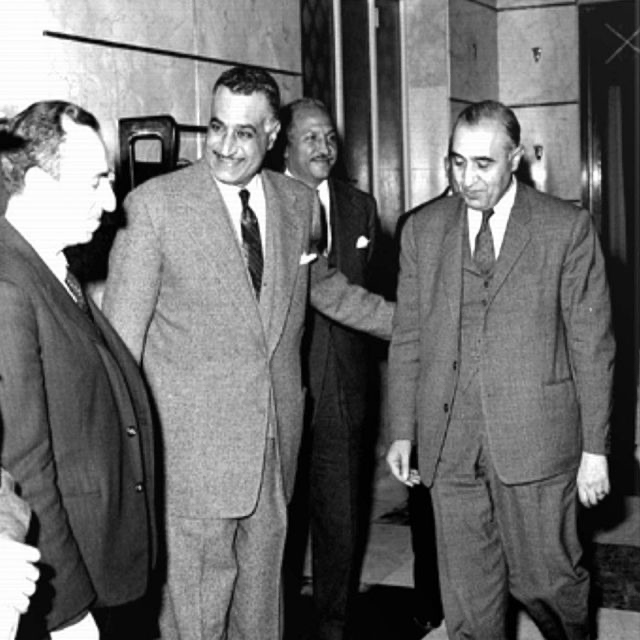
Two of the most famous advocates for Pan-Arabism were Michel Aflaq, the founder of the Arab Ba’ath Movement, and Jamal Abdel Nasser, a leading revolutionary of the 1952 Egyptian Revolution and President of Egypt from 1954-1970. According to Aflaq, “Nationalism is the awareness of the unity of the nation, its past, present, and future; it is the feeling that this unity is a sacred trust” (Fi Sabil al-Ba’ath) (1959). Arabs must realize their shared past and come together to overcome their oppressors, as many of their issues were a result of their oppressors, whether Turkish or European, and only the Arabs will have the best interest of themselves in mind.
How Would Unity Look?
In terms of which flavor of unity is the most effective, the debate is wide and continuous. In the past, Arab unity took the form of a leader surrendering power to the United Arab Republic in an attempt to create an immediate and direct union; however, this approach failed for numerous reasons. Some have presented the idea of a gradual union, operating like the EU, with all the states combining their passports, currencies, militaries, and other aspects of the countries over time, with the permission of the people, at the goal of eventual unity.
What’s important is the people. The Arabs will not feel their true freedom until they’re thriving and independent of their oppressors, who extract the wealth, resources, and labor of the Arab world, granting the Arabs nothing in return. This must be put to an end, no matter the circumstances, to achieve true justice.
ثورة حتى النصر
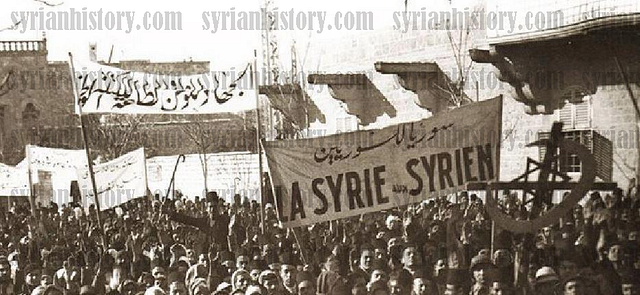
“La Syrie Aux Syrien,” Which Translates to “Syria For the Syrians,” Along With a Cross With a Crescent and Star of David Over it Showing Christian-Muslim-Jewish Arab Unity
Want more articles like this? Sign up for our e-newsletter!
Check our blog here!