

Subscribe
to receive news by email

Poll
Will the Trump Administration Shift U.S. Policy in Favor of Palestine?
- No (87%)
- Yes (13%)
 Loading ...
Copyright © 2026 Arab America
Go topSanctions Cannot Silence the Truth
By: Ramsey Zeidan / Arab America Contributing Writer
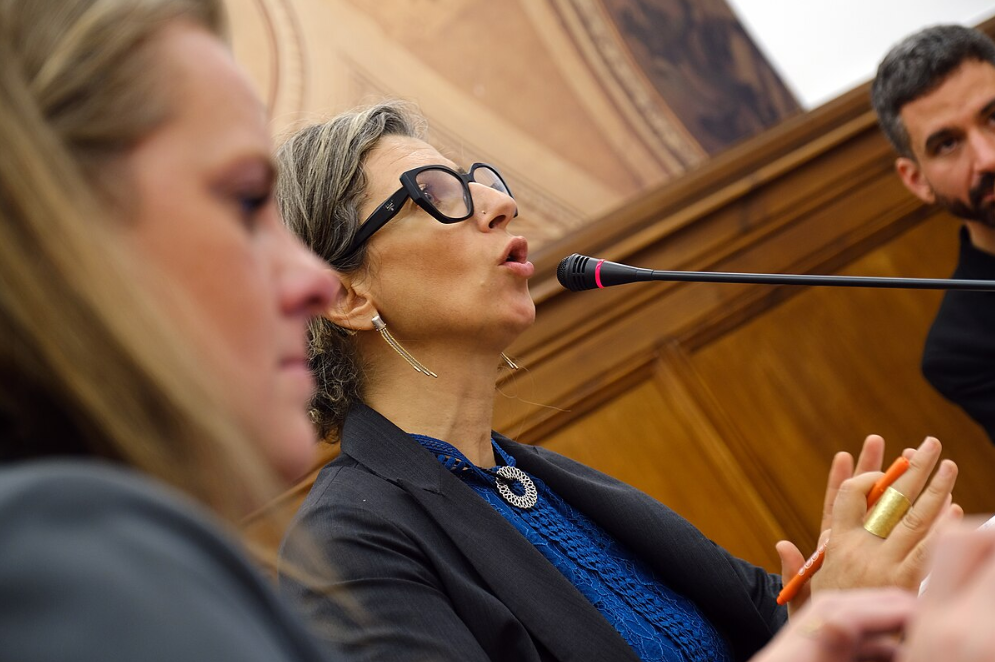
Under the guise of security and keeping the peace, the outspoken often lose their voices to repressive censorship. A series of sanctions have been handed out amidst public outcry over the crimes against humanity inflicted on Gaza. The latest censor was announced by Secretary of State Marco Rubio, who said the U.S. imposed sanctions on UN Special Rapporteur Francesca Albanese for her reporting on Gaza. Albanese was mandated by the United Nations to be a dedicated watchdog for human rights. She published a report earlier this month exposing Western defense companies providing weapons and bulldozers to the IDF. Ms. Albanese called on the companies and the nations profiting from human rights violations to be held accountable.
In reply to the report, the U.S. hit her with sanctions for “a years-long pattern of virulent antisemitism and unrelenting anti-Israel bias.” The sanctions on Francesca Albanese are disheartening, yet they are far from surprising. Actually, attempts at dampening pro-Palestine voices aren’t isolated; rather, they’re part of a larger coordinated crackdown.
Human Rights Groups
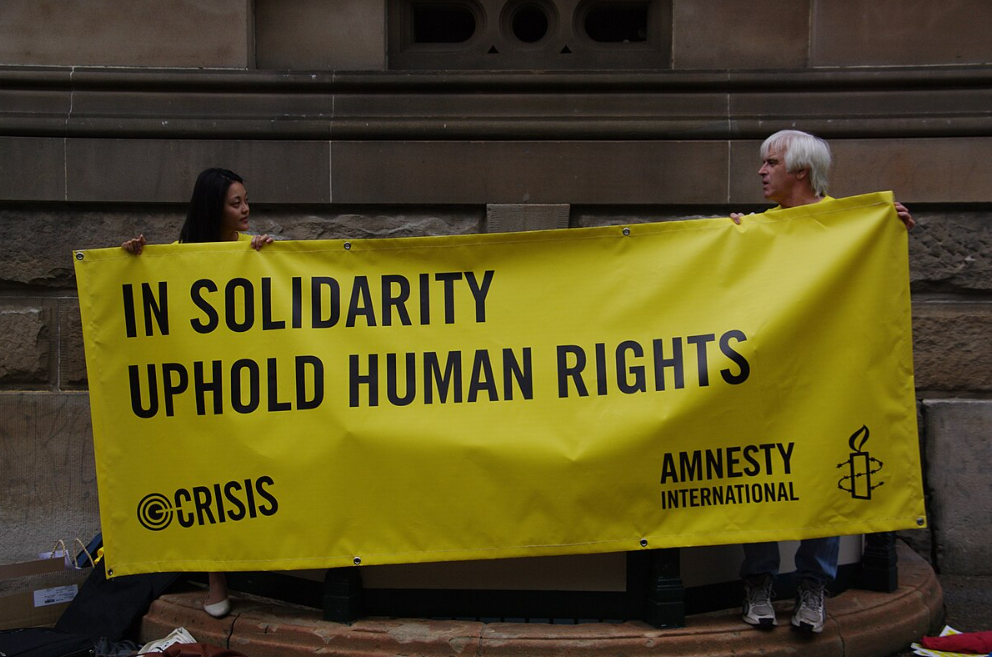
According to Amnesty International, the US Department of the Treasury’s Office of Foreign Assets Control (OFAC) sanctioned Palestinian human rights organization Addameer. Addameer has collaborated with Amnesty International and Human Rights Watch for decades to support Palestinian prisoners. OFAC claims Addameer has ties to the Popular Front for the Liberation of Palestine (PFLP), which is unsubstantiated. Unfortunately, the U.S. has kept these sanctions in place in spite of Amnesty’s continuous pressure.
The United Kingdom recently imposed sanctions against Palestine Action, a grassroots youth movement committed to ending the genocide. The group employs civil disruption and protests to target corporations complicit in the atrocities occurring in Gaza. A devastating decision from the UK Parliament proscribed Palestine Action as a terrorist group, criminalizing any form of support. Critics argued the UK’s definition of terrorism is far too broad and allowed the government to silence people arbitrarily. In response to the new law, Irish author Sally Rooney wrote an opinion piece aptly titled, “Israel kills innocent Palestinians. Activists spray-paint a plane. Guess which the UK government calls terrorism.”
Yet another instance of sanction-based suppression comes from Vancouver-based NGO Samidoun Palestinian Prisoner Solidarity Network. In 2024, Samidoun was hit with terrorist sanctions by the United States and Canada for its support of Palestine. Israel originally dubbed Samidoun a terrorist organization based on “secret evidence” and ties to the PFLP, similar to Addameer. Moreover, Canadian citizen Khaled Barakat was declared a “terrorist” for his heavy involvement in the organization.
With these examples, it is clear to see that Western interests triumph over well-meaning people upholding international law.
A Broader Problem
The same nations who claim to be bastions of freedom strip people of their free speech with reckless abandon. Instead of investigating Israel’s documented war crimes, the focus lies on eliminating legitimate dissent. Ms. Albanese captured the problem perfectly when questioning why she was sanctioned: “For having exposed a genocide? For having denounced the system? They never challenged me on the facts.” The reality is that genuine criticism of Israel’s crimes in Gaza is often conflated with antisemitism. Governments and interest groups do this on purpose, since it is easier to rally sanctions and repression under one banner.
Look no further than New York University, which recently declared Zionists are a “protected class” under Title VI of the Civil Rights Act. A report published by the Arab Center Washington DC argues this sets a dangerous precedent and invites further institutional pressure on groups like Students for Justice in Palestine and Jewish Voice for Peace.
Conflating political ideology and religious identity is dangerous, and as stated earlier, hinders the right of free expression. However, despite the best efforts to sanction pro-Palestine voices, the truth cannot be censored or silenced. Francesca Albanese is far from the first person to be sanctioned, and she will not be the last. Supporting free press and reaffirming core human rights in an era of democratic backsliding is of utmost importance. Likewise, the international community has expressed limited solidarity with Palestine, but the time to follow through with support is now. Human rights groups have been sounding the alarm for years; who is listening?
Want more articles like this? Sign up for our e-newsletter!
Check out our blog here!


.jpg)