

Subscribe
to receive news by email

Poll
Will the Trump Administration Shift U.S. Policy in Favor of Palestine?
- No (87%)
- Yes (13%)
 Loading ...
Copyright © 2026 Arab America
Go topSaudi's Kafala System Ends
By: Taim Al-Faraje / Arab America Contributing Writer
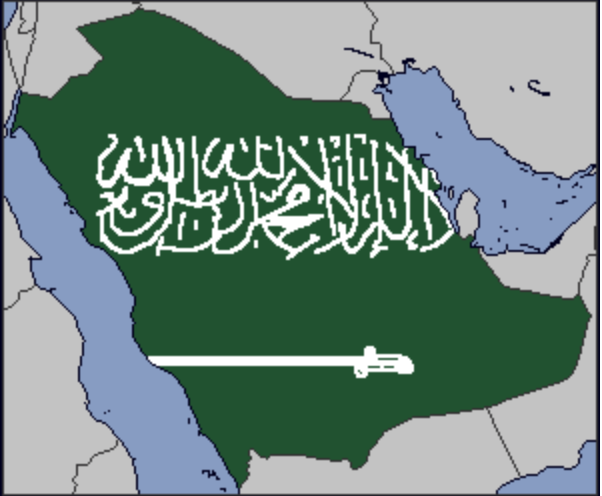
In June 2025, Saudi Arabia announced the end of its “Kafala System,” also known as the Immigrant Sponsorship System. Saudi Arabia will grant millions of employees from South and Southeast Asia the freedoms that the United Nations and other international human rights organizations have demanded for years. For decades, activists, analysts, and other writers/journalists have called for an end to the Kafala System, present in Qatar, the UAE, Lebanon, Bahrain, and other countries. A 2010 article exemplifies early protests against the system, though people had been calling for change decades earlier. This article will detail what the Kafala System is, Saudi Arabia’s plans to end it, the detrimental continuation of it by other countries, and why it needs to be ended.
What is the Kafala System?
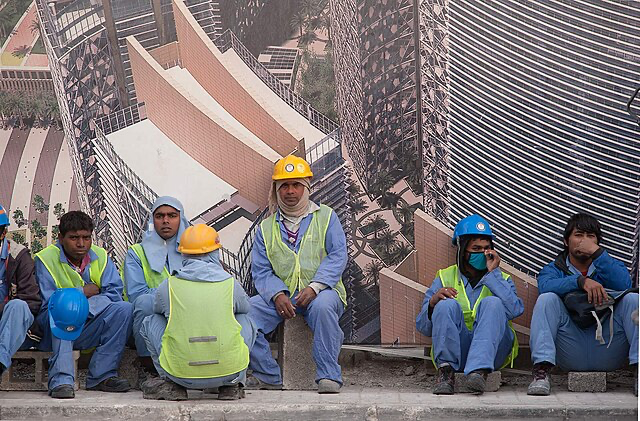
The Kafala System, primarily found in Gulf countries and Lebanon, enables employers to “sponsor” immigrants. A majority of these sponsored workers came from India, Pakistan, Bangladesh, and the Philippines. This, in part, explains why these countries have such high non-Arab populations, such as Qatar’s 43% South Asian population or the UAE’s almost 60% South Asian population. While a sponsorship may sound pleasant and helpful to immigrants on the surface, the truth behind these sponsorships is, to say the least, distasteful. In the system, states issue permits to individuals or privately owned companies to employ foreign workers. The company/individual then provides travel and typically dorm-style housing to the workers during their stay at work.
The system usually falls under the host country’s interior ministry, not labor. Unfortunately, this means that labor laws do not adequately protect workers. As one may assume, this leads to the employer taking advantage of the worker, overworking them, stealing their passports, and trapping them within the host country. In most cases, the worker needs permission from the employer to transfer jobs, quit, or even simply leave the workplace, and disobeying could result in imprisonment and the termination of their legal status. People have raised complaints about the system for many obvious reasons—the main one being that the system isn’t just close to modern-day slavery; it is modern-day slavery.
How the System Lines Up With International Law
According to the United Nations, “The term “migrant worker” refers to a person who is to be engaged, is engaged or has been engaged in a remunerated activity in a State of which he or she is not a national.” The system breaks international law for these workers in many ways. This section will list out some articles from the International Convention on the Protection of the Rights of All Migrant Workers and Members of Their Families, laid out by the UN, and detail how the system breaks them.
- Part III, Article 8, states, “Migrant workers and members of their families shall be free to leave any State, including their State of origin.”
- Part III, Article 11, states, “No migrant worker or member of his or her family shall be required to perform forced or compulsory labour.”
- Part III, Article 12, states, “Migrant workers and members of their families shall have the right to freedom of thought, conscience and religion. This right shall include freedom to have or to adopt a religion or belief of their choice and freedom either individually or in community with others and in public or private to manifest their religion or belief in worship, observance, practice and teaching.”
- Part III, Article 16, states, “Migrant workers and members of their families who are arrested or detained on a criminal charge shall be brought promptly before a judge or other officer authorized by law to exercise judicial power and shall be entitled to trial within a reasonable time or to release.”
How the System Breaks These Articles
As stated in this article previously, the Kafala System gives the employer control of workers’ entry and exit, therefore breaking Article 8. Workers do not have the right to leave their state of employment without the permission of their employer under the system.
Article 11 prohibits slavery and forced labor. Despite this, according to a report by Amnesty International from just last year, “Despite some limited labour reforms, migrant workers, in particular domestic workers, continued to be subjected to forced labour and other forms of labour abuse and exploitation, and lacked access to adequate protection and redress mechanisms.” This clearly breaks Article 11.
Workers, according to Article 12, need to have the right to practice any religion they want, in public or in private, and shouldn’t face repression and punishment for it. Unfortunately, according to Human Rights Watch, “Migrant workers who are not Muslims but are religiously observant must adjust to the absence of houses of worship for their religious faiths, and refrain from public display of religious symbols such as Christian crosses or the tilaka – the distinctive “holy spot” – that many Hindus apply on the forehead between the eyes.”
According to Article 16, authorities must give arrested migrant workers a speedy trial before a judge or legal officer. However, according to Human Rights Watch, “Thousands of people were arrested and deported to their home countries, often without due process, as part of a government crackdown on individuals accused of violating labour, border and residency regulations. Saudi Arabia carried out executions for a wide range of crimes, including drug-related offences. Courts sentenced people to death following grossly unfair trials. Women continued to face discrimination in law and practice.” This breaks Article 16, as the workers were not receiving any part of the provision.
How Will Saudi Employers Hire Immigrants in the Post-Kafala Era?
As part of Saudi’s 2030 Vision project, the government will grant immigrants the same rights guaranteed to other laborers under Saudi labor laws. They will simply be under an employment contract, not needing a sponsor, unlike they did before. This will also allow them to change jobs and leave the country without the permission of the employer, unlike before. Employers will still need permits to hire and must initiate the hiring process; however, they will no longer have the control they did before, under the modern system.
Final Remarks
It is great that Saudi Arabia has adopted a modern contractual system for its migrant workers, and other countries, such as the UAE, Lebanon, and Qatar, must do the same.
Want more articles like this? Sign up for our e-newsletter!
Check our blog here!