Subscribe
to receive news by email

Poll
Will the Trump Administration Shift U.S. Policy in Favor of Palestine?
- No (87%)
- Yes (13%)
 Loading ...
Copyright © 2026 Arab America
Go topSudan in Crisis: War, Displacement, and a Fractured Future

By: Layla Mahmoud / Arab America Contributing Writer
Sudan’s conflict, which erupted in April 2023, has spiraled into one of the world’s worst humanitarian disasters. What began as a power struggle between the military and a powerful paramilitary force has turned into a full-blown civil war with millions displaced, tens of thousands killed, and no clear end in sight. Arab America contributing writer Layla Mahmoud explores where the war stands now, who’s gaining ground, and what the future could look like for ordinary Sudanese people.
What Sparked the Conflict, and Why It’s Escalating
The war began in April 2023, as power struggles between SAF and RSF spiraled into open fighting. The RSF, long a powerful paramilitary force, turned on the army, sparking a conflict that has since swept across Khartoum, Darfur, Kordofan, and other critical regions. Analysts warn that the RSF’s control in western regions could fracture Sudan along de facto lines. Meanwhile, the SAF has retaken important ground, including key parts of Khartoum.
Major Fronts and Shifting Control
The conflict has seen intense battles in multiple regions. In Khartoum, the SAF recaptured strategic bridges and military installations, including the Jebel Aulia Dam bridge, consolidating control over much of the capital. Meanwhile, the RSF has maintained strongholds in Darfur, capturing El Fasher and extending its control over surrounding areas. Cities such as Wad Madani and Al Maliha have changed hands multiple times, showing the volatility of the frontlines. The RSF’s declaration of a rival government in territories under its control has further complicated the political landscape and raised concerns about a possible permanent split in Sudan.
Humanitarian Crisis and Civilian Impact
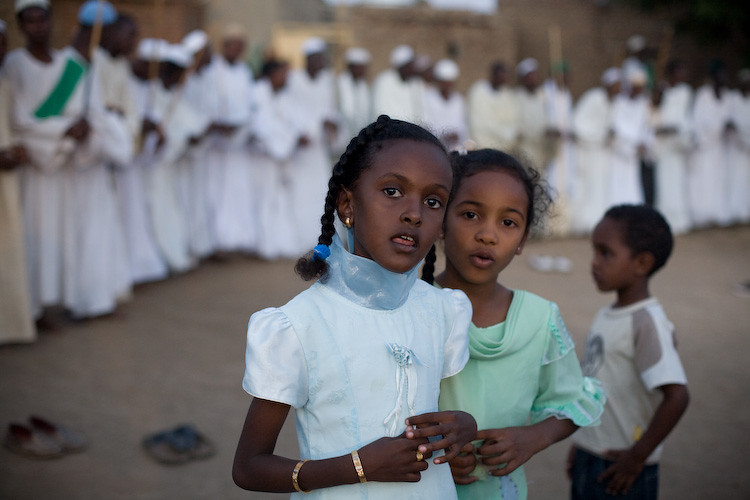
Civilians have suffered the gravest consequences of this war. Over twelve million people have been displaced, forced to live in overcrowded camps or improvised shelters. Food and medical supplies are scarce, and famine is a growing threat in several regions. Shelling and indiscriminate attacks have also killed hundreds. In February 2025, an RSF strike on a market in Omdurman claimed more than fifty lives. Hospitals have been damaged or destroyed, including a facility in El Fasher, leaving communities without essential care. Reports of targeted attacks, looting, and ethnic violence in Darfur highlight the extreme vulnerability of civilians and the scale of human rights violations.
Attempts at Ceasefire and Political Negotiations
Efforts to establish a ceasefire have so far been fragile. In November 2025, the RSF tentatively agreed to a U.S.-backed humanitarian truce, though past agreements have rarely held. The SAF has made participation conditional on the RSF withdrawing from civilian areas and disarming, which shows the deep mistrust between the two factions. International mediators continue to push for dialogue, but even a temporary truce may struggle to hold unless a broader political solution is reached that addresses governance, power-sharing, and security.
Potential Long-Term Consequences
If the conflict continues, Sudan faces the risk of permanent fragmentation. The RSF could entrench its authority in Darfur and Kordofan, while the SAF maintains dominance elsewhere, and leave the country effectively divided. Beyond political division, civilians will continue to face displacement, famine, and the collapse of essential services. The declaration of a rival government by the RSF raises the stakes, signaling a potential reshaping of Sudan’s political map and a deepening humanitarian crisis.
Conclusion
Sudan’s civil war is no longer just a military confrontation, but rather a battle for the country’s identity, governance, and survival. With millions of lives at stake, the coming months will determine whether Sudan can emerge as a unified nation or face long-term fragmentation. Civilians, caught in the middle, continue to bear the highest cost, and international actors must balance humanitarian support with efforts to push for accountability and peace. Sudan stands at a crossroads, and its future remains deeply uncertain.
Want more articles like this? Sign up for our e-newsletter!
Check out our blog here!