Subscribe
to receive news by email

Poll
Will the Trump Administration Shift U.S. Policy in Favor of Palestine?
- No (87%)
- Yes (13%)
 Loading ...
Copyright © 2026 Arab America
Go topThe Chaldeans of Lebanon: “Love Is Contagious”
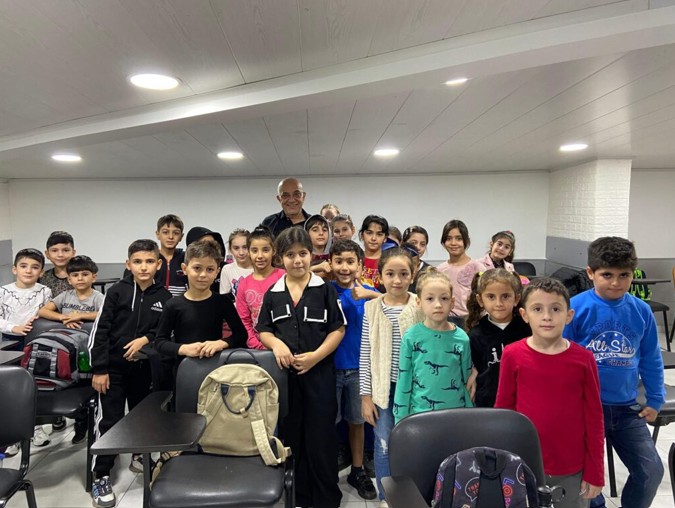
https://chaldeansoflebanon.org/2024/10/29/bishop-kassarjis-visit-to-st-thomas-educational-school/
By Ralph I. Hage/Arab America Contributing Writer
In the heart of Lebanon, a country known for its religious pluralism and historic role as a haven for the displaced, lives a resilient yet often overlooked Christian community: the Chaldeans. While Lebanon is home to 18 recognized sects, the Chaldean Catholic community, tied deeply to Iraq’s ancient Mesopotamian Christian roots, holds a unique and poignant place in the region’s socio-religious landscape.
Their presence in Lebanon is a story of displacement, faith, and enduring cultural identity – one that also resonates strongly with Arab Americans who share ancestral ties across Iraq, Syria, and Lebanon.
A Journey Rooted in Survival
The Chaldean community’s arrival in Lebanon dates back over a century. Small groups of Chaldean families – mainly from northern Iraq, southeastern Turkey, Syria, and Iran – fled persecution under the crumbling Ottoman Empire in the early 20th century. The first priest and approximately 25 families established the foundation of the Chaldean Church in Lebanon around 1920, following violence that targeted Assyrian and Syriac Christians.
But it was the recent decades – particularly after the 2003 U.S.-led invasion of Iraq and the rise of ISIS – that saw a significant influx. Thousands of Iraqi Chaldean families sought refuge in Lebanon, escaping targeted persecution, church bombings, and kidnappings that devastated Christian communities across Baghdad, Mosul, and the Nineveh Plains.
Lebanon, already strained under the weight of its own economic and political crises, nonetheless became, and continues to be, a relatively safe haven.
The Church at the Center
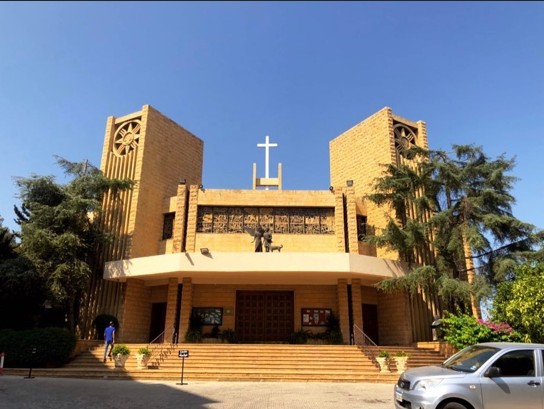
(From Instagram: assyro_kld1_lhistoire_continue)
The Chaldean Catholic Eparchy of Beirut, established in 1957, serves as the spiritual and administrative heart of the community. It is an Eastern Rite Catholic Church in communion with Rome. This Eparchy operates under the authority of the Patriarch of Babylon, who is based in Baghdad, while ultimately recognizing the primacy of the Roman Catholic Pope.
Its leader, Bishop Michel Kassarji, born in Zahlé to a Chaldean Lebanese family, has become a voice not only for his constituents but also for numerous displaced Christians across the region. Under his direction, the Eparchy operates refugee centers, humanitarian aid programs, and educational support for thousands of Iraqi Chaldeans now living on the margins of Lebanese society.
Saint Thomas Chaldean Educational Center in Lebanon
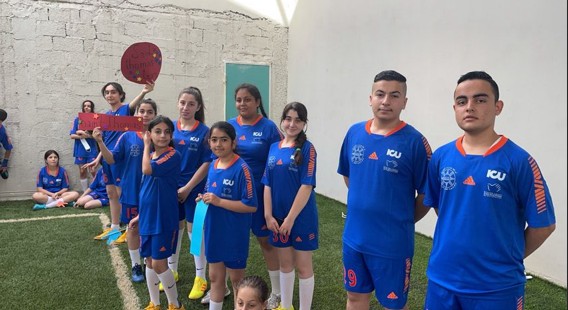
https://saintthomaseducationalcenter.wordpress.com
Founded in 2017 by Bishop Kassarji, with support from the Chaldean Charitable Society in Lebanon and the Bidawid Foundation, this center operates as a free, non‑formal educational initiative within the Chaldean Relief Center in Sabtieh, Lebanon. It welcomes around 120 Iraqi and Syrian refugee children – typically aged 7 to 16 – offering them safe, compassionate learning environments to ward off illiteracy, child labor, and delinquency. Students are grouped into primary (7–9), junior (10–12), and youth (13–16) classes. Beyond core academics – Arabic, English, French, math, science, biology – the center provides music, theater, arts, sports, and psychosocial and awareness programs. Since 2020, it has implemented child protection policies in collaboration with Lebanese and international NGOs, and its faculty receive regular training. In recent years, it has expanded with a children’s choir, sports teams, summer camps, and adult education and life‑skills programs (like IT, soap‑making, agriculture, accounting). Starting in 2023, support from Monaco via the Edu‑Care projects further strengthened its mission, including enhancing students’ English and IT capabilities in partnership with Trainable.
The phrase “Love Is Contagious” appears prominently as the center’s slogan – encapsulating their spirit and approach and reflecting how they view education and community. The idea that compassion and support can spread from person to person is valuable and especially powerful within refugee communities. Through kindness, care, and learning, positive impact multiplies and ripples outwards, nurturing both the individuals and their broader community.
Living in Limbo
Today, an estimated 20,000-30,000 Chaldeans reside in Lebanon. While a portion are Lebanese citizens, others are refugees and asylum seekers – primarily from Iraq, with some from Syria. Many are undocumented and live without basic legal protections.
Unlike Syrian refugees, who benefit from UNHCR programs, Iraqi Christians often lack formal refugee status in Lebanon. This leaves them vulnerable: unable to legally work, access consistent healthcare, or secure safe housing. Most rely on under-the-table jobs and support from the Church or NGOs to survive.
Mira Kassarji, media coordinator for the Eparchy, reported that the church assists more than 2,000 families every month. They provide food kits, rent aid, medical care, and education programs. But the needs are greater than what they can provide.
Holding on to Heritage
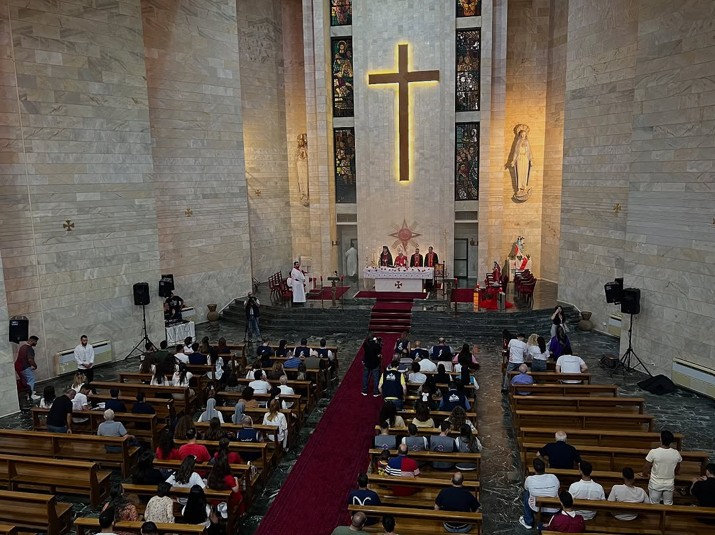
(From Instagram: apecljeune.liban and chaldeans_of_lebanon)
In the face of economic hardship and political uncertainty, the Chaldeans of Lebanon remain committed to preserving their identity.
At the cathedral in Ba’abda, Mass is still conducted in Suret, a dialect of Aramaic spoken since the time of Christ. Children learn catechism in their mother tongue. Cultural programs celebrate the heritage of northern Mesopotamia – where many of these families trace their roots back thousands of years.
One Chaldean refugee, who asked to remain anonymous, said, “Lebanon is safer than Iraq. But we have no future here. We are neither recognized nor supported. Still, we won’t give up our traditions.”
For some, the ultimate goal is resettlement – many hope to join family members in the U.S., Canada, or Australia. Until then, Lebanon remains a place of waiting for some, and a new home for others.
The Call for Representation
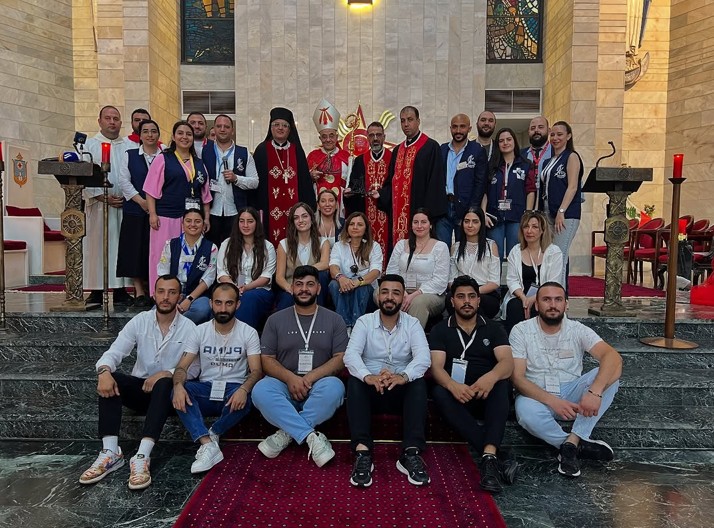
(From Instagram: apecljeune.liban and chaldeans_of_lebanon)
Although officially recognized as a sect within Lebanon’s religious framework, Chaldeans remain politically underrepresented. Community leaders have consistently called for greater recognition, including a dedicated parliamentary seat – similar to other Christian minority sects like Armenians and Melkites.
In 2021, the Chaldean Church joined other Christian denominations in backing calls for an international conference to help stabilize Lebanon and protect minority communities.
A Link to Arab Americans
The story of Lebanon’s Chaldeans reverberates across the world – particularly in Arab American communities in Detroit, Chicago, and San Diego, where large Chaldean diasporas from Iraq have taken root.
Many American Chaldeans have relatives in Lebanon – parents, cousins, or siblings – waiting in limbo for visa approvals or refugee sponsorships. Some support them from afar with remittances and advocacy.
“I was born in Lebanon to Iraqi Chaldean parents,” one Arab American wrote on Reddit. “I live in the U.S. now, but I often think about how hard life was for my family back there. We keep our language and faith alive here too.”
This transnational connection reinforces the importance of global solidarity – and the role of Arab Americans in pushing for refugee aid, legal recognition, and preservation of Chaldean heritage both abroad and at home.
Looking Ahead
As Lebanon’s economic collapse deepens and its refugee policies tighten, the future remains uncertain for the Chaldean community.
Although Lebanese Chaldeans and Chaldean refugees share a common cultural identity, their experiences in Lebanon are markedly different. Variations in citizenship status and economic well-being influence the opportunities accessible to each group. Many in both groups feel invisible – caught between wars they fled and borders that won’t let them pass. Yet between it all, throughout the green hills of Lebanon, the spirit of Chaldean resilience carries on.
If you’re interested in supporting Chaldean refugees in Lebanon, organizations like the Chaldean Eparchy of Beirut, Chaldean Diocese of St. Thomas the Apostle U.S.A. and Caritas Lebanon welcome donations and advocacy from the diaspora.
Ralph Hage is a Lebanese American architect and writer who spends his time between Lebanon and the United States. His work explores the intersections of art, architecture, and cultural heritage in Lebanon and across the Arab World.
Want more articles like this? Sign up for our e-newsletter!
Check out our blog here!