Subscribe
to receive news by email

Poll
Will the Trump Administration Shift U.S. Policy in Favor of Palestine?
- No (87%)
- Yes (13%)
 Loading ...
Copyright © 2026 Arab America
Go topThe Coptic Museum: A Living Metaphor of Egypt’s Interwoven Heritage
By: Laila Mamdouh / Arab America Contributing Writer
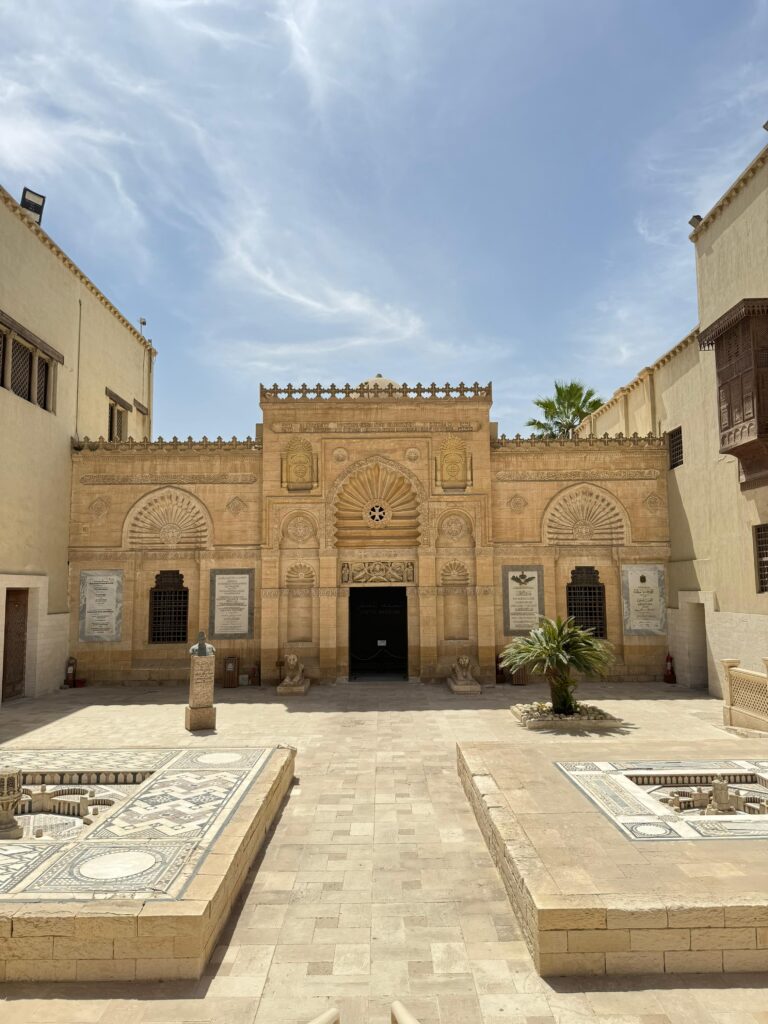
When I had the chance to visit the Coptic Museum in Fustat for a course on Egyptian History, I was immediately drawn to its unique setting and architectural presence. Nestled in the heart of Old Cairo and the Religious Complex, the Coptic Museum’s exterior immediately draws the eye with its historic charm, as it stands not only as a guardian of Egypt’s Christian past but also as a symbol of the nation’s layered cultural identity. Its very facade, where Islamic motifs blend seamlessly with Christian symbolism, serves as a powerful metaphor for the history of the Copts in Egypt: a story of resilience, adaptation, and profound, and understated influence.
A Facade That Tells a Story
The architecture of the Coptic Museum is not merely decorative; rather it is a visual narrative of Egypt’s multicultural nature. The museum’s facade is inspired by the Al-Aqmar Mosque in Fatimid Cairo, echoing its intricate stonework and ornamental surfaces. This adaptation is far from accidental; conversely, it demonstrates how Coptic identity has always been defined by dialogue, borrowing, blending, and reinterpreting symbols from Egypt’s pagan, Greco-Roman, and Islamic past.
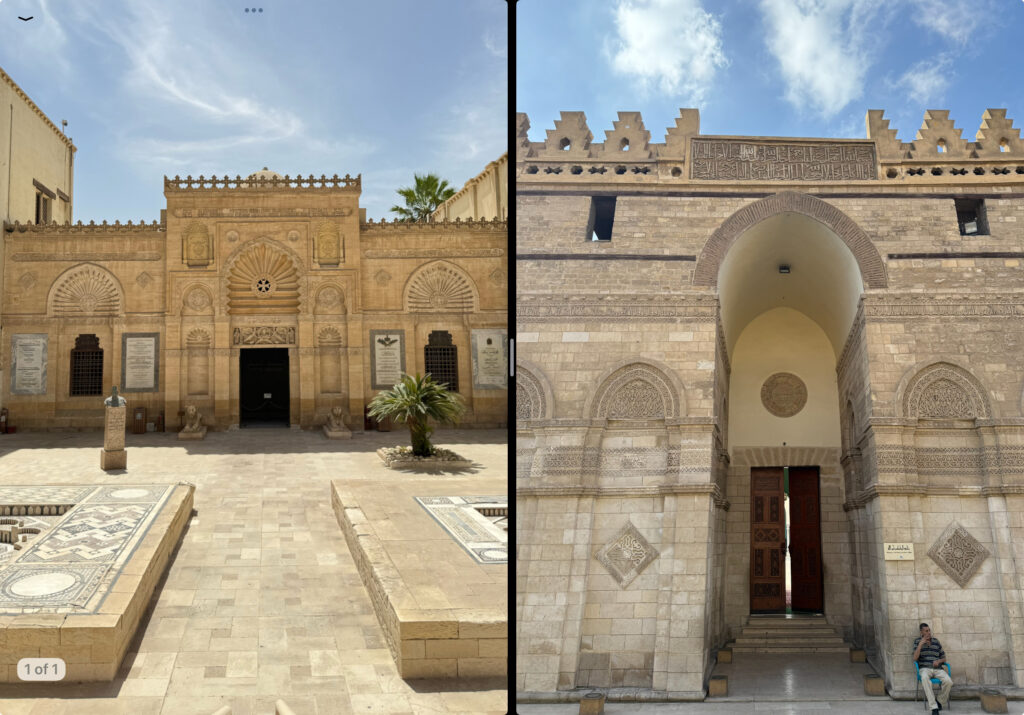
This architectural interwovenness is more than aesthetic. It reflects the lived reality of Copts as an indigenous community whose history bridges the ancient, Christian, and Islamic eras of Egypt. The very term “Coptic” itself comes from the Arabic “qibt,” derived from the Greek word for Egypt’s native population, underscoring the deep roots and ongoing evolution of this community.
Inside the Museum: Hidden Legacies in Plain Sight
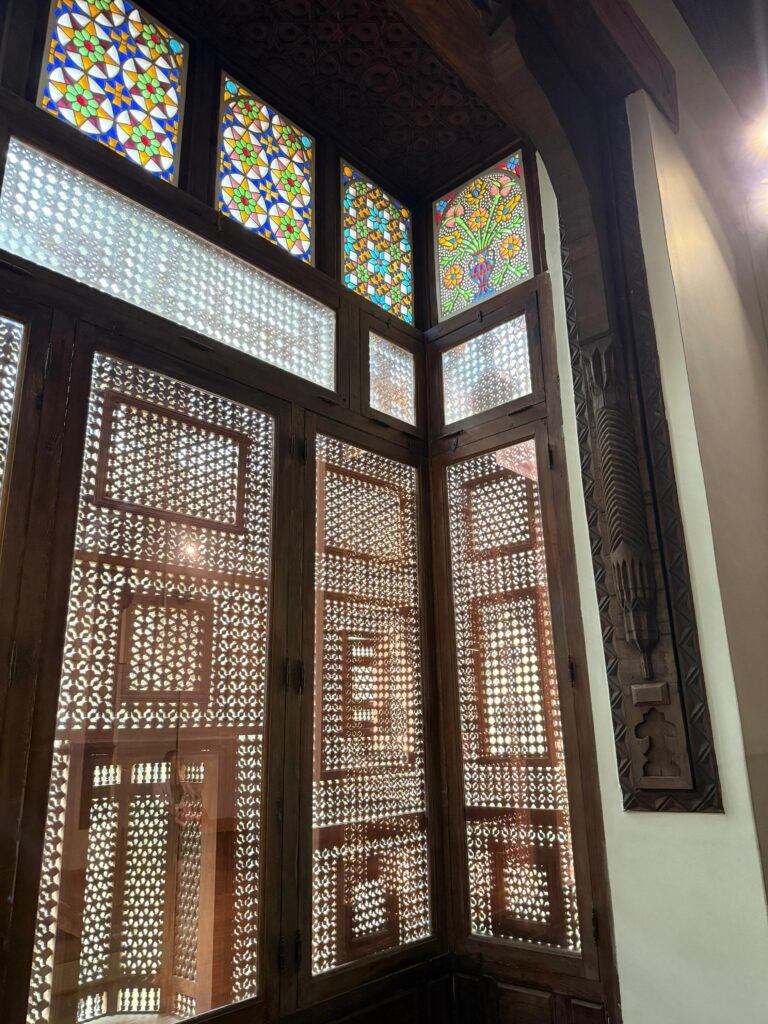
The wooden mashrabiyas, with their intricate latticed screens, filter sunlight and cast delicate patterns of shadow across the entrance, while their interlaced geometric designs and arabesque motifs evoke the artistry of Islamic Cairo. Yet, looking closely, we can see how Christian symbolism emerges as crosses are subtly integrated into the decorative details, and the overall harmony of styles reflects the centuries-long coexistence and dialogue between Egypt’s Christian and Muslim communities. This blending of motifs on the museum’s exterior stands as a metaphor for the Coptic experience in Egypt: resilient, adaptive, and deeply interwoven with the nation’s broader cultural fabric.
Stepping inside the museum was like unfolding one of the world’s richest repositories of Coptic art, offering a vivid tapestry of Egypt’s first millennium. Despite its minimalism, something about that made it so elegantly bare. It was very easy to follow through, with every room designated for textiles, clothes, coins, or scriptures. It allowed the academic in me to forgo the dimly lit rooms and instead connect the dots with the objects right in front of me, an opportunity I could neither overlook nor take for granted.
The collection spans from the 3rd to the 13th centuries, revealing how Coptic culture has both shaped and been shaped by its surroundings. Frescoes such as the one depicting Christ enthroned, surrounded by angels and saints, showcase a synthesis of Greco-Roman artistic traditions with distinctly Christian iconography. The halos, gestures, and arrangement of figures echo earlier artistic conventions, yet the message is unmistakably rooted in Christian theology.
Frescoes and Christian Iconography
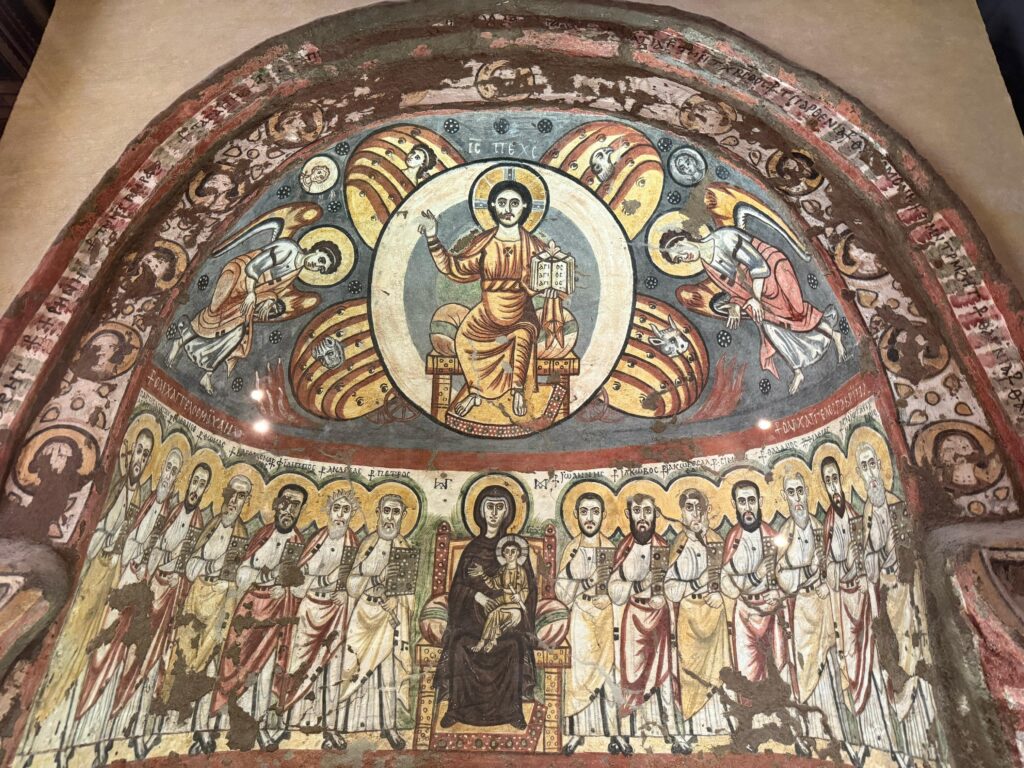
One striking example is the vibrant fresco (the image above) that depicts Christ enthroned, surrounded by angels and saints. The iconography is unmistakably Christian as according to Mai Elwakil, yet the composition and style bear the influence of earlier Greco-Roman art, with halos, gestures, and even the arrangement of figures echoing pre-Christian traditions. The blending of these styles is a visual testament to the Copts’ ability to preserve their faith while engaging with the dominant cultures of their time.
Manuscripts: The Written Legacy
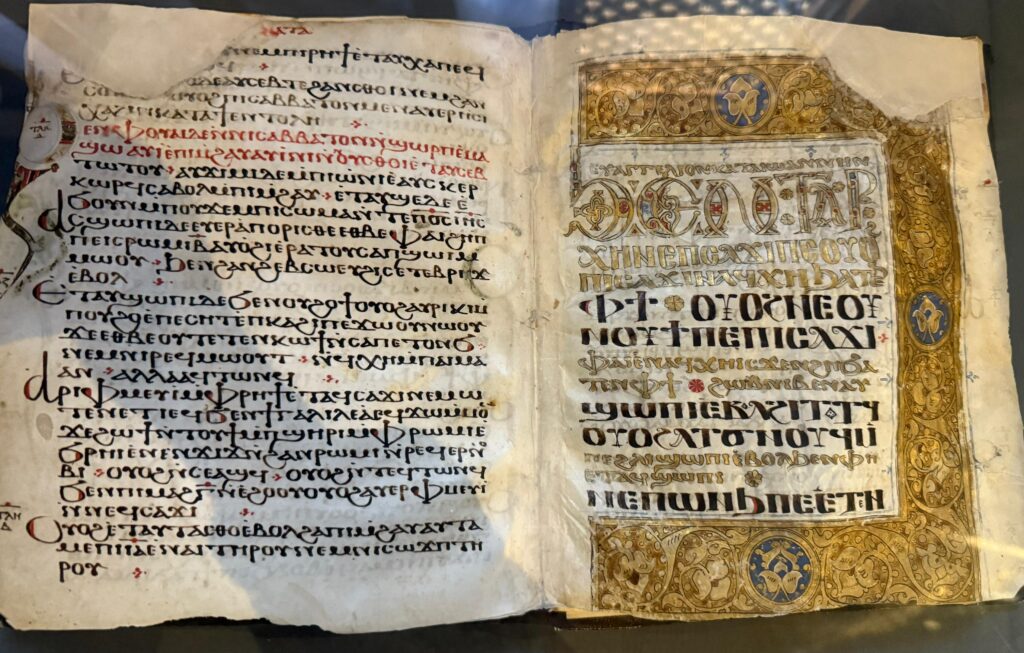
The museum’s manuscript collection (the image above) is equally revealing. The Coptic script itself is a hybrid, using the Greek alphabet supplemented by seven Demotic Egyptian characters; a linguistic bridge between Egypt’s pharaonic past and its Christian present. The manuscripts on display range from biblical texts to liturgical books, richly illuminated with gold and intricate borders. Some codices are written in parallel columns of Coptic and Arabic, reflecting the gradual Arabization of Egypt and the Copts’ enduring bilingualism (the image below).

These manuscripts are not just religious documents; they are historical artifacts that record the evolution of language, theology, and bookmaking. The codex format, which replaced the scroll, was pioneered by the Copts and remained the basis for modern bookbinding.
Ostraca: Everyday Voices
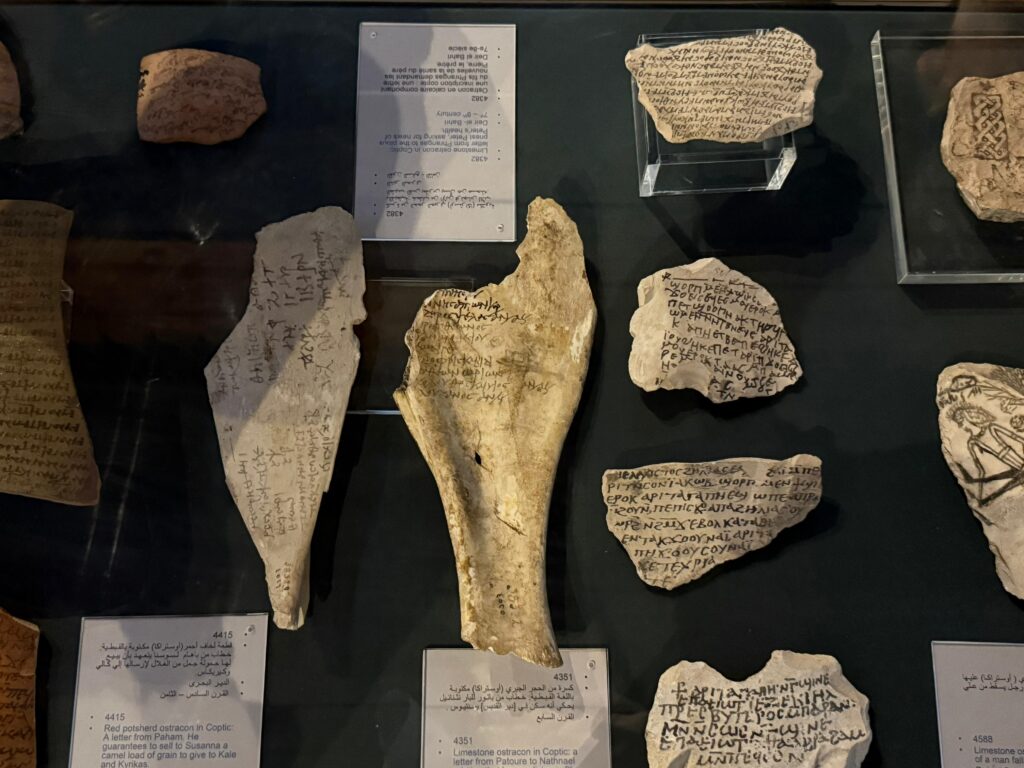
Perhaps most evocative are the humble ostraca; fragments of pottery and limestone inscribed with Coptic text (the image above). These shards preserve the voices of ordinary Egyptians: letters, receipts, and prayers that offer a rare glimpse into daily life. One ostracon records a guarantee of salt delivery, another a letter from a monk. These artifacts remind us that Coptic history is not only the story of saints and theologians, but also of farmers, merchants, and scribes whose lives were intertwined with Egypt’s broader society.
A Hidden Legacy, Waiting to Be Discovered
Although the Coptic Museum’s treasures often go unnoticed by casual visitors, overshadowed by Egypt’s more famous Pharaonic and Islamic monuments, its collection reveals how Coptic art and culture have left a memorable mark on Egypt’s identity: motifs like the cross-adorned wreath and the ankh appear not only in churches but also in Islamic architecture and decorative arts. The Mashrabiyas, woodwork, and geometric patterns throughout the museum demonstrate how Coptic artisans influenced Islamic design, from Mosque Mihrabs to star-shaped minbars.
More than a repository of relics, the Coptic Museum stands as a living metaphor for Egypt’s lasting pluralism. Its facade and collections remind us that the Copts’ story is one of creative engagement, not isolation. Their legacy, despite being hidden in plain sight, continues to shape Egypt’s cultural landscape, offering lessons in resilience and adaptation. In Fustat, surrounded by mosques, churches, and synagogues, the museum invites visitors to look beyond the obvious and discover the subtle threads that bind Egypt’s past and present.
Want more articles like this? Sign up for our e-newsletter!
Check out our blog here!