

Subscribe
to receive news by email

Poll
Will the Trump Administration Shift U.S. Policy in Favor of Palestine?
- No (87%)
- Yes (13%)
 Loading ...
Copyright © 2026 Arab America
Go topThe Economic Standing and Implications of Palestinian Olive Oil
By Ben Samuels/Arab America Contributing Writer
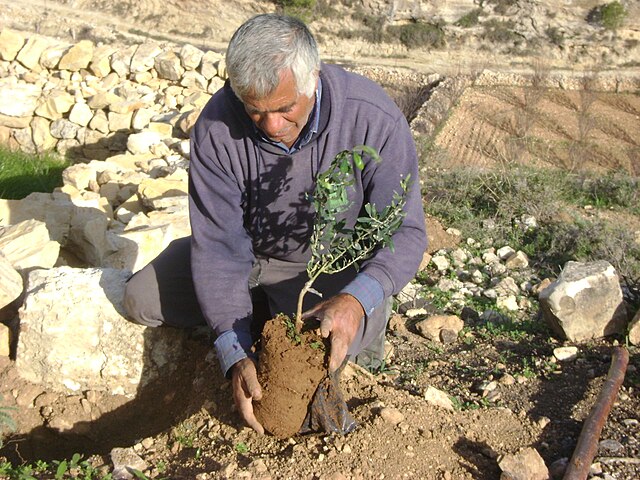
Olive trees have been a crucial staple of Palestinian culture for decades, with deep ethnic ties that bring people together and represent many key ideas about heritage and culture. However, the role that olive trees play is much more multifaceted. Olive trees and, by extension, Olive Oil are a key economic and geopolitical factor in Palestine. Olive trees are a major source of agriculture and economic export, providing income for many living in the area. In light of current events, there have been significant issues with the exportation of olive oil due to largely supply-and-demand factors. In addition, Palestinian diaspora communities are a driving market force beyond Palestine and add significance to olive trees and their products from other angles.
Economic Ties
Palestine has a largely agricultural-based export economy that also features products such as tomatoes, cucumbers, and many citrus fruits, such as oranges. However, none of these are nearly as substantial to the economy as olive trees. For example, according to a United Nations report in 2019, between 80,000 and 100,000 Palestinian families rely on the olive harvest as their main source of income. That said, issues with olive oil exports could have a detrimental effect on the overall Palestinian economy. In addition, around 45-50% of cultivated land in the West Bank is occupied by olive trees, indicating the immense reliance on these trees and their products for sustainability and economic security. Olive trees and the production of olive oil are excellent ways to stimulate market and job growth in Palestine, thereby increasing overall economic productivity in an area with very limited geographic territory and low levels of developed infrastructure and institutions, which often employ people in other regions. In conclusion, the mass production of olive products generates foreign income in a situation where there aren’t many other options, so the standing of olive oil and other similar products in export markets is crucial to both the domestic and international standing of the limited Palestinian economy.
Export Issues
As stated earlier, olive oil is Palestine’s largest export, driven by the number of olive trees and the people who work them. Due to the ongoing conflict with Israel, there have been many negative effects on the export of products. In Gaza, many of the olive trees have been destroyed or severely damaged, which puts most of the agricultural pressure on the West Bank. In addition, the conflict has increased the barriers for farmers to get access to their farms, let alone harvest and produce, as there are many travel restrictions, both due to oppression and physical barriers. Building on this, trade routes have been severely disrupted, making it physically difficult to transport products for export. Overall, these issues severely limit the ability of those who work in agriculture in Palestine to grow, access, and export their products, which, given the economic significance of olive oil, is highly consequential.
Diaspora Communities
Palestinians and Arabs around the world heavily influence the supply and demand chain of Palestinian olive oil, as many prefer to purchase it instead of Spanish or Italian olive oil, as an act of solidarity. The purchase of Palestinian olive products helps fuel the economy of farmers who have fallen on hard times, as foreign spending plays a tremendous role. The olive oil also helps create a rally-around-the-flag effect, as it symbolizes something people can do from home to support those in Palestine, if they choose to. However, the issue is that this increasing demand does not align with the declining supply. The export issues in Palestine outweigh the demand for olive oil, as the inability to access the product makes it essentially a non-factor. Even though the product has a limited supply, the awareness being raised helps bring attention to the Palestinian cause, so, at the very least, there is still a reason to continue purchasing Palestinian olive oil, even if supply and demand aren’t symmetrical.
Conclusion
The economic standing of Palestinian olive oil is a strong indicator of geopolitics in the region, as it brings together the cultural influence of many around the world who stand in solidarity, as well as bringing political conditions to life. Even though supply is low and demand is high, olive oil remains a strong symbol of the Palestinian people and is much more than an export product.
Want more articles like this? Sign up for our e-newsletter!
Check out our blog here!





.jpg)