
Subscribe
to receive news by email

Poll
Will the Trump Administration Shift U.S. Policy in Favor of Palestine?
- No (87%)
- Yes (13%)
 Loading ...
Copyright © 2026 Arab America
Go topThe Humor of a Ghetto
By: Robert Jackson/Arab America Contributing Writer
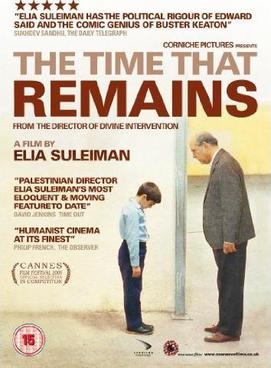
The Time That Remains, written and directed by Elia Suleiman, is a brilliant piece of Palestinian filmmaking. The 2009 comedy/drama film is an introspective autobiography of a so-called “present absentee.” Following the life of Elia’s father and eventually Elia himself, it tells the story of resistance through humor. By using slapstick comedy and planimetric cinematography, Elia is able to take the viewer out of reality enough to keep the tone humorous while still historical. This is why some consider this film a masterpiece, walking the tightrope of being funny while still focusing on the Palestinian experience living in Israeli controlled Nazareth difficult to say the least. The film is split into four sections, 1948, 1970, 1980, and the present day (2009). They each are characterized in a different tone so I will review them one by one.
1948-Idealism
The first scene takes place in the present, Elia arrive back in Palestine from the airport after a long time being away. He is middle aged and does not speak. His arrival brings a storm, in which his taxi driver soon becomes literally and figuratively lost within. We cut to Elia’s father, Fuad, in 1948 to see how this all came to be. Fuad is a resistance fighter. He is tall, handsome, and heroic. The first part of the film is the most dramatic but still has plenty of comedy. The surrender itself is a farse, highlighting the absurdity of the situation. However, once the the surrender is complete, the comedy becomes much darker. A woman is executed by an Israeli soldier wearing a captured Arab uniform, a resistance fighter kills himself rather than face capture, and Israeli soldiers loot the homes of Fuad’s neighbors while he is powerless to stop them. Fuad is later betrayed, nearly executed, beaten, and thrown off a ledge. However, Elia still undermines the authority of the Army. Before he is to be shot, Fuad is told to count to ten, but rather than succumb to his captures, he decides to skip directly to ten rather than let the officer get the better of him. During the scenes, Israeli soldiers are characterized as a sinister and somewhat silly. This mixture leads the viewer to empathize with Fuad, and the Palestinian plight.
1970-Desent into Absurdity
By the time of the 1970’s, Fuad and his family are doing better, now joined by a young Elia. The tone is absurd with to start. The routine of the family’s lives have become ridiculous under the Israeli government. A neighbor tries to set himself on fire day after day, only for Fuad to casually stop him every time. Elia goes to an Arab school with an award winning Hebrew choir and while watching the movie Spartacus in class, is told by his Israeli teacher that the romance scene is merely platonic. The palpable irony of the situation, blatant propaganda and obvious lies adds to the comical nature of the situation. The routine continues this way until Fuad comes across a fateful accident. An Israeli military truck has crashed and despite orders not to approach the truck, Fuad saves the soldier stuck in the wreckage. Despite this, he is soon arrested on false charges of weapons smuggling. Although his father’s attempts to live a normal life, the state refuses to let him. This time, it is the death of Egyptian President Gamal Nasser that is the injection of reality into this absurd situation. He was extremely influential and his death signaled the end of an era. This chapter shows the characters seemingly accept the situation as they try to live their lives the best they can.
1980-Deterioration
This chapter marks the end of the film’s focus on Fuad as it shifts to Elia’s perspective. The adults in Elia’s life are withering away by this point. His father’s health continues to suffer as the effects of his beating in 1948 continue to afflict him. His mother has diabetes and his aunt has dementia. This chapter’s event is the 4th anniversary of Land Day, when the Israeli government seized Arab land and large protest erupted, which the Israeli Army quashed. Under suspicion by the authorities, Elia is forced to leave the country and his father, who he realizes he will likely never see alive again. The consequences of living under this system while trying to ignore reality seem clear in the health of Elia’s relatives. He has been abroad and so seems to have been spared from deterioration. The symbol of community deterioration leads nicely into the modern day.
2009-The Dream
It is now the present, Elia returns to his family home, now a middle aged man. Though greeted by old friends and what remaining family he has, the city has changed. The celebration of Israel’s Independence Day, is contrasted with the previous protest on Land Day that we see in 1980. Yet all isn’t lost. This chapter of the film most clearly defines what we have been watching this whole time. Palestinians not allowing the government to interfere in their lives. A mother on a walk with her baby disrupts soldiers and protesters fighting, refusing to give in and allow the conflict to shut down her life. While a man takes out his trash, an Israeli tank follows him around with the barrel aimed right at him, but still he continues to live like it isn’t even there. These scenes are funny but poignant. They show the lunacy of the government’s attempts at control while people live their lives. Just like when Fuad skips to ten when a gun is leveled at him, Palestinians still resist.
Humor as Resistance
Laughing in the face of oppression is not a new form of resistance. It undermines the authority of those in power. Suleiman commented on the ability of humor to weaken authority and strengthen bonds of community. He says that the “humor of a ghetto” comes from the necessity to extend time. When he says “expand time vertically,” he means that living in the conditions of a ghetto forces you to make the most of time with friends and family. To make every moment meaningful when time in precious and danger is near. In the film, Elia is a silent observer, he’s the audience. A witness to the unfolding events. From his perspective, humor is necessary for community to survive in such an oppressive environment
Want more articles like this? Sign up for our e-newsletter!
Check out our blog here!