

Subscribe
to receive news by email

Poll
Will the Trump Administration Shift U.S. Policy in Favor of Palestine?
- No (87%)
- Yes (13%)
 Loading ...
Copyright © 2026 Arab America
Go topThe Lie That Broke Iraq

By: Taim Al-Faraje / Arab America Contributing Writer
The 2003 Invasion of Iraq, an indiscriminate aggression done purely for a political objective, has plagued the country and its people in all walks of life, and will continue to as long as Iraq’s Arab allies are suppressed and not in a position to support their Arab brothers. With a death toll of 162,000 between 2003 and 2011, 80% being civilians, and almost none of the “political objectives” America had claimed to initiate the war for being carried out, it begs the question: what was the objective of this war? If America truly had Iraq’s people and the wider Arab world on their minds when invading Iraq with the coalition, why did they have to lie?
This article will explore a brief history of Saddam Hussein’s war history, how this falsely gave the US justification for the invasion, the legality of the invasion according to international law, and the aftermath of the war for Iraq’s people and the wider Arab world.
Saddam’s Presidency Prior to the 1990 Invasion of Kuwait
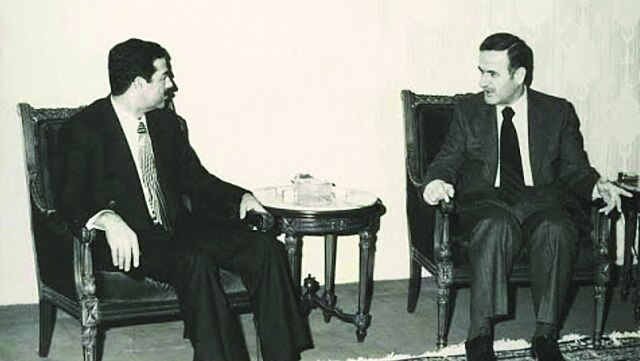
At this point, his excellency, Saddam Hussein, had been in power for 11 years. The people had a love-hate relationship with him. Many Shia Muslims were not in favor of his presidency as they believed he concentrated power to his inner circle, which was Sunni and Christian, and they felt misrepresented and suppressed by the government. Kurds also felt this way as the Kurdistan separatist movement had been suppressed using chemical weapons, leading to the killing of innocents who had no place in the movement.
Sunni Muslims and Christians tended to be in favor of his presidency as they felt Iraq was thriving under his administration. Literacy jumped 30% in under ten years, life expectancy went up almost a decade, and Iraq provided social services that were unheard of in the Arab World, including subsidies that were granted to farmers, and hospitalization was provided to all citizens for free. This meant the people’s opinions on Saddam were mixed, and there was no consensus.
Furthermore, Saddam had great relations with the US. There’s a lot of evidence that points towards US involvement in the coup which brought Saddam Hussein’s political party to power in 1968. The US backed Iraq in the Iran-Iraq War, providing intelligence and economic aid. Iraq-US relations were at an all time high during this period, and diplomacy was abundant and constant.
Glaspie’s Infamous Meeting Weeks Prior to the Invasion

April Glaspie, the American ambassador to Iraq from 1988-1990, was summoned by Saddam Hussein on July 25, 1990, to discuss Iraqi-Kuwaiti tensions. To explain these tensions without going to deep, it was (and a lot of times still is) generally believed in Iraq and the wider Arab world that Kuwait “belongs” to Iraq because their people and are the exact same, even down to the dialect of Arabic they speak; they were just split by a border that Britain artificially created at some point.
Iraq had also accused Kuwait of stealing Iraqi oil, and Kuwait and the UAE didn’t comply with OPEC oil quotas, selling their oil at a lower price than Iraq, forcing Iraq to either lower its prices or sell less oil. Neither option was plausible as they intended to pay off their debts and wartime costs (from the Iran-Iraq War) as soon as possible. To put it simply, Iraq was not happy with Kuwait for a multitude of reasons.
At this meeting, Saddam Hussein asked Glaspie how the US felt about these tensions between Iraq and Kuwait, to which she responded that the US has no place in conflicts between Arabs, specifically stating that “We have no opinion on the Arab-Arab conflicts, like your border disagreement with Kuwait.” To some, this may have seemed reasonable to say and truly reflected US foreign policy towards the situation. However, to most, and especially to the President of Iraq, who had just stationed a large number of troops on the Kuwaiti border and showed discontent with Kuwaiti politics, it looked like a green light to invade.
1990 Iraqi Invasion of Kuwait
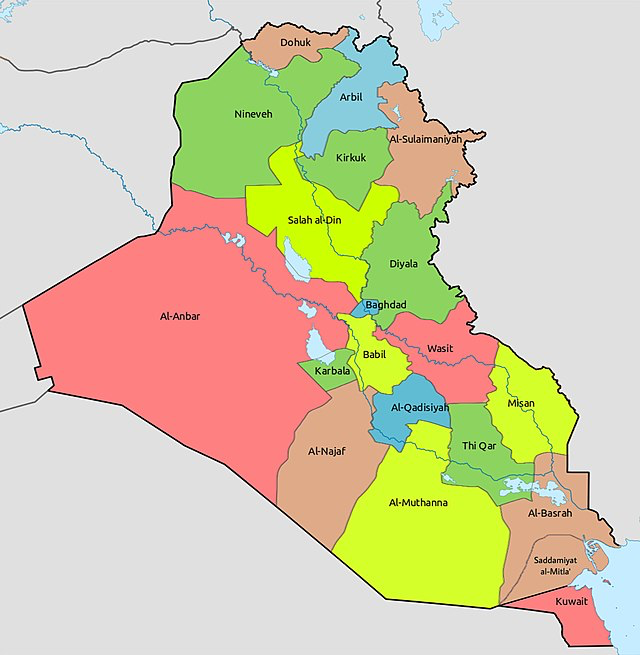
On August 2, 1990, Iraq invaded Kuwait. Within three days, Iraq had taken over and annexed the whole country and set up the “Provisional Government of Free Kuwait.” Over the next few months, the world, as well as international human rights organizations such as the UN and Amnesty International, condemned Iraq. This paved the way for the US-led anti-Iraq coalition to be formed, which had the goal of liberating Kuwait.
On February 24 of the following year, a coalition of about a dozen countries invaded the Kuwait province of Iraq, liberated it within four days, and returned Kuwait’s sovereignty.
This made Saddam Hussein, a President who had already been opposed by many Presidents and Kings around the world, one of the most hated and opposed leaders on earth. It made him appear overly aggressive and unstable, which would give any country looking to overthrow him and grant Iraq “democracy” the opportunity to do such and have the backing of the world.
Between 1990-2003
The UN passed UNSCR 661 on August 6, 1990, which imposed strict sanctions on Iraq after the invasion of Kuwait. This resolution had three main goals: to force them out of Kuwait, to compel them into giving up their Weapons of Mass Destruction, and to ensure Iraq’s compliance with previous UN resolutions. Saddam Hussein didn’t comply with the UN’s resolution for multiple reasons, such as that it made the US and UN directly responsible for much of the Iraqi suffering and that it concealed Iraq’s weakened military after the Iran-Iraq War.
Iraq having Weapons of Mass Destruction was a major justification used by President George W. Bush for his 2003 Invasion of Iraq. Although this would be a horrendous justification for killing 100,000s of innocent Iraqis and destabilizing the Arab World further than it already was, these allegations were just plain false. Iraq agreed to Security Council Resolution 687, leading to the release of all WMD locations in Iraq by the Iraqi government. From this point and over the next few years, the United Nations Special Commission on Iraq would inspect Iraqi WMDs. Especially after 9/11, as Iraq knew they were being blamed for the terrorist attack and wanted to clear their name as they had no involvement. According to the Stockholm International
Peace Research Institute, “Often overlooked is the highly cooperative attitude of the Iraqis during the inspections in 2002–2003. They saw clearly that they were being blamed for the 9/11 terrorist attacks and that there was likely to be a war, and saw full cooperation as a last chance to prevent it. “
The 2003 Invasion

America formed a coalition to invade Iraq. The coalition, made up of 48 countries, was called the “Coalition of the Willing” by the US, an amusing name for a coalition that was partially created when the US gave economic aid to countries that joined. The US and UK dropped over 29,000 bombs on Iraq during the 2003 invasion, killing a minimum of 7,000 civilians during this initial period alone.
Needless to say, it’s clear that the US had no good intentions when invading Iraq. The lies Bush relied on were clear, as the US knew that Iraq had no WMDs. The civilians who died during this war died in vain.
Arab Impact
What happened in Iraq proved that a country is never safe and its sovereignty can always be overridden by deception. The invasion normalized foreign intervention, which was completely illegitimate. It weakened regional unity and deepened instability in the Arab World, a region that the West clearly has no care for. Iraq was not alone, and served as a warning to the Arabs who didn’t want to play America’s game.