Subscribe
to receive news by email
Poll
Will the Trump Administration Shift U.S. Policy in Favor of Palestine?
- No (87%)
- Yes (13%)
 Loading ...
Copyright © 2026 Arab America
Go topThe Olive Harvest in Lebanon and Palestine
By: Robert Jackson / Arab America Contributing Writer
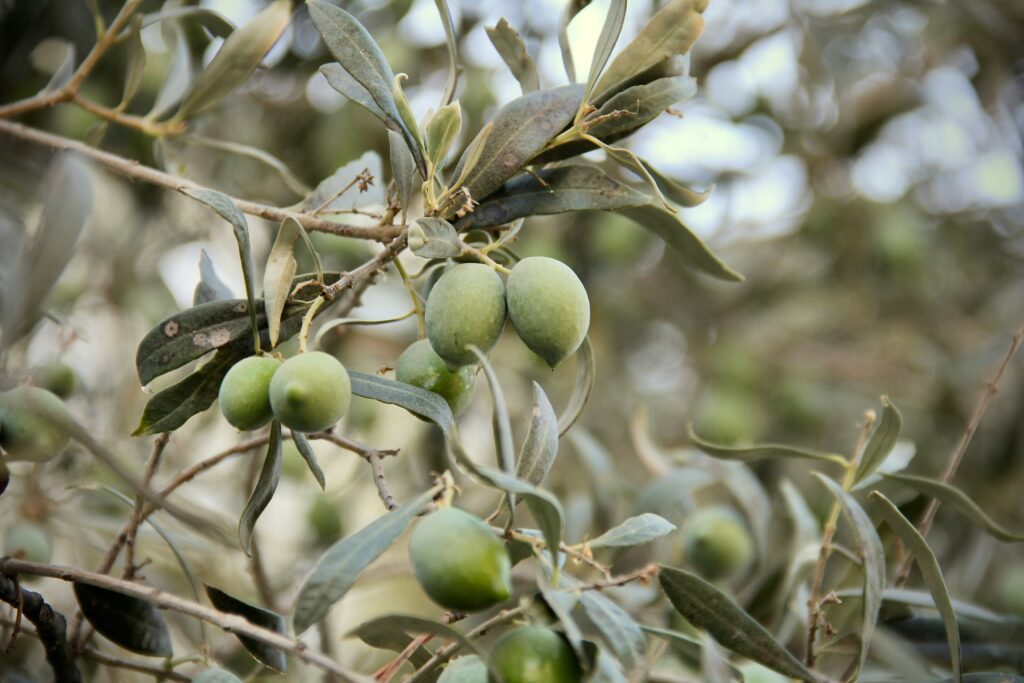
Every autumn, families across Lebanon and Palestine prepare for one of the most cherished times of the year, the olive harvest. For both peoples, the olive is far more than an agricultural crop. It is a living symbol of endurance, identity, and a sense of belonging. Rooted in the landscape and in countless generations of tradition, olives are an integral part of the story that defines the Lebanese and Palestinian experience.
An Ancient Tradition
Olive cultivation in the Levant dates back thousands of years. Archaeological evidence shows that the olive tree has been domesticated in this region since at least 3500 BCE.1 From the coastal plains of Lebanon to the terraced hills of Palestine, generations have nurtured these hardy trees, which thrive on rocky soil and minimal water. In Lebanon, the olive tree is a fixture of rural life. Lebanese olive oil, often described as fruity and robust, plays a central role in both the economy and cuisine. In Palestine, olives grow across the countryside, particularly around Nablus, Jenin, and Salfit.
A Time of Reunion
The olive harvest usually begins in October and extends through November. It is a time of hard work, but also of celebration. Families spread across cities and villages, or even abroad, reunite to gather the year’s crop. The process remains largely traditional, with the olives being hand-picked or gently beaten from the branches with long sticks, then collected in nets or buckets. This traditional method prevents damage to the branches and leaves that machinery would cause. The bad olives are then discarded while the others are taken to local presses, where they are transformed into olive oil or used year-round as table olives.
In both Lebanon and Palestine, this season is marked by community cooperation. Neighbors help one another harvest, sharing meals under the trees and songs that echo through the hillsides. The harvest is also a social ritual that reaffirms kinship and continuity. Children learn from their elders how to distinguish the perfect time for picking, how to cure olives with salt and water, and how to care for the trees. In this way, the harvest sustains not only bodies but the social fabric itself.
Israeli Violence
The olive tree’s deep roots mirror the deep connections Lebanese and Palestinians feel to their homelands, but that connection is threatened by Israel. In the West Bank and Southern Lebanon, Israeli violence against farmers and groves has been common.2 Olive trees have been burned, bombed, and chopped down, while workers have been repeatedly attacked and even killed.3
Thousands of Palestinian and Lebanese families depend on the trees for their livelihoods. They are grown and cared for over the years and generally live to be hundreds, and in rare cases, thousands of years old.4 It is no wonder that the destruction of olive groves is mourned as if they were family members. In response to the destruction of the trees, communities have replanted wherever possible, turning each harvest into an act of quiet resistance and renewal. The olive tree thus becomes a powerful symbol of defiance.
Culinary and Spiritual Importance
Beyond its economic and symbolic roles, the olive holds a cherished place in the daily lives of Lebanese and Palestinians. Olives and olive oil are a cornerstone of Levantine cuisine. Whether drizzled over hummus and labneh or poured generously over tabbouleh and fattoush, olive oil is used for everything. Fresh green and black olives also accompany nearly every meal, from simple breakfasts to festive gatherings.
Olive oil also carries spiritual and medicinal connotations. In Islam and Christianity alike, the olive tree is blessed. The Qur’an describes it as a “blessed tree,” and the Bible repeatedly invokes the olive branch as a sign of peace and divine favor. In Lebanon and Palestine, olive oil has long been used in traditional medicine, to make soap, and even as lamp fuel in mosques and churches.
Economic Lifeline
Olive cultivation also remains a crucial part of rural economies. Olives account for a significant portion of agricultural output, with hundreds of small presses and cooperatives sustaining village economies. Despite limited access to water and land, olives remain one of the few crops that can thrive in challenging conditions, making them essential for food security. Olive oil is so important and valuable that it is even used as a currency.
The Cycle of Renewal
Olives in Lebanon and Palestine are central to life. The olive tree has witnessed empires rise and fall, survived wars and droughts, and yet continues to thrive. Its harvest is a ritual of connection, linking the past to the present and trees to their communities. For the Lebanese and Palestinians, it is not merely a crop but a companion, a symbol of peace and persistence, and a promise that, no matter how harsh the season, renewal will always come.
Works Cited:
- https://www.sciencedirect.com/science/article/abs/pii/030544039190037P
- https://www.theguardian.com/global-development/2024/nov/12/cattle-crops-and-ancient-olive-groves-lebanons-farmers-lose-everything-to-israeli-bombs
- https://www.npr.org/2023/11/10/1211687030/the-death-of-a-palestinian-olive-farmer-emphasizes-conflict-over-land
- https://embraceme.org/blog/symbol-of-resistance
Want more articles like this? Sign up for our e-newsletter!
Check out our blog here!