

Subscribe
to receive news by email
Poll
Will the Trump Administration Shift U.S. Policy in Favor of Palestine?
- No (87%)
- Yes (13%)
 Loading ...
Copyright © 2026 Arab America
Go topThe Political Underrepresentation of Arab Americans
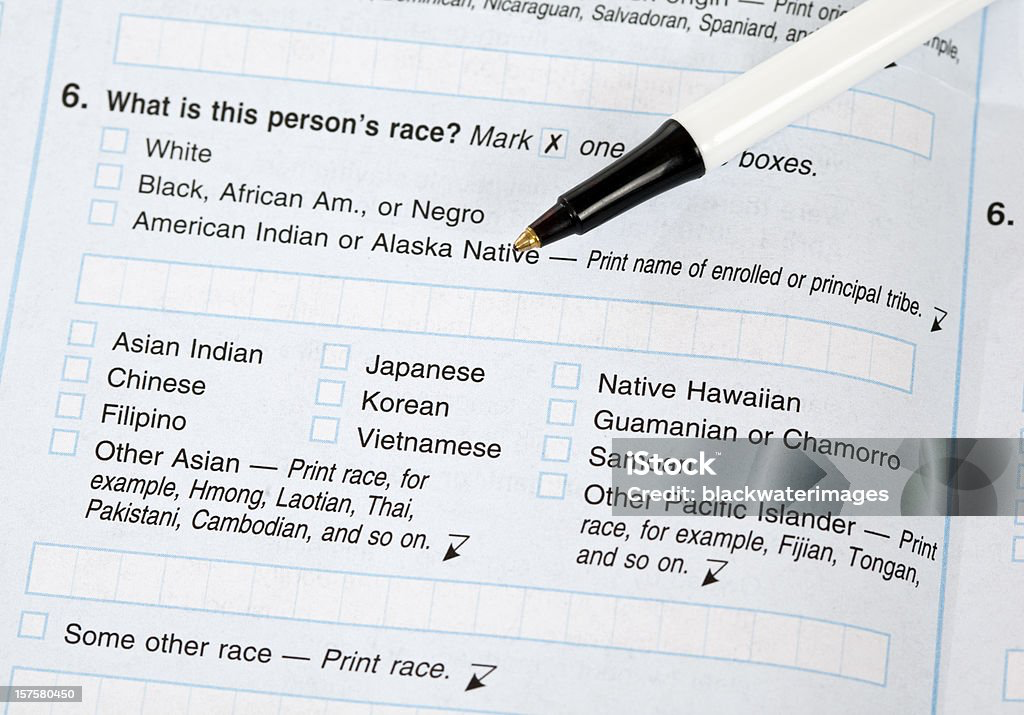
Photo Credit: Pexels
By: Laila Ali / Arab America Contributing Writer
Erased on Paper: The Census and Identity Crisis
For decades, Arab Americans have faced an erasure that begins with the most basic forms of government documentation. On federal forms, they’ve been classified as “white”—a designation that fails to reflect their unique cultural, linguistic, and political experiences. This classification has made it impossible to accurately measure Arab American populations, track discrimination, or allocate fair resources to communities in need.
According to the Arab American Institute, while the 2010 Census officially recorded 1.7 million Arab Americans, independent research and community surveys estimate the true number exceeds 3.7 million. The discrepancy isn’t just academic—it affects everything from political redistricting to healthcare funding to civil rights enforcement.
But change is finally on the horizon. In 2024, the Biden administration announced a historic revision to federal race and ethnicity data collection standards. For the first time, a “Middle Eastern or North African” (MENA) checkbox will be added to U.S. Census forms and other federal documents. This long-awaited change, to be implemented fully by 2029, will allow Arab Americans to be counted, seen, and served.
“This is more than a checkbox—it’s a step toward political visibility,” said Maya Berry, Executive Director of the Arab American Institute. “It will empower our communities with the data we’ve needed for decades.”
The Post-9/11 Backlash and Civic Silence
Even as Arab Americans have sought greater civic inclusion, the community has faced unique barriers—none more devastating than the wave of discrimination following the September 11, 2001 attacks.
Arab Americans, alongside Muslims and South Asians, became the targets of surveillance, detentions, and public suspicion. Policies like the National Security Entry-Exit Registration System (NSEERS) disproportionately affected Arab and Muslim immigrants, while the “Muslim Ban” under the Trump administration only deepened the climate of fear.
In this environment, many Arab Americans—particularly immigrants and first-generation youth—learned to keep their heads down rather than speak up. Civic participation, instead of being encouraged, became something to fear. Voting rates declined, and representation stagnated.
Proxy data from 2020 reveal that registered Arab American voters turned out at only 54%, trailing the national average of 66%—suggesting significant underutilized political potential.
The result? Arab Americans remained politically sidelined, despite their deep roots in the U.S.—from early 20th-century immigrants in Detroit and Brooklyn to today’s vibrant diaspora in cities like Dearborn, Anaheim, and Paterson.
Breaking Barriers: A New Generation of Leaders
But that tide is beginning to turn.
In 2018, Rashida Tlaib became the first Palestinian American woman elected to the U.S. House of Representatives. Her election was not just historic—it was transformative, inspiring Arab and Muslim youth across the country. That same year, Ilhan Omar, a Somali American Muslim woman, also entered Congress, challenging stereotypes and championing inclusive politics.
In 2021, Abdullah Hammoud was elected mayor of Dearborn, Michigan—becoming the first Arab American and Muslim to hold the position in a city long known as a hub of Arab culture. And in 2023, Ruwa Romman made history as Georgia’s first Muslim woman state legislator, and in 2025, Abraham Hamadeh became Arizona’s first Arab American Congressman.
These trailblazers have become more than just elected officials—they are symbols of what’s possible. Their victories prove that Arab Americans can win, can lead, and can transform American politics from within.
A Hopeful Horizon
While challenges remain—from Islamophobia and xenophobia to political exclusion—the Arab American community is rising.
Civic organizations are mobilizing like never before. The Arab American Institute continues to drive voter registration, while youth-led groups are demanding inclusion on campuses and in statehouses. The new MENA checkbox represents a structural shift in how Arab Americans are recognized by their own government. And with each election, more Arab Americans are stepping up to run for office, advocate for their communities, and reclaim their voice.
The political underrepresentation of Arab Americans is no longer a quiet crisis—it’s a public call to action. As the community grows in number, pride, and power, one truth becomes clear: Arab Americans are no longer content to be on the margins of American democracy. They are claiming their space at the center and on the census.
Want more articles like this? Sign up for our e-newsletter!
Check out our blog here!