

Subscribe
to receive news by email

Poll
Will the Trump Administration Shift U.S. Policy in Favor of Palestine?
- No (87%)
- Yes (13%)
 Loading ...
Copyright © 2026 Arab America
Go topThe Sport of Camel Racing
By: Robert Jackson/Arab America Contributing Writer
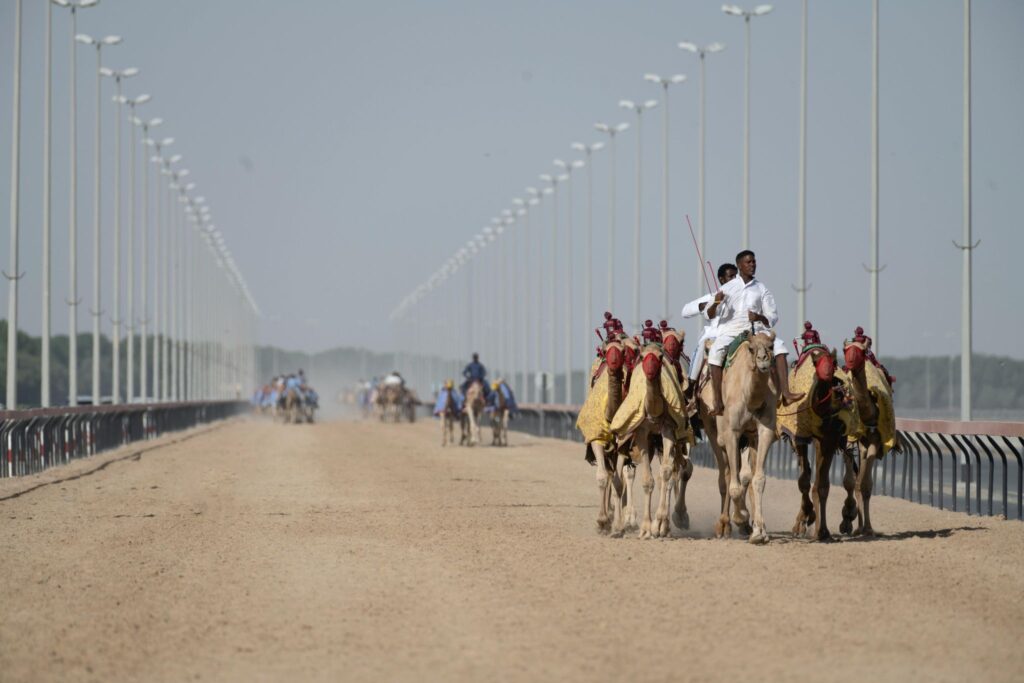
Camel racing is becoming a more popular sport in the modern day, especially in the Gulf States. Rooted in thousands of years of tradition, what began as simple entertainment has evolved into a professional sport with specialized training, big cash prizes, and even robotic jockeys. It is a sport drenched in tradition that nevertheless has adapted well to the modern world, becoming a bigger part of Arab life once more.
The History
For thousands of years, camels have been a central part of Arab life. Being well-adapted to arid climates, camels found many uses. They were the main tool for carrying cargo, culture, and people thousands of miles overland, in the process connecting empires. They also provide a source of milk, meat, and hides, which are still valuable today. First developing on the Arab Peninsula, evidence of camel racing can be found as early as the 7th century C.E. It is no surprise that such a ubiquitous animal would eventually find itself put to use for folk entertainment during festivals and gatherings. Although it remains less popular than horse racing, the sport has spread from North Africa, all the way to Australia. It is likely that as more money and time are invested in the sport, it will grow larger with more clubs and races occurring.
Robot Riders
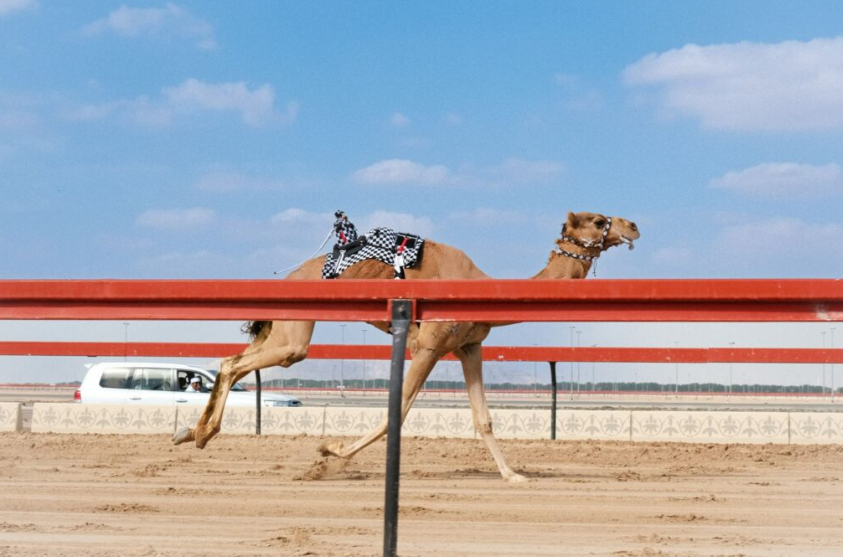
Many tournaments are now dominated by so-called “robot” jockeys. In reality, the robot is more of a walkie-talkie with a remote control whip. As seen in the photo above, the devise is strapped to the camel while a handler in a nearby car drives alongside. Calling instructions through a radio and triggering the cloth whip to urge the camels forward, allowing them to be controlled from a safe distance.
This system not only reduces the weight on the camels, making them faster, but also has a humanitarian purpose. In the past, child trafficking was commonly used to acquire new jockeys. The young jockeys were commonly injured and, in some cases, even died from falling off the camels. This new system is a major improvement and has been enforced through laws banning those under 18 from being jockeys.
Race Day Experience
A camel race is a lively event. Tracks can stretch several kilometers, and races may last anywhere from a few minutes to half an hour, depending on the distance. Due to the heat, most camel races take place in the morning. At the beginning of a race, the camels are clustered together. When the gate lifts, they surge forward in a frenzy. Egged on by the honking of the many cars driving alongside them, they can reach up to 40 mph. Some race tracks also include grandstands for fans to watch, but many prefer to drive next to the trainers’ cars to watch the sport up close, adding to the excitement. Though most tournaments are much smaller, as recently as 2024, the largest camel racing tournament ever was held in Saudi Arabia with over 21,000 camels participating.
A New Industry
Camel racing has clearly become a major industry in its own right over the past decades. Camel clubs, prize money, and tourism all contribute to the local economies. Winning camels have even been sold for up to $30 million. But it’s not just buying a camel that’s expensive, raising a camel is too. The camels are fed a diet of honey, milk, and eggs among other foods, making race camels rearing a pricey endeavor.
However, there are rich rewards for such commitment. Even without gambling revenue, which is illegal in most Arab countries, the prize money from winning tournaments is high. One of the largest events, the King Abdulaziz Camel Festival in Saudi Arabia, allocates millions of dollars towards prizes for various camel competitions, including racing. The races and promotion have spurred considerable tourism from abroad as well, drawing thousands to watch the events.
A Living Tradition
Far from a relic, this old sport is growing to become a powerhouse of regional entertainment, and some believe it may even expand to Europe. Camel racing has endured because it has been able to evolve. Many governments have encouraged and funded their development to foster traditional pastimes while their economies have modernized. Among sports like falconry, or events like heritage festivals, camel racing fits right into the efforts to maintain Arab traditions in a changing world.
Want more articles like this? Sign up for our e-newsletter!
Check out our blog here!