

Subscribe
to receive news by email

Poll
Will the Trump Administration Shift U.S. Policy in Favor of Palestine?
- No (87%)
- Yes (13%)
 Loading ...
Copyright © 2026 Arab America
Go topThe Traditional Architecture of Qatar
By: Ralph I. Hage/Arab America Contributing Writer
Before Qatar became known for its modern skylines of glass and steel, its people built with the materials they had, the climate they knew, and the culture they lived. Traditional Qatari architecture tells a story – not just about buildings, but about how people lived, worked, and stayed cool long before air conditioning arrived.
Building With What the Land Gave
Traditional architecture in Qatar was largely shaped by its geography and climate. With sweltering summers, minimal rainfall, and few trees, Qatari builders turned to the materials that were readily available. Limestone, coral rock, and mud were the go-to elements for walls. These thick walls weren’t just sturdy – they acted as insulation, keeping the interior cooler during the day and warmer at night.
The roofs were often flat and made using mangrove poles imported from East Africa, laid side by side and topped with palm fronds, woven mats, and a layer of clay or mud to hold everything in place. It was a simple but effective system, and one that could be maintained using basic tools and community labor.
Homes With Heart-The Courtyard House
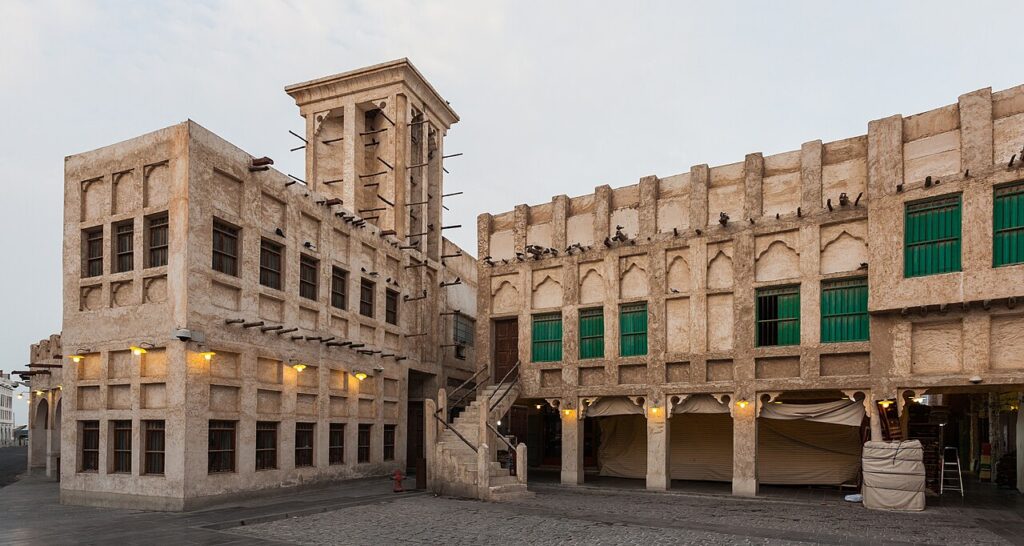
One of the most iconic elements of traditional Qatari architecture is the courtyard house. If you’ve ever visited Souq Waqif in Doha or seen restored heritage homes in places like Al Wakrah, you’ve probably stepped into one of these spaces.
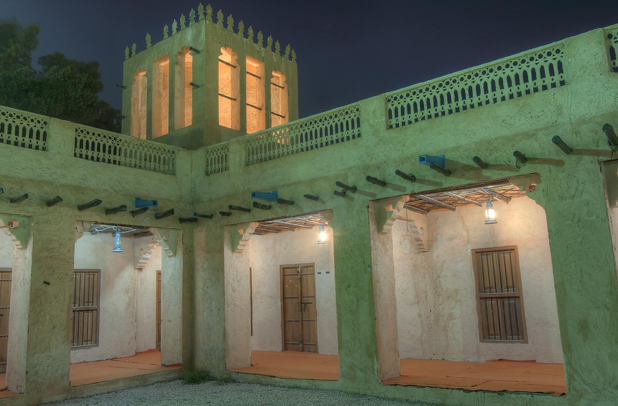
At the center of the house was an open courtyard, often surrounded by rooms on all sides. The courtyard wasn’t just an aesthetic feature – it helped ventilate the home by allowing hot air to escape and cool breezes to circulate. It was also a social space where families would gather in the evenings to eat, talk, and spend time together in the shade.
Around the courtyard were rooms for sleeping, cooking, and receiving guests. Privacy played a big role in how these homes were designed. Guest spaces, called majlis, were often kept near the entrance, so visitors didn’t intrude on family life. In wealthier homes, these rooms were often decorated with gypsum carvings or painted patterns that reflected Qatari craftsmanship and Islamic influence.
Keeping Cool, the Old-Fashioned Way
Staying cool in the Gulf heat has always been a challenge. Long before the invention of electricity or air conditioning, Qatari builders came up with clever ways to beat the heat using passive cooling techniques.
One of the most iconic solutions was the barjeel, or wind tower. Though more common in the UAE and Bahrain, some historical Qatari homes, especially in coastal areas like Doha, used similar features to direct wind down into the living areas. These towers worked almost like natural air conditioners, channeling cooler breezes into the home and pushing hot air out.
Another technique was the badgheer – a type of small opening or vent in the upper parts of walls. These openings allowed hot air to escape while still keeping the house relatively shaded and secure.
These systems weren’t just functional – they were also a reflection of the deep knowledge local builders had of their environment. Today, architects and engineers study these methods as examples of sustainable design that still have value in the twenty-first century.
Forts, Mosques, and Marketplaces
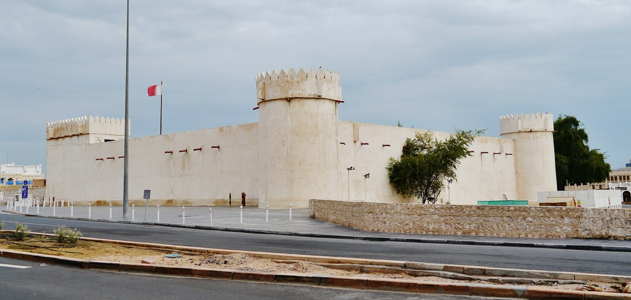
Beyond homes, traditional Qatari architecture is also seen in forts, mosques, and markets – each built to reflect the needs and values of the community.
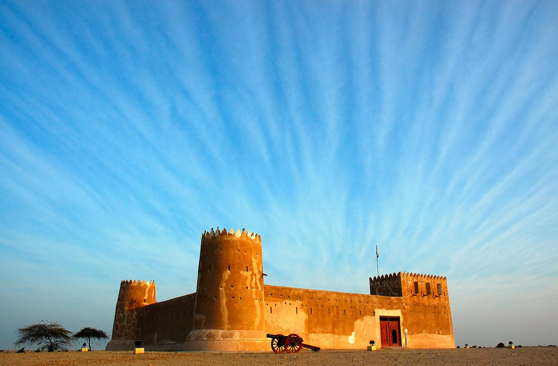
Forts like Al Zubarah and Al Koot were made for defense but also served as symbols of authority. Built with the same local materials – limestone, coral, and mud – they had thick walls, high watchtowers, and limited windows, all designed for protection. Al Zubarah Fort, a UNESCO World Heritage Site, is one of the best-preserved examples and gives a powerful glimpse into Qatar’s 18th- and 19th-century architecture.
Traditional mosques, like the one at Al Ruwais, are typically small, with minimal decoration and a strong emphasis on function. Their simplicity reflects both the environment and the spiritual values of the time. Minarets were often short and sturdy, and many had no domes or lavish ornamentation like you’d see elsewhere in the Islamic world. Instead, beauty was expressed through proportion, geometry, and the cool serenity of plastered walls.
Marketplaces, or souqs, were the heart of urban life. Built with shaded walkways and narrow lanes to keep things cool, souqs like the now-restored Souq Waqif were designed for community, trade, and hospitality. The architecture was practical but also welcoming, with wooden beams, carved doors, and intimate scales that made every corner feel alive.
Preserving the Past in a Rapidly Changing Country
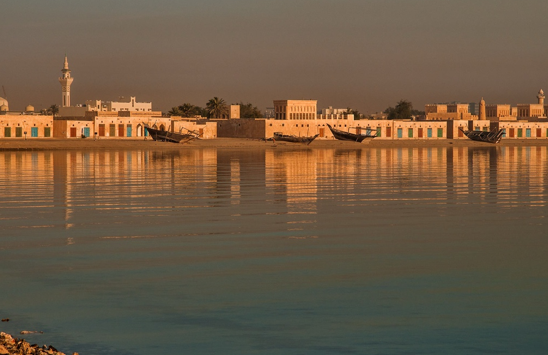
In the last few decades, Qatar has undergone one of the fastest transformations of any country in the world. Skyscrapers, mega-malls, and master-planned cities now dominate much of the landscape. And yet, there’s a renewed appreciation for the country’s architectural roots.
Government initiatives, especially through the Qatar Museums Authority and the Ministry of Culture, have led to the restoration of traditional buildings in places like Al Wakrah Heritage Village. Newer developments, like Katara Cultural Village, draw inspiration from traditional elements – like arches, courtyards, and wind towers – blending them with modern materials and engineering. It’s part of a larger conversation about identity. In a place developing at lightning speed, architecture has become a way to reconnect with heritage and ensure that the past is not forgotten.
A Living Legacy
The forms and features of traditional Qatari architecture continue to inspire its architects, artists, and cultural thinkers. And for many Qataris, these structures aren’t just old buildings – they’re reminders of how people lived together, helped each other, and adapted to their environment. As Qatar looks ahead, it should also look back – with pride in its roots, and with a renewed interest in how old ways of building might help shape a more sustainable, human-centered future.
Ralph Hage is a Lebanese American architect who divides his time between Lebanon and the United States.
Want more articles like this? Sign up for our e-newsletter!
Check out our blog here!