Subscribe
to receive news by email

Poll
Will the Trump Administration Shift U.S. Policy in Favor of Palestine?
- No (87%)
- Yes (13%)
 Loading ...
Copyright © 2026 Arab America
Go topThe War On Iran Is Not Advancing Security For Anyone
By: Ghassan Rubeiz / Arab America Contributing Writer
The United States and Israel may claim a military victory over Iran, but the region they say they are securing is more unstable, divided, and vulnerable than at any time in recent memory. Tactical success on the battlefield is rapidly becoming strategic failure for everyone involved.
In a recent interview, well-known Professor John Mearsheimer, of the University of Chicago, contended that the Trump administration stumbled into a war of attrition under Israeli pressure, pursuing regime change through air power alone — a tactic with a poor historical record. Iran, far from submitting, has hardened its resolve, closed the Strait of Hormuz, and is systematically targeting the economic infrastructure of its adversaries and Gulf neighbors rather than engaging American and Israeli military superiority directly.
As Stephen Walt, a distinguished scholar at Harvard’s Kennedy School, has long cautioned, U.S. strategy repeatedly fails when it “confuses the use of force with the achievement of political goals.” That confusion is now on full display.
Iran’s military capacity has been severely degraded, but this has not produced the collapse some in Washington anticipated. Instead, it has left Arab Gulf states more exposed than before. Their security was never built on American firepower alone; it depended on a regional equilibrium in which Iran, however adversarial, played a balancing role. With that equilibrium shattered, Gulf capitals face compounding uncertainties — about American reliability, Iranian retaliation, and regional order itself.
The human costs across the region are no less severe. In particular, Lebanon, already on economic life support, has been pushed deeper into chaotic fracture: hundreds of thousands displaced, villages destroyed, its fragile political framework strained further still. Gaza remains trapped in a siege and severe deprivation. The West Bank lands are undergoing accelerated dispossession under the cover of regional war.
Vali Nasr, of the Johns Hopkins School of Advanced International Studies, has argued for years that the Middle East cannot be stabilized by treating Iran as a problem to be bombed rather than a reality to be engaged. The current war confirms this argument: by striking Iran without addressing the political drivers of conflict, above all the unresolved Palestinian question, Washington has deepened every existing fault line rather than closing any.
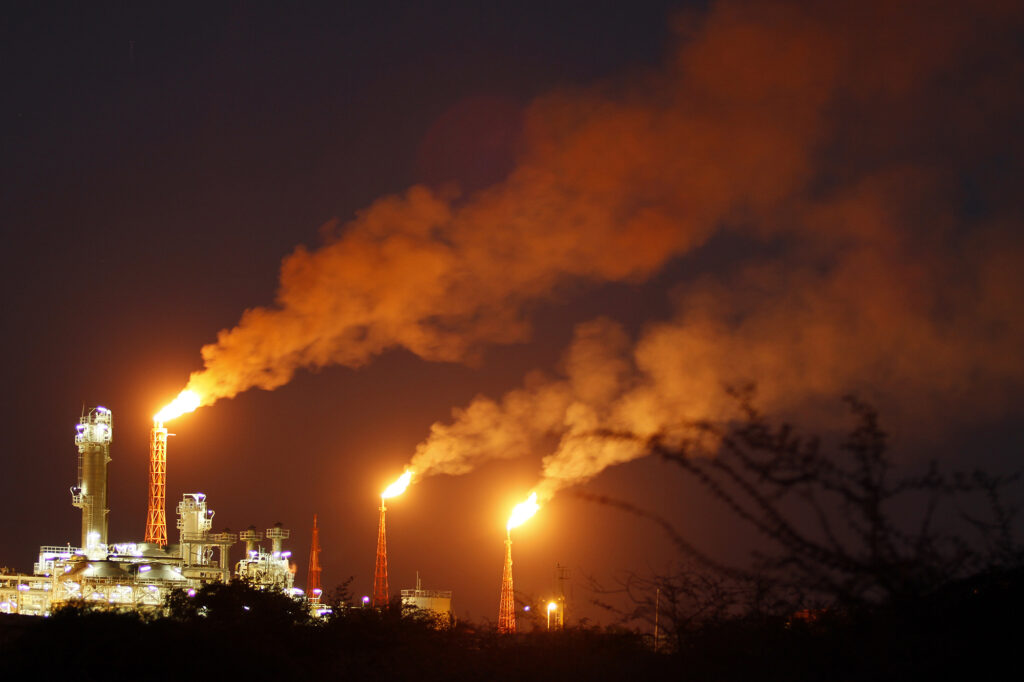
The economic risks compound the strategic ones. A protracted war threatening oil flows through the Strait of Hormuz could trigger a severe global recession at a moment when the United States already carries unprecedented levels of debt. These are not remote scenarios. They are the predictable consequences of launching a war without a political endgame.
Israel, too, faces a reckoning it cannot indefinitely defer. Israeli hawks have mobilized this war, assuming that once Iran is militarily neutralized, Israel can be the region’s only hegemon. Trita Parsi of the Quincy Institute for Responsible Statecraft, has argued that Israeli security cannot rest on force alone when millions of Palestinians live under permanent inequality. The war on Iran does nothing to resolve that contradiction — it deepens it, while eroding the one asset Israel has relied upon most: unqualified American support.
So far, the United States and Israel are achieving a dramatic military campaign. But they have not produced a dependable, enduring political horizon. Without one, power becomes a trap rather than a tool. Iran has no incentive to come to the negotiating table, and Washington and Israel have no clear off-ramp. Poorly planned, power-obsessed tactical victory, often sows the seeds of the next conflict — and the one after that.
Ghassan Rubeiz is the former Middle East Secretary of the World Council of Churches. Earlier, he taught psychology and social work in his country of birth, Lebanon, and later in the United States, where he currently lives. He has contributed to political commentary for the past twenty years and has delivered occasional public talks on peace, justice, and interfaith topics. You can reach him at rubeizg@gmail.com
The views and opinions expressed in this article are those of the author and do not necessarily reflect the position of Arab America. The reproduction of this article is permissible with proper credit to Arab America and the author.
Want more articles like this? Sign up for our e-newsletter!
Check our blog here!